ISHN logo
search
cart
facebook twitter linkedin youtube
  • Sign In
  • Create Account
  • Sign Out
  • My Account
ISHN logo
  • NEWS
    • Today's News
    • Global Safety News
    • Government Regulations
  • PRODUCTS
    • Product Innovations
    • Featured Products
  • TOPICS
    • Environmental Health and Safety
    • Facility Safety
    • Workplace Health
    • Occupational Safety
    • PPE
    • More Topics
  • CONSTRUCTION
  • TECHNOLOGY
  • COLUMNS
    • Best Practices
    • Dave Johnson: What’s going on
    • Editorial Comments
    • Leading Safety
  • MULTIMEDIA
    • ISHN Podcast
    • Videos
    • Cold Stress Education Quiz
    • Webinars
    • White Papers
  • MORE
    • Buyer's Guide
    • Newsletters
    • Convention Companion
    • Polls
    • Events
    • ISHN Store
    • Sponsor Insights
  • EMAGAZINE
    • eMagazine
    • Archived Issues
    • Contact
    • Advertise
  • JOIN TODAY!
Environmental Health and Safety

Quiet down

Acoustic curtain walls save money & time
By Kyle Justice
August 2, 2011
 Building permanent walls is definitely one way to quiet things down — and guard against bothersome and potentially harmful noise. But there’s another, more practical solution that costs less and speeds installation time: acoustic curtain walls. It’s why many decision-makers use them in place of permanent walls andpure Insulated Metal Panel (IMP) Systems, especially when the goal is to reduce noise levels and create more comfortable and productive work environments.

 In addition to sound-attenuation, companies have also found that curtain walls are omni-functional and offer unlimited flexibility in managing physical space. The result is the ability to adapt various areas to meet the needs of both employees and customers. Given the advantages, curtain walls are worth consideration when it’s time to get a handle on noise and keep it to a minimum.

 Acoustic curtain wall basics

Acoustic curtain walls (also called flexible or soft walls) are engineered industrial fabric curtains layered with sound-absorbing materials specifically designed to reduce excessive noise in virtually any industrial, commercial or institutional facility. Some walls can reduce noise levels inside buildings by up to 22-25 decibels (dB), making a space approximately four times quieter than it would be without them, depending on the existing noise frequency levels.

A typical wall is made of five-foot-wide fabric panels that are interconnected with Velcro® to span the width of a given space. The curtain height extends to the desired length. The fabric is designed to fit snugly around virtually any obstructions to close off noisy areas or equipment and is easily fitted around a framework if a door is needed.

A plant maintenance crew, or anyone who is mechanically inclined, can install a basic wall system with relative ease even if it involves doorways and obstructions. Typically, the top of the flexible wall is attached to ceiling joists. The weight of the curtains, while minimal to the roof structure, holds the bottom in place in almost all applications. Velcro corner connectors are used to form corner joints. The curtain walls, which cannot be used as load-bearing walls, can be installed as stationary systems, or walls that slide open and close. They can also be reconfigured as the needs for physical space change.

 Quiet down equipment & operations

The idea behind acoustic curtain walls is to protect employees’ hearing and enhance the comfort of people who work in noisy areas. The walls can be used to isolate loud-running equipment and noisy operations. Often, they’re used to partition and quiet down different areas in large buildings and multi-use facilities. Typical applications of acoustic curtain walls include factories, machine shops and a diverse range of industrial operations.

Acoustic curtain walls offer a number of advantages over permanent walls and IMP systems. By comparison, the walls are often:

n Easier to install: The walls do not require concrete curbing or a steel guardrail to protect the base of the wall, which makes installation easier. Additionally, there are no studs involved. Typically, fabric walls also do not require a permit.

n Less costly: The savings can be considerable. They’re realized because there are fewer steps; there’s no need to involve a carpentry crew; and there are no hard costs for concrete curbs, protective railings, studs, and metal framework on a basic wall. If a curtain wall is damaged, repair costs are low because the wall can be easily patched or replaced with minimal lead-time. Lower cost is also a major factor when a wall needs to be removed, reconfigured, or moved to another location. It can be done without demolition costs.

n Time-savers: Simplification results in faster installation. Additionally, lead-times are reduced because there are fewer people in the loop and permitting is often a non-requirement. Delays are minimized because some walls can be installed with off-the-shelf hardware. The simplicity involved in repair and/or replacement also saves time. The same is true if the wall needs to be taken down, repositioned in the same general area, or used somewhere else.

 Noise control: a top priority

Noise control is essential for the overall health and safety of employees. Fortunately, acoustic curtain walls give companies the ability to gain control over noise quickly and cost effectively.

KEYWORDS: business case for safety compliance

Share This Story

Looking for a reprint of this article?
From high-res PDFs to custom plaques, order your copy today!

Kyle Justice is regional sales manager for Zoneworks (www.zoneworks.com).

Recommended Content

JOIN TODAY
to unlock your recommendations.

Already have an account? Sign In

  • forklift safety

    Exploring the latest technologies in forklift safety

    With more staff and more stock in warehousing now more...
    Workplace Training Strategies
    By: Josh Cramer
  • welding

    All about welder’s flash or arc eye

    A flash burn is a painful inflammation of the cornea,...
    Environmental Health and Safety
  • dangerous jobs

    The 10 most dangerous jobs in the U.S.

    On-the-job deaths have been rising — hitting the highest...
    Transportation Safety
    By: Benita Mehta
Manage My Account
  • eMagazine Subscriptions
  • ISHN Newsletter & Other Newsletter Alerts
  • Online Registration
  • Manage My Preferences
  • Subscription Customer Service

More Videos

Sponsored Content

Sponsored Content is a special paid section where industry companies provide high quality, objective, non-commercial content around topics of interest to the ISHN audience. All Sponsored Content is supplied by the advertising company and any opinions expressed in this article are those of the author and not necessarily reflect the views of ISHN or its parent company, BNP Media. Interested in participating in our Sponsored Content section? Contact your local rep!

close
  • man wearing the the Sundström SR200 Full Face Mask Respirator
    Sponsored byOHD

    5 Fit Testing Mistakes That Could Cost You

  • This image shows Magid AcuSpex polarized blue mirrored safety glasses.
    Sponsored byMagid Glove and Safety

    Construction PPE Guide: What Crews Need for Each Task

  • lone worker in confined space
    Sponsored byAlphasense Ltd.

    GET THE LEAD OUT of your Safety Oxygen Sensors!

Popular Stories

SpaceX 7 launch

OSHA Investigating Fatal Fall at SpaceX Starbase

Worker Impairment

How to Tell When a Co-Worker is Impaired? A Safety Pro’s Challenge

psychology in the workplace

Most Workplaces Measure Psychological Safety, Ignoring Psychosocial Risks

top 10 most dangerous jobs

Poll

Seasonal Readiness

With the federal heat stress prevention rule on the horizon, which area of your safety program needs the most attention?
View Results Poll Archive

Products

Surviving an OSHA Audit A Management Guide, 2nd Edition

Surviving an OSHA Audit A Management Guide, 2nd Edition

See More Products

ISHN Podcasts

Related Articles

  • NIOSH rolls-out web resources to support Buy Quiet programs

    See More
  • NIOSH to hold "Buy Quiet" workshop

    See More
  • NIOSH web tool will help employers "Buy Quiet"

    See More

Related Products

See More Products
  • 1119010160.jpg

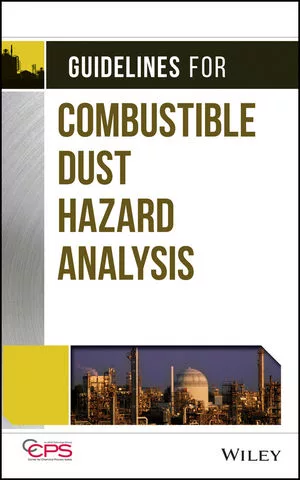
    Guidelines for Combustible Dust Hazard Analysis

  • 1119772133.jpg

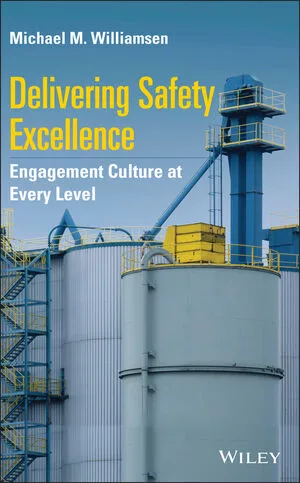
    Delivering Safety Excellence: Engagement Culture at Every Level

  • 3E

    Safety Professional's Reference and Study Guide, Third Edition

See More Products
×

Become a Leader in Safety Culture

Build your knowledge with ISHN, covering key safety, health and industrial hygiene news, products, and trends.

JOIN TODAY
  • RESOURCES
    • Advertise
    • Contact Us
    • Directories
    • Manufacturing Division
    • Store
    • Want More
  • SIGN UP TODAY
    • Create Account
    • eMagazine
    • Newsletters
    • Customer Service
    • Manage Preferences
  • SERVICES
    • Marketing Services
    • Reprints
    • Market Research
    • List Rental
    • Survey/Respondent Access
  • STAY CONNECTED
    • LinkedIn
    • Facebook
    • YouTube
    • X (Twitter)
  • PRIVACY
    • PRIVACY POLICY
    • TERMS & CONDITIONS
    • DO NOT SELL MY PERSONAL INFORMATION
    • PRIVACY REQUEST
    • ACCESSIBILITY

Copyright ©2026. All Rights Reserved BNP Media, Inc. and BNP Media II, LLC.

Design, CMS, Hosting & Web Development :: ePublishing