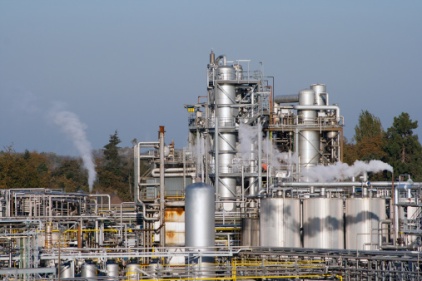
 The U.S. Environmental Protection Agency (EPA) and the U.S. Department of Justice announced that Dover Chemical Corporation has agreed to pay $1.4 million in civil penalties for the unauthorized manufacture of chemical substances at facilities in Dover, Ohio and Hammond, Ind. The settlement resolves violations of the Toxic Substances Control Act (TSCA) premanufacture notice obligations for its production of various chlorinated paraffins. Dover Chemical produces the vast majority of the chlorinated products sold in the United States. As part of the settlement, Dover Chemical has ceased manufacturing short-chain chlorinated paraffins, which have persistent, bioaccumulative and toxic (PBT) characteristics. PBTs pose a number of health risks, particularly for children, including genetic impacts, effects on the nervous system, and cancer. Dover Chemical will also submit premanufacture notices to EPA for various medium-chain and long-chain chlorinated paraffin products.
“Assuring the safety of chemicals is one of EPA’s top priorities,” said Cynthia Giles, assistant administrator for EPA’s Office of Enforcement and Compliance Assurance. “Today’s action reinforces the need for chemical manufacturers to follow the law and protects Americans from chemicals that could be harmful to their health.”
“This settlement will require Dover to participate in an EPA review of all types of chlorinated paraffin products sold by the company and bring Dover into compliance with the Toxic Substances Control Act,” said Ignacia S. Moreno, assistant attorney general for the Environment and Natural Resources Division of the Department of Justice. “By halting production of short-chain chlorinated paraffins, this settlement will reduce undue risks to human health and the environment.”
Chlorinated paraffins are a family of chemical substances with different properties depending on their carbon chain lengths and are generally identified as short, medium, or long-chain. Chlorinated paraffins are used as a component of lubricants and coolants in metal cutting and metal forming operations, as a secondary plasticizer and flame retardant in plastics, and as an additive in paints. Short-chain chlorinated paraffins, however, have been found to be bioaccumulative in wildlife and humans, persistent and transported globally in the environment, and toxic to aquatic animals at low concentrations. EPA has developed an action plan for these chemicals based on the potential for significant impacts on the environment. The environmental and health concerns relating to medium-chain chlorinated paraffins and long-chain chlorinated paraffins may be similar to those associated with short-chain chlorinated paraffins. Those chemicals may also be persistent and bioaccumulative based on their physical-chemical properties, bioaccumulation modeling, and because they are also found in the environment.
In 1978, EPA compiled the initial TSCA Inventory of chemical substances from industry submissions and those substances were grandfathered onto the TSCA Inventory without additional human health or environmental review. Chemical substances not on the TSCA Inventory constitute “new chemical substances” for which a premanufacture notice (PMN) must be submitted to EPA at least 90 days before a company begins producing the substance. A PMN includes information such as the specific chemical identity, use, anticipated production volume, exposure and release information, and existing available test data. EPA identifies risks associated with new chemicals through the PMN process. In the PMN process, EPA can require additional testing or issue orders prohibiting or limiting the production or commercial use of such substances.
The proposed settlement agreement, lodged in the U.S. District Court for the Northern District of Ohio, is subject to a 30-day public comment period and approval by the federal court.