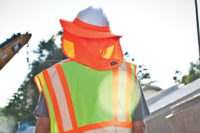
 As temperatures rise, so does the chance of those working in areas susceptible to high heat conditions of becoming ill. To prevent heat-related work injuries and illnesses, the American Society of Safety Engineers (ASSE) suggests employers and employees take safety precautions now and be aware of factors that can lead to heat stress; the symptoms of heat exhaustion and heat stroke; ways to prevent heat stress; and, what can be done for heat-related illnesses.
Each year, thousands of outdoor workers experience heat illness, which often manifests as heat exhaustion. If not quickly addressed, heat exhaustion can become heat stroke, which can be deadly.
ASSE warns one should be cautious when one’s body is unable to cool itself by sweating. According to OSHA, several heat-induced illnesses such as heat stress or exhaustion and the more severe heat stroke can occur, and can result in death. Body temperatures can rise to dangerous levels if precautions are not taken. Factors leading to these conditions include high temperatures; being in direct sun or heat; limited air movement; physical exertion; poor physical condition; some medicines; using bulky protective clothing and equipment; and, inadequate tolerance for hot workplaces.
Symptoms of heat stroke include dry, hot skin with no sweating; mental confusion or losing consciousness; and, seizures or convulsions. To prevent heat stress, officials suggest you monitor your co-workers and yourself. Prevention efforts include blocking out direct sun or other heat sources; using cooling fans or air conditioning; resting regularly; and, wearing lightweight, light colored, loose-fitting clothes. Drinking lots of water, about one cup every 15 minutes, is very important.
Although there is no one-size-fits-all solution, some suggested tips for employees and employers to use in order to prevent heat-related illnesses and injuries include:
• Use cooling pads that can be inserted into hardhats or around the neck to keep the head and neck cool. Vented hardhats or neckbands soaked in cold water can also be used to minimize prolonged heat exposure and prevent the body from overheating.
• Wear protective eyewear that features sufficient ventilation or anti-fog lens coating to reduce lens fogging from the heat. Sweatbands can also be used to prevent perspiration from dripping into the eyes.
• Use gloves with leather palms and cotton or denim backs, which allow for an increased airflow and still protect hands. Also, choose gloves with a liner to absorb sweat preventing perspiration buildup. Some gloves also feature strips of nylon mesh or are perforated at the back of the hand for more airflow.
• Wear light-colored, loose-fitting, breathable clothing such as cotton, recommends OSHA.
• Take breaks in cooler, shaded areas.
• To prevent dehydration, another hazard associated with exposure to heat, drink cool water and avoid diuretics such as coffee, tea, alcohol or soda, as these can deplete body fluid.
The U.S. National Oceanic and Atmospheric Administration (NOAA) notes heat is the number one weather-related killer in the U.S., noting excessive heat claims more lives each year than floods, lightning, tornadoes and hurricanes combined. NOAA provides additional detail on how heat impacts the human body at “The Hazards of Excessive Heat“.
To assist workers and employers, NOAA will be issuing heat alerts across the U.S. this summer. Each National Weather Service Weather Forecast Office will send, as needed, warnings for 1) excessive heat outlooks to be issued when the potential exists for an excessive heat event within 3-7 days; 2) excessive heat watches will be issued when conditions are favorable for an excessive heat event within 12 to 48 hours; and, 3) excessive heat warnings/advisories will be issued when an excessive heat event is expected within 36 hours.