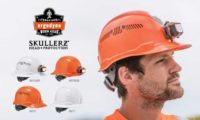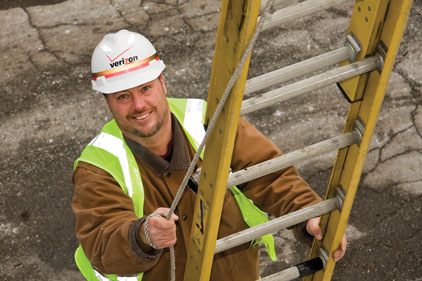
In selecting the proper protective helmet, many variables must be considered. Each kind is designed to protect against specific hazards. To determine the proper protection necessary, first consider hazards and use limitations. Completing a hazard assessment will help you identify specific workplace hazards.
In general, hard hats should:
- Resist penetration and deflect blows to the head
- Have a suspension system that can absorb the force of impact
- Serve as an insulator against electrical shocks (when warranted)
- Be water resistant and slow burning
- Shield the scalp, face, neck and shoulders 1
When in doubt, seek guidance if concerned about a potential hazard.
Types of hard hats
ANSI categorizes hard hats by impact type. A Type I (top impact) hard hat is designed to reduce the force of impact on top of the head. The Type II (top and lateral impact) hard hat not only reduces the force of an object that may directly impact the top of the head but also diffuses the force from a side blow to other parts of the head.
ANSI has divided hard hats into three general classifications:
- Class G (General) – This is an all purpose, general helmet that provides good impact and penetration protection, but offers limited voltage protection (up to 2,200 volts).
- Class E (Electrical) – This helmet provides the highest level of protection from high-voltage shock (up to 20,000 volts.) And is especially well suited for electrical work.
- Class C (Conductive) – This lightweight helmet is designed more for comfort than overall protection. Since this helmet does not protect against electric shock, it is best utilized to protect from impact against fixed objects.
Bump Cap should also be mentioned. Bump caps are designed for use in areas with low head clearance and are designed to reduce exposure to cuts, bumps and abrasions. But bump caps are appropriate only for work situations that do not require ANSI-compliant head protection.
Accessories & markings
Manufacturers provide compatible systems that incorporate protective hard hats and caps with hat frames, visors, faceshields, chin guards and adapter kits for various applications. Hearing protection, eye protection and communication systems are also options. There are also accessories that protect wearers’ ears and neck from the sun and heat and shield workers from the sun’s harmful rays, as well as terrycloth headbands for added comfort.
Helmets that comply with ANSI requirements must be marked with proper certification. Inside the hat, you’ll find the manufacturer’s name, the legend, ANSI Z89.1-1986 and the class designation. Compliant hard hats must include the date of manufacture and the manufacturer’s name. The hard hat must also contain sizing instructions, guidelines for care and service, as well as the ANSI legend and class description.2
Customization helps compliance
If you provide employees with stylish, comfortable and safe PPE, they are more apt to wear it, thus following safety regulations. That’s why today hard hats come in a variety of colors, styles and offer various tailored applications. Updated styles are geared not only toward added safety and comfort but are also driven by fashion.
One way to provide personalization is by customizing hard hats with logos. This is a cost-effective way to brand equipment with your corporate identity. Customized logos not only provide obvious marketing benefits, they can help commemorate special occasions and aid in employee or work area identification. You can also personalize hard hats with custom artwork, stickers, striping, corporate slogans or messaging, or the logo of a favorite sports team. If safety at night is a factor, consider hats that glow in the dark.
Because hard hats must be inspected for dents, cracks and other imperfections before use, personalization of helmets must be within the manufacturer’s guidelines to prevent the elimination of electrical resistance. Stickers or markings must allow the helmet underneath to be inspected for dents and cracks. Paints must be selected according to manufacturer’s standards, as some solvents and thinners can make a hard hat more prone to damage.3
Inspection, care and maintenance
The hard hat has two basic parts: the shell and the suspension system. In some cases, a chinstrap is applicable. Each component requires periodic inspection and maintenance to ensure its continued ability to protect the worker. Inspecting the hard hat for any damage prior to use is vital. Proper care and maintenance should extend the hard hat’s longevity:
- Never store a hard hat in direct sunlight
- Clean the hard hat shell and suspension system with mild detergent, rinse with warm water.
- Inspect the shell for any signs of damage or excess wear, perforations, cracking or deformity of the brim or shell.
- Inspect suspension straps for cuts, frays, damage from chemicals, or any other signs of wear.
- Never drill holes in the shell of a hard hat. This can lessen the impact resistance of the helmet and can nullify the Class E or G electrical insulation rating.
- Do not use adhesives, paints or cleaning solvents on your hard hat. They may damage the shell and lessen the effectiveness of the protection.4
For your safety, replace a hard hat at the first sign of any of these conditions and whenever it sustains any impact, regardless of whether there are any visual signs of damage. Although there is no determined service life for hard hats, manufacturers typically recommend replacement after no more than five years.
Another frequently asked question is whether a hard hat still complies with protective standards if it is worn backwards. According to OSHA, it is not recommended. Play it safe and obtain written verification from the manufacturer regarding compliance prior to wearing your hard hat backwards.
Understanding the proposed ANSI update
ANSI has established recognized standards for hard hats regarding minimum performance requirements. OSHA recently published a direct final rule to revise the PPE sections of its standards regarding requirements for head protection. OSHA is updating the references in its standards to recognize the 2009 edition of the American National Standard for Industrial Head Protection, and is deleting the 1986 edition of that national consensus standard because it is out of date. OSHA also is including the construction industry in this rulemaking to ensure consistency among the agency’s standards. Provided there are no negative comments, the rule will go into effect September 20, 2012. You can read the entire OSHA notice at www.osha.gov.
References
1 http://www.hardhats.4ursafety.com/hard-hat-articles.html
2 http://www.professionalequipment.com/guide-to-hard-hat-reqs/articles/
3 http://www.ehow.com/about_6520923_osha-regulations-hard-hats.html#ixzz228wUVwOQ