ISHN logo
search
cart
facebook twitter linkedin youtube
  • Sign In
  • Create Account
  • Sign Out
  • My Account
ISHN logo
  • NEWS
    • Today's News
    • Global Safety News
    • Government Regulations
  • PRODUCTS
    • Product Innovations
    • Featured Products
  • TOPICS
    • Environmental Health and Safety
    • Facility Safety
    • Workplace Health
    • Occupational Safety
    • PPE
    • More Topics
  • CONSTRUCTION
  • TECHNOLOGY
  • COLUMNS
    • Best Practices
    • Dave Johnson: What’s going on
    • Editorial Comments
    • Leading Safety
  • MULTIMEDIA
    • ISHN Podcast
    • Videos
    • Cold Stress Education Quiz
    • Webinars
    • White Papers
  • MORE
    • Buyer's Guide
    • Newsletters
    • Convention Companion
    • Polls
    • Events
    • ISHN Store
    • Sponsor Insights
  • EMAGAZINE
    • eMagazine
    • Archived Issues
    • Contact
    • Advertise
  • JOIN TODAY!
Psychology in the Workplace

Are you 'Training' or 'Educating?'

By E. Scott Geller
May 19, 2000
When I teach a university class it's considered "education," even "higher education," but when I teach in industry, I'm considered to be "training" employees. Colleges and universities have "Centers for Educational Excellence;" industries have "Training Centers." So it seems that colleges and universities educate, and industries train. What's the difference? After all, we use these terms interchangeably, as if they have the same meaning. But if you think about it, education and training are not the same. Each should have a different teaching style and purpose. Some situations require education, others call for training, and some need both education and training. As safety teachers we need to know when to educate, when to train, and when to do both.

First, let's dissect the difference between education and training. Actually, you already know the distinction. Do you want your teenager to receive sex education or sex training? Are you satisfied if your teenager receives only "driver education," or do you prefer some "training" with that education?

Perception problems

Our intuitive understanding of the difference between education and training can actually lead to problems. We might perceive safety training as a step-by-step procedure or program with no room for individual creativity, ownership, or empowerment. This is how safety can come to be seen as a top-down "flavor of the month." If we don't educate people about the principles or rationale behind a particular safety policy, program or process, they might participate only minimally. They'll perceive the program as a requirement rather than an opportunity to make a difference. They might even see themselves as animals in a "circus," well-trained to jump through hoops, rather than as members of a safety community, empowered to go beyond the call of duty for safety.

By the same token, safety education without follow-up training will not reap optimal benefits. Learning the theory or principles behind an intervention approach is crucial for customizing procedures for a particular work situation. But after the procedures are developed -- hopefully with input from an educated work team -- training is necessary. People need to know precisely what to do.

Teaching styles are not the same for education and training. When I lecture to large groups of university students or to safety professionals and hourly workers, I use various techniques to maintain attention and get participants involved in the learning process. Perhaps brightly colored overheads or statements written out on a blackboard or flipchart. I might say something extreme to get a contrary reaction, or ask pointed questions and solicit answers from the audience. I'm trying to influence participants' cognitive or thinking processes. This kind of education might increase profound knowledge or critical thinking skills, and this could lead to behavior change. If so, I will have "thought a person into behaving differently." In other words, education targets thought processes directly, and might indirectly influence what people do.

Training targets behavior directly, and might indirectly influence thought processes. This typically calls for more than a lecture format. Training might start by specifying steps needed to accomplish a particular task, but more than this is needed to assure that certain skills or procedures are learned. Participants in a training course should practice the desired behavior and receive pertinent feedback to support what's right and correct what's wrong. If feedback is given genuinely in a trusting and caring atmosphere, behavior might not only be directly improved, but one's thinking or attitude associated with the behavior might be positive. My graduate students and colleagues at Safety Performance Solutions use both education and training to teach safety coaching skills. They start with education, teaching the basic principles behind a behavior-based approach to coaching. Then they use group exercises to implement a training process.

In one small-group exercise, participants develop a brief skit to demonstrate the coaching principles they have learned. For example, one person sets the stage, another person demonstrates safe or at-risk behavior, and a third person gives rewarding and/or corrective feedback. When performed in front of the group, everyone can give feedback on how principles translate into practice. If done right, the feedback from the audience and the educator/trainer improves the performance.

We have also asked groups to first show us the wrong way to coach and then to demonstrate the right way. After the group acts out appropriate safety coaching, the audience can offer supportive and corrective feedback. Usually, the educator/trainer finds opportunities to add to an observer's feedback, and points out how that feedback could have been more constructive. This teaching frequently includes restating the underlying principle or rationale. In this way, education and training go hand-in-hand to maximize real benefits from the learning process.

That's the bottom line here: You'll need a strategic combination of both education and training to improve both behavior and attitude.

Share This Story

Looking for a reprint of this article?
From high-res PDFs to custom plaques, order your copy today!

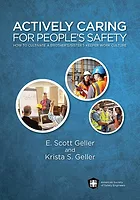
E. Scott Geller, Ph.D., is Alumni Distinguished Professor, Center for Applied Behavior Systems, Virginia Tech, and senior partner with Safety Performance Solutions, Blacksburg, VA. For more information visit www.safetyperformance.com. "Actively Caring for People's Safety: How to cultivate a brother’s/sister’s keeper work culture," co-authored by Scott’s daughter Krista, was recently published by ASSE. Scott’s 15-minute TEDX talk on You Tube can be accessed at: https://www.youtube.com/watch?v=7sxpKhIbr0E


Recommended Content

JOIN TODAY
to unlock your recommendations.

Already have an account? Sign In

  • forklift safety

    Exploring the latest technologies in forklift safety

    With more staff and more stock in warehousing now more...
    Facility Safety
    By: Josh Cramer
  • welding

    All about welder’s flash or arc eye

    A flash burn is a painful inflammation of the cornea,...
    Environmental Health and Safety
  • dangerous jobs

    The 10 most dangerous jobs in the U.S.

    On-the-job deaths have been rising — hitting the highest...
    Transportation Safety
    By: Benita Mehta
Manage My Account
  • eMagazine Subscriptions
  • ISHN Newsletter & Other Newsletter Alerts
  • Online Registration
  • Manage My Preferences
  • Subscription Customer Service

More Videos

Sponsored Content

Sponsored Content is a special paid section where industry companies provide high quality, objective, non-commercial content around topics of interest to the ISHN audience. All Sponsored Content is supplied by the advertising company and any opinions expressed in this article are those of the author and not necessarily reflect the views of ISHN or its parent company, BNP Media. Interested in participating in our Sponsored Content section? Contact your local rep!

close
  • man wearing the the Sundström SR200 Full Face Mask Respirator
    Sponsored byOHD

    5 Fit Testing Mistakes That Could Cost You

  • This image shows Magid AcuSpex polarized blue mirrored safety glasses.
    Sponsored byMagid Glove and Safety

    Construction PPE Guide: What Crews Need for Each Task

  • lone worker in confined space
    Sponsored byAlphasense Ltd.

    GET THE LEAD OUT of your Safety Oxygen Sensors!

Popular Stories

SpaceX 7 launch

OSHA Investigating Fatal Fall at SpaceX Starbase

Worker Impairment

How to Tell When a Co-Worker is Impaired? A Safety Pro’s Challenge

psychology in the workplace

Most Workplaces Measure Psychological Safety, Ignoring Psychosocial Risks

top 10 most dangerous jobs

Poll

Seasonal Readiness

With the federal heat stress prevention rule on the horizon, which area of your safety program needs the most attention?
View Results Poll Archive

Products

Surviving an OSHA Audit A Management Guide, 2nd Edition

Surviving an OSHA Audit A Management Guide, 2nd Edition

See More Products

ISHN Podcasts

Related Articles

  • ASSE

    Hot off the ASSE press: Actively Caring for People’s Safety

    See More
  • Actively Caring for People’s Safety

    4 STEPS to cultivating a brother’s/sister’s keeper culture

    See More
  • actively caring for people, behavior-based safety

    Actively caring for people’s safety

    See More

Related Products

See More Products
  • Top Ten Pitfalls in OSHA Recordkeeping and How to Avoid Them

See More Products
×

Become a Leader in Safety Culture

Build your knowledge with ISHN, covering key safety, health and industrial hygiene news, products, and trends.

JOIN TODAY
  • RESOURCES
    • Advertise
    • Contact Us
    • Directories
    • Manufacturing Division
    • Store
    • Want More
  • SIGN UP TODAY
    • Create Account
    • eMagazine
    • Newsletters
    • Customer Service
    • Manage Preferences
  • SERVICES
    • Marketing Services
    • Reprints
    • Market Research
    • List Rental
    • Survey/Respondent Access
  • STAY CONNECTED
    • LinkedIn
    • Facebook
    • YouTube
    • X (Twitter)
  • PRIVACY
    • PRIVACY POLICY
    • TERMS & CONDITIONS
    • DO NOT SELL MY PERSONAL INFORMATION
    • PRIVACY REQUEST
    • ACCESSIBILITY

Copyright ©2026. All Rights Reserved BNP Media, Inc. and BNP Media II, LLC.

Design, CMS, Hosting & Web Development :: ePublishing