ISHN logo
search
cart
facebook twitter linkedin youtube
  • Sign In
  • Create Account
  • Sign Out
  • My Account
ISHN logo
  • NEWS
    • Today's News
    • Global Safety News
    • Government Regulations
  • PRODUCTS
    • Product Innovations
    • Featured Products
  • TOPICS
    • Environmental Health and Safety
    • Facility Safety
    • Workplace Health
    • Occupational Safety
    • PPE
    • More Topics
  • CONSTRUCTION
  • TECHNOLOGY
  • COLUMNS
    • Best Practices
    • Dave Johnson: What’s going on
    • Editorial Comments
    • Leading Safety
  • MULTIMEDIA
    • ISHN Podcast
    • Videos
    • Cold Stress Education Quiz
    • Webinars
    • White Papers
  • MORE
    • Buyer's Guide
    • Newsletters
    • Convention Companion
    • Polls
    • Events
    • ISHN Store
    • Sponsor Insights
  • EMAGAZINE
    • eMagazine
    • Archived Issues
    • Contact
    • Advertise
  • JOIN TODAY!

Combat combustible dust

By Beth Pullin
January 11, 2009


In November 2006, the U.S. Chemical Safety and Hazard Investigation Board (CSB) released the results of a three-year study regarding dust explosions. The organization concluded that dust explosions in factory and industrial-type settings were much more common and serious than had previously been believed.

Among their findings:
  • There have been at least 281 dust-related fires/explosions in industrial facilities from 1980 to 2005
  • Seven of these explosions were considered “catastrophic,” involved multiple facilities, and resulted in significant negative community economic impact
  • No current OSHA standards comprehensively address the problem and how to prevent combustible dust explosions
At the end of its report, the CSB added this disclaimer:

“The combustible dust incidents included are likely only a small sampling, as no federal or state agency keeps specific statistics on combustible dust incidents, nor does any single data source provide a comprehensive collection of all these incidents.”

The basics on (industrial) dust
Many types of materials, including wood, metals, and nonmetallic materials can burn and possibly explode if small enough and in large enough concentrations. Polishing, grinding, cutting, and shaping materials cause the dust to become airborne and then settle on surfaces, equipment, and floors. If “stirred up,” it can cause dust clouds that potentially can cause an explosion.

It appears the amounts of accumulated dust necessary for an explosion can be far less than recognized. At one explosion in 2003 that killed six people, the dust accumulation was less than 0.25 inches deep. It is believed that once more than 1/32 of an inch of dust covers over five percent of a room’s surface, there is a hazard for a dust explosion.

But how does the fire or explosion actually occur? Accumulated dust can be viewed as fuel. Once exposed to heat, the ignition source, the “fuel” explodes. This scenario has been simplified, but with oxygen present, it creates the classic “fire triangle” combining all the elements necessary for a fire.

Facility managers should also know there are actually two types of dust explosions. A primary explosion occurs within a machine, a specific room, or area. A secondary explosion occurs when dust that has accumulated on floor surfaces becomes airborne and becomes ignited. This secondary, unconfined explosion can generate other explosions within the same facility.

Prevention
Professor Bill Kauffman of the University of Michigan, a leading expert on dust explosions, says there is only one option: remove the dust. Since these explosions occur within equipment, silos, storage and other enclosed areas, cleaning and maintenance of these machines and areas is paramount. The goal is to keep the dust and dust accumulation away from ignition sources. Kauffman says that there are also various explosion protection methods. Among these are:
  • Explosion relief venting (rupture disks)
  • Explosion suppression
  • Oxygen concentration reduction.
But probably the best way to prevent secondary dust explosions centers on enhanced housekeeping. Reducing dust accumulation on floors reduces the chances that it can be ignited, causing a fire or explosion.

Develop a formalized housekeeping plan that applies to both your workers and cleaning professionals. Often, floor areas around work stations are swept to remove dust, however that can cause the dust to become airborne. Instead of sweeping, manual sweepers can be employed to gather and trap the dust. Because they are manually operated, there are no heat or ignition sources, which makes them safe to use.

Along with enhanced housekeeping, consider conducting more workforce training and education programs to help keep workers aware of the problem of dust. Additionally, canvass warehouse and industrial facilities for potential ignition sources and eliminate them wherever possible.

Share This Story

Looking for a reprint of this article?
From high-res PDFs to custom plaques, order your copy today!

Beth is a writer for the professional cleaning, healthcare, and building industries. She may be reached at info@alturasolutions.com.

Recommended Content

JOIN TODAY
to unlock your recommendations.

Already have an account? Sign In

  • forklift safety

    Exploring the latest technologies in forklift safety

    With more staff and more stock in warehousing now more...
    Workplace Training Strategies
    By: Josh Cramer
  • welding

    All about welder’s flash or arc eye

    A flash burn is a painful inflammation of the cornea,...
    Environmental Health and Safety
  • dangerous jobs

    The 10 most dangerous jobs in the U.S.

    On-the-job deaths have been rising — hitting the highest...
    Occupational Safety
    By: Benita Mehta
Manage My Account
  • eMagazine Subscriptions
  • ISHN Newsletter & Other Newsletter Alerts
  • Online Registration
  • Manage My Preferences
  • Subscription Customer Service

More Videos

Sponsored Content

Sponsored Content is a special paid section where industry companies provide high quality, objective, non-commercial content around topics of interest to the ISHN audience. All Sponsored Content is supplied by the advertising company and any opinions expressed in this article are those of the author and not necessarily reflect the views of ISHN or its parent company, BNP Media. Interested in participating in our Sponsored Content section? Contact your local rep!

close
  • man wearing the the Sundström SR200 Full Face Mask Respirator
    Sponsored byOHD

    5 Fit Testing Mistakes That Could Cost You

  • This image shows Magid AcuSpex polarized blue mirrored safety glasses.
    Sponsored byMagid Glove and Safety

    Construction PPE Guide: What Crews Need for Each Task

  • lone worker in confined space
    Sponsored byAlphasense Ltd.

    GET THE LEAD OUT of your Safety Oxygen Sensors!

Popular Stories

SpaceX 7 launch

OSHA Investigating Fatal Fall at SpaceX Starbase

Worker Impairment

How to Tell When a Co-Worker is Impaired? A Safety Pro’s Challenge

psychology in the workplace

Most Workplaces Measure Psychological Safety, Ignoring Psychosocial Risks

top 10 most dangerous jobs

Poll

Seasonal Readiness

With the federal heat stress prevention rule on the horizon, which area of your safety program needs the most attention?
View Results Poll Archive

Products

Surviving an OSHA Audit A Management Guide, 2nd Edition

Surviving an OSHA Audit A Management Guide, 2nd Edition

See More Products

ISHN Podcasts

Related Articles

  • Chilworth Technology’s dust explosion testing and process safety consulting services help process industries address and mitigate combustible dust hazards

    See More
  • In wake of deadly W. Va. metal dust explosion, CSB renews call for combustible dust standard

    See More
  • Calculating the cost: is housekeeping the best way to reduce combustible dust risks?

    See More

Related Products

See More Products
  • 1119010160.jpg

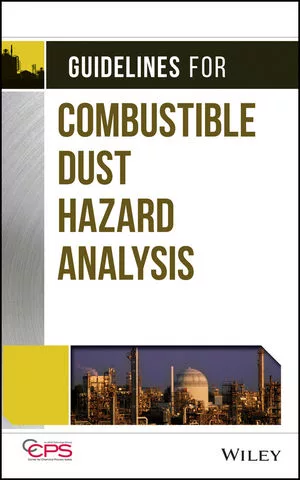
    Guidelines for Combustible Dust Hazard Analysis

See More Products

Related Directories

  • Scientific Dust Collectors

    Scientific Dust Collectors (SDC) began in 1981 when our first patent for improving filter cleaning was issued. Our patented UniFlow Supersonic Nozzle -based cleaning system is where it all starts. Combined with our High Side Inlets, Wide Filter Spacing, and Inlet Baffling, we are able to guarantee performance, efficiency, and filter life. ASHRAE 199 Test Lab on site.
×

Become a Leader in Safety Culture

Build your knowledge with ISHN, covering key safety, health and industrial hygiene news, products, and trends.

JOIN TODAY
  • RESOURCES
    • Advertise
    • Contact Us
    • Directories
    • Manufacturing Division
    • Store
    • Want More
  • SIGN UP TODAY
    • Create Account
    • eMagazine
    • Newsletters
    • Customer Service
    • Manage Preferences
  • SERVICES
    • Marketing Services
    • Reprints
    • Market Research
    • List Rental
    • Survey/Respondent Access
  • STAY CONNECTED
    • LinkedIn
    • Facebook
    • YouTube
    • X (Twitter)
  • PRIVACY
    • PRIVACY POLICY
    • TERMS & CONDITIONS
    • DO NOT SELL MY PERSONAL INFORMATION
    • PRIVACY REQUEST
    • ACCESSIBILITY

Copyright ©2026. All Rights Reserved BNP Media, Inc. and BNP Media II, LLC.

Design, CMS, Hosting & Web Development :: ePublishing