Developing a Lockout/Tagout program

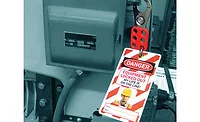
PHOTO: Fluke Corp.
Lockout/tagout can be one of the most important and most difficult safety programs to administer. A good lockout/tagout procedure covers all aspects of 29 CFR 1910.147, but should not be so complicated that it is difficult to implement. Comprehensive and effective employee training is essential in developing a program that is practical and works.
Let’s look at six aspects of lockout/tagout that will help make your program a success.
1 Training
The level of training for lockout/tagout will vary depending on job responsibilities. It’s good practice to train all employees as authorized employees. Training should include practical hands-on knowledge as well as classroom training and written testing. Since not everyone learns the same way, use a multimedia approach to training that combines lecture, video, hands-on and computer.
A comprehensive audit program is essential to ensure that employees have retained sufficient knowledge to perform their duties and responsibilities under the lockout/tagout procedure. When audits find gaps in the program, it is a regulatory requirement to retrain individuals who show that they have an insufficient understanding of the program. A change in job assignment or new equipment also triggers the retraining requirement.
2 Clear responsibilities
Establishing clear responsibilities written out as part of the procedure helps to avoid confusion. Teaching these responsibilities as part of training and making sure all employees understand their individual responsibilities will result in a more smoothly implemented program.
All employees are affected by the lockout/tagout program even if they never hang a tag or lock. Responsibilities should be established for all facility employees regardless of job assignment. It is also important to have a supervisor or foreman on each shift that has overall responsibility and authority to administer the program. If equipment is to remain under lockout/tagout over a shift change, have one individual position responsible for the lockout/tagout program to ensure a smooth turnover.
3 Using computer programs
There are many lockout/tagout software products available to assist in the administration of your program. Programs may require a good deal of time to set up, but once established, they can save a facility time and money.
While lockout/tagout software programs offer many advantages, it is also important to have a procedure that can stand alone without the need for a computer, as there may be times when the software is unavailable due to computer problems.
4 Handling violations
In order for a lockout/tagout program to be effective, everyone has to follow the rules. This includes contractors as well as employees. While everyone makes mistakes from time to time, willful violations cannot be tolerated. Violations must be investigated and swift corrective action must be taken. These issues should be discussed during training and clearly stated in the procedure.
5 Adding second checks
Many times a lockout/tagout is written and hung without having an individual do a second check. This can be a problem in facilities that have multiple units or identical pieces of equipment, as the wrong equipment may get locked out.
Having an additional step in the process where the lockout/tagout is walked down by an employee that was not involved in the origin of the procedure is beneficial. Approximately 30 percent of the time, some type of problem is found by an independent second check.
6 Audits
Weekly or monthly audits help to keep the lockout/tagout program on track. Regular audits can identify small problems before they become larger. These audits must be performed by an authorized employee who is not using the energy control procedure being audited. Audits should include:
- Review of the lockout/tagout log;
- Ensure active lockout/tagouts are logged as active;
- Ensure closed lockout/tagouts are properly closed and filed;
- Perform a physical walkdown of several active lockout/tagouts to ensure all information is correct and all tags are hanging on the correct devices;
- Document the audit.
SIDEBAR: Verify lockout/tagout electrically safe status
For non-electricians working in electrical environmentsBy Duane Smith
Lockout/tagout procedures specify the steps electricians must follow to remove power from an electrical circuit or panel, and to lockout and tag the panel or circuit so that no one can re-energize it while work is in progress.
An increasing number of specialty contractors, ranging from health inspectors to thermographers, must work near electrical panels and exposed circuits. For their own safety, these contractors and anyone else who may be exposed to live voltages should understand lockout/tagout procedures and know how to verify that power has been removed from the environment before beginning work, especially if live circuits may be nearby. Use of a non-contact voltage detector can verify that the work environment is safe in terms of exposure to live circuits or conductors. Industrial non-contact detectors can be relatively inexpensive and safety-rated up to 1,000 volts AC.
Lockout/tagout electrical disconnect principles and procedures are described in industry standards like NFPA 70E, Standard for Electrical Safety in the Workplace. NFPA 70E requires those working on exposed conductors and circuit components operating at 50 volts or more to use lockout/tagout devices and procedures and be properly trained. This document also outlines specific circumstances when work on live circuits is permitted and sets approach boundaries for both qualified and unqualified personnel.
Standard lockout/tagout process
Conducted by the electrician
- Open disconnecting device(s) for each source of power supply.
- Visually verify that all blades of the disconnecting devices are fully open or that circuit breakers are in the fully disconnected position.
- Use a voltage detector or other test tool to verify that the panel/circuit is de-energized.
Conducted by the non-electrician
- Visually verify that the electrician has applied lockout/tagout devices in accordance with a documented and established policy and that he/she has declared the area or equipment electrically safe.
- Test your voltage detector on a known live circuit to make sure it works.
- Use your voltage detector to test the surrounding equipment cabinets and circuit panels (covers, not wiring) to ensure everything is de-energized or grounded.
- Test each phase conductor or circuit breaker for the absence of voltage. The wand should read no live electricity on each test.
- After each test, check the voltage detector wand again on the known live circuit.
Only after the area has been declared electrically safe should you:
Duane Smith is a specialist in digital multimeters for Fluke Corp., a manufacturer of electrical test and measurement products. He can be reached at duane.smith@fluke.com.
Looking for a reprint of this article?
From high-res PDFs to custom plaques, order your copy today!