ISHN logo
search
cart
facebook twitter linkedin youtube
  • Sign In
  • Create Account
  • Sign Out
  • My Account
ISHN logo
  • NEWS
    • Today's News
    • Global Safety News
    • Government Regulations
  • PRODUCTS
    • Product Innovations
    • Featured Products
  • TOPICS
    • Environmental Health and Safety
    • Facility Safety
    • Workplace Health
    • Occupational Safety
    • PPE
    • More Topics
  • CONSTRUCTION
  • TECHNOLOGY
  • COLUMNS
    • Best Practices
    • Dave Johnson: What’s going on
    • Editorial Comments
    • Leading Safety
  • MULTIMEDIA
    • ISHN Podcast
    • Videos
    • Cold Stress Education Quiz
    • Webinars
    • White Papers
  • MORE
    • Buyer's Guide
    • Newsletters
    • Convention Companion
    • Polls
    • Events
    • ISHN Store
    • Sponsor Insights
  • EMAGAZINE
    • eMagazine
    • Archived Issues
    • Contact
    • Advertise
  • JOIN TODAY!

Emergency showers

October 1, 2003
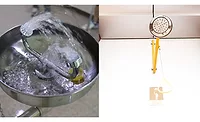
An emergency shower is a fairly basic apparatus, drenching victims with substantial quantities of water. But the equipment is rarely used in its "simplest terms."

Victims are often exposed to hazardous chemicals such as corrosives (acids and bases), oxidizers, and solvents. The object is to both remove the hazardous materials to halt further injury, and to mitigate the effects of the exposure to that point. Since contact with most hazardous materials requires at least 15 minutes of immediate and constant flushing, having the correct volume of water and a minimum water pressure available are critical.

Three choices

There are three emergency shower system variations to consider: 1) Plumbed-in assets, where there is access to municipal water; 2) Air-charged systems offering a stable, low-mounted water supply that is pressure fed for use, via bottled compressed air; and 3) Gravity-fed systems that have a supply of water suspended over the emergency equipment until needed. Each of the three variations can be configured as a shower, eyewash or combination system.

The best solution is a plumbed-in system in the closest proximity to potential use. That's because plumbed-in equipment tempers the water and can most easily treat multiple victims. Tempering supply water minimizes the possibility of hypothermia, which can occur when a victim is exposed to the temperatures of many areas' tap water for 15 continuous minutes. And since plumbed-in systems have the shortest recovery time, their ability to treat multiple victims is readily apparent.

If the water supply is either unstable or not available at all, your best choice is air-charged shower/eyewash systems. In these products, a sufficient volume of water is held for use at the system, in a pressurized state, and is consistently fed through the emergency equipment at the proper pressure (up to 50 psi), for the entire 15-minute shower cycle.

In comparison, many gravity-fed systems do not hold sufficient volumes of water to properly address the ANSI standard. Basic calculations of volume and pressure indicate that a 1,200-liter holding tank, for example, cannot supply the ANSI required minimum of 20 gpm over a full 15-minute use cycle. Some gravity-fed systems have the ability to refill the holding tank while in operation. But that refill process (at a typical 10 psi) will not keep pace with the outflow. Thus, the level in the tank constantly diminishes throughout the use cycle.

Also, the design of gravity-fed equipment uses the water pressure created by elevating the tank above the system, as well as the physical pressure of the weight of the water in the tank pressing downward. As indicated, the water level drops throughout the use cycle. This leads you to believe that the pressure will also decrease, most likely to below the ANSI required 20 gpm minimum flow rate.

Remember, you need the correct volume of water and a minimum water pressure available to get the most from your emergency shower equipment.

Share This Story

Looking for a reprint of this article?
From high-res PDFs to custom plaques, order your copy today!

Recommended Content

JOIN TODAY
to unlock your recommendations.

Already have an account? Sign In

  • forklift safety

    Exploring the latest technologies in forklift safety

    With more staff and more stock in warehousing now more...
    Facility Safety
    By: Josh Cramer
  • welding

    All about welder’s flash or arc eye

    A flash burn is a painful inflammation of the cornea,...
    Environmental Health and Safety
  • dangerous jobs

    The 10 most dangerous jobs in the U.S.

    On-the-job deaths have been rising — hitting the highest...
    Government Safety Regulations
    By: Benita Mehta
Manage My Account
  • eMagazine Subscriptions
  • ISHN Newsletter & Other Newsletter Alerts
  • Online Registration
  • Manage My Preferences
  • Subscription Customer Service

More Videos

Sponsored Content

Sponsored Content is a special paid section where industry companies provide high quality, objective, non-commercial content around topics of interest to the ISHN audience. All Sponsored Content is supplied by the advertising company and any opinions expressed in this article are those of the author and not necessarily reflect the views of ISHN or its parent company, BNP Media. Interested in participating in our Sponsored Content section? Contact your local rep!

close
  • man wearing the the Sundström SR200 Full Face Mask Respirator
    Sponsored byOHD

    5 Fit Testing Mistakes That Could Cost You

  • This image shows Magid AcuSpex polarized blue mirrored safety glasses.
    Sponsored byMagid Glove and Safety

    Construction PPE Guide: What Crews Need for Each Task

  • lone worker in confined space
    Sponsored byAlphasense Ltd.

    GET THE LEAD OUT of your Safety Oxygen Sensors!

Popular Stories

SpaceX 7 launch

OSHA Investigating Fatal Fall at SpaceX Starbase

Worker Impairment

How to Tell When a Co-Worker is Impaired? A Safety Pro’s Challenge

psychology in the workplace

Most Workplaces Measure Psychological Safety, Ignoring Psychosocial Risks

top 10 most dangerous jobs

Poll

Seasonal Readiness

With the federal heat stress prevention rule on the horizon, which area of your safety program needs the most attention?
View Results Poll Archive

Products

Surviving an OSHA Audit A Management Guide, 2nd Edition

Surviving an OSHA Audit A Management Guide, 2nd Edition

See More Products

ISHN Podcasts

Related Articles

  • There’s no excuse for not installing emergency showers & eyewashes

    See More
  • emergency showers & eyewash stations

    30 things to know about emergency showers & eyewash stations

    See More
  • Q&A - Emergency showers & eyewashes

    See More

Related Products

See More Products
  • 0470074876vol4.jpg

    Patty's Industrial Hygiene, Volume 4, Program Management and Specialty Areas of Practice , 6th Edition

See More Products

Related Directories

  • Hughes Safety Showers

    Hughes design and manufacture emergency safety showers, eye/face wash units and decontamination equipment to provide you with a safer working environment, greater protection against serious injury and peace of mind that you’re compliant with crucial safety standards. From mains and tank fed safety showers to portable self-contained eye washes, we have solutions for every environment.
×

Become a Leader in Safety Culture

Build your knowledge with ISHN, covering key safety, health and industrial hygiene news, products, and trends.

JOIN TODAY
  • RESOURCES
    • Advertise
    • Contact Us
    • Directories
    • Manufacturing Division
    • Store
    • Want More
  • SIGN UP TODAY
    • Create Account
    • eMagazine
    • Newsletters
    • Customer Service
    • Manage Preferences
  • SERVICES
    • Marketing Services
    • Reprints
    • Market Research
    • List Rental
    • Survey/Respondent Access
  • STAY CONNECTED
    • LinkedIn
    • Facebook
    • YouTube
    • X (Twitter)
  • PRIVACY
    • PRIVACY POLICY
    • TERMS & CONDITIONS
    • DO NOT SELL MY PERSONAL INFORMATION
    • PRIVACY REQUEST
    • ACCESSIBILITY

Copyright ©2026. All Rights Reserved BNP Media, Inc. and BNP Media II, LLC.

Design, CMS, Hosting & Web Development :: ePublishing