ISHN logo
search
cart
facebook twitter linkedin youtube
  • Sign In
  • Create Account
  • Sign Out
  • My Account
ISHN logo
  • NEWS
    • Today's News
    • Global Safety News
    • Government Regulations
  • PRODUCTS
    • Product Innovations
    • Featured Products
  • TOPICS
    • Environmental Health and Safety
    • Facility Safety
    • Workplace Health
    • Occupational Safety
    • PPE
    • More Topics
  • CONSTRUCTION
  • TECHNOLOGY
  • COLUMNS
    • Best Practices
    • Dave Johnson: What’s going on
    • Editorial Comments
    • Leading Safety
  • MULTIMEDIA
    • ISHN Podcast
    • Videos
    • Cold Stress Education Quiz
    • Webinars
    • White Papers
  • MORE
    • Buyer's Guide
    • Newsletters
    • Convention Companion
    • Polls
    • Events
    • ISHN Store
    • Sponsor Insights
  • EMAGAZINE
    • eMagazine
    • Archived Issues
    • Contact
    • Advertise
  • JOIN TODAY!
Columns

Executive strategies
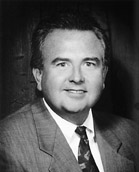
By Kyle B. Dotson
June 21, 2001
Dotson
Your CEO turns to you at a meeting and asks, “How do we measure industrial hygiene performance?” What would you say?

It’s not an easy question to answer. There may be a few exceptions, but I have found scant evidence of general performance metrics for industrial hygiene that apply across multiple industry sectors and meet the needs of different levels within one organization — an ironic fact from a profession so extremely well versed in and focused on the art and science of exposure measurement.

Until recent years, most of the environmental health and safety key performance indicators available to senior managers have been limited to quantitative measures of safety and environmental performance and have focused on results, or “lagging indicators” (lost-time injuries and pollution releases).

Now corporations are increasingly interested in proactive measures, or “leading indicators” of EHS performance. Industrial hygiene staffs must see to it that the EHS metric that “rolls up” to corporate senior managers and the boardroom adequately reflects progress, or lack of progress, in the “H part” of EHS.

Different agendas

First, you need to consider how the purpose of EHS metrics varies at different levels of the organization:

  • External to the organization, and at the board of directors level, metrics determine acceptability of performance.

  • At the CEO and corporate senior manager level, they gauge management culture, establish strategic direction, and drive improvement or other desired change.

  • At the business unit level, metrics serve to plan, implement, monitor, and improve business performance delivery systems.

  • At the plant or operations level, EHS metrics identify new risks; assess, manage, or prevent known risks; address variance in controls; facilitate improvement and recognize effort.

    Traditional IH metrics of exposure assessment are crucial at the site and business unit levels, but generally fail to deliver against objectives at the corporate level. To compensate, progressive corporations have developed an exposure index along the lines of “Number or Percent of Exposures Greater than the Limit.” These numbers might be an adequate metric of IH performance for executives, but they fail to deliver what board members and external stakeholders need to determine acceptability of performance.


Should illnesses, injuries count?

What about counting illnesses and occupational diseases as metrics? After all, injury rates are a good lagging indicator of recent experience that can be used to make decisions about the future. But many occupational diseases have a lag time of many years, making currently reported data more indicative of what your company was doing in the 1970s than of the 21st century. Clearly, illnesses count as a measure of failure of organizations and their managers from long ago. But a better performance metric for IH management effectiveness is needed to benchmark the current efforts of American business.

A health risk index

So what single IH metric can all organizations use? One approach is to express all exposures to all agents as a single composite average. This yields a metric that is a performance index of all exposures for all “similar exposure groups” for the entire workforce as a percent of the applicable occupational exposure limit. This “Health Risk Index” is expressed as a number from zero (no one is exposed to anything) to 100 (everyone is exposed to everything at the currently published limit).

With all of its blemishes, this metric could be benchmarked with industry peers, drive performance improvement of industrial hygiene, and even assist in reversing the unfortunate decline of the IH profession, all with little to no fear of plaintiff attorneys having a field day with the data.

If a company already conforms to the best practices of exposure assessment, it has essentially all of the data needed to develop a Health Risk Index. Standard protocols and methodologies for exposure assessment have been widely available as early as the publication of the Occupational Exposure Sampling Strategy Manual by NIOSH in 1977. Another well-defined process is the excellent 1991 publication, A Strategy for Occupational Exposure Assessment, published by the American Industrial Hygiene Association.

Exposing existing data

Such exposure assessment methodologies are critical for developing the underlying data that is the basis for proactive corporate performance indicators of industrial hygiene management effectiveness. In fact, implementing a risk index will show where existing data is weak, changing or unknown, driving management to support additional exposure assessment.

The infrastructure for reporting health performance measures such as a Health Risk Index exists in many major corporations. Site operations of large corporations routinely report safety statistics at least monthly to business units and/or corporate. Plus, inexpensive software tools are now widely available that can deliver industrial hygiene metrics to senior management. These tools are essential to handle the complexity of the compilation that is required to combine industrial hygiene exposure assessment and roll it up to senior managers.

What’s the best answer?

I believe the best answer for the CEO’s question is, “We have adopted a total risk index for industrial hygiene. Our Health Risk Index is a measure of the total exposure of the total workforce to all known occupational disease risks.”

The next question is one that most vice presidents of EHS can anticipate. “How do we compare with our competitors?” Until more companies proactively begin to compile their existing exposure data in a readily comparable metric such as a Health Risk Index, you won’t have a good answer for that one.

www.dotsongroup.com

Share This Story

Looking for a reprint of this article?
From high-res PDFs to custom plaques, order your copy today!

Kyle is president of The Dotson Group, LLC, an international management consulting firm in strategic safety and health leadership. Kyle can be reached at (281) 290-9294, www.dotsongroup.com

Recommended Content

JOIN TODAY
to unlock your recommendations.

Already have an account? Sign In

  • forklift safety

    Exploring the latest technologies in forklift safety

    With more staff and more stock in warehousing now more...
    Workplace Training Strategies
    By: Josh Cramer
  • welding

    All about welder’s flash or arc eye

    A flash burn is a painful inflammation of the cornea,...
    Environmental Health and Safety
  • dangerous jobs

    The 10 most dangerous jobs in the U.S.

    On-the-job deaths have been rising — hitting the highest...
    Occupational Safety
    By: Benita Mehta
Manage My Account
  • eMagazine Subscriptions
  • ISHN Newsletter & Other Newsletter Alerts
  • Online Registration
  • Manage My Preferences
  • Subscription Customer Service

More Videos

Sponsored Content

Sponsored Content is a special paid section where industry companies provide high quality, objective, non-commercial content around topics of interest to the ISHN audience. All Sponsored Content is supplied by the advertising company and any opinions expressed in this article are those of the author and not necessarily reflect the views of ISHN or its parent company, BNP Media. Interested in participating in our Sponsored Content section? Contact your local rep!

close
  • man wearing the the Sundström SR200 Full Face Mask Respirator
    Sponsored byOHD

    5 Fit Testing Mistakes That Could Cost You

  • This image shows Magid AcuSpex polarized blue mirrored safety glasses.
    Sponsored byMagid Glove and Safety

    Construction PPE Guide: What Crews Need for Each Task

  • lone worker in confined space
    Sponsored byAlphasense Ltd.

    GET THE LEAD OUT of your Safety Oxygen Sensors!

Popular Stories

SpaceX 7 launch

OSHA Investigating Fatal Fall at SpaceX Starbase

Worker Impairment

How to Tell When a Co-Worker is Impaired? A Safety Pro’s Challenge

psychology in the workplace

Most Workplaces Measure Psychological Safety, Ignoring Psychosocial Risks

top 10 most dangerous jobs

Poll

Seasonal Readiness

With the federal heat stress prevention rule on the horizon, which area of your safety program needs the most attention?
View Results Poll Archive

Products

Surviving an OSHA Audit A Management Guide, 2nd Edition

Surviving an OSHA Audit A Management Guide, 2nd Edition

See More Products

ISHN Podcasts

Related Articles

  • Executive strategies

    See More
  • How to coach senior managers

    See More
  • 'We're different here'

    See More

Related Products

See More Products
  • 2016_WM.jpg

    ANSI/ASSE Z9.11-2016 Laboratory Decommissioning

  • safety law.jpg

    Safety Law: Legal Aspects in Occupational Safety and Health

  • 1119906652.webp

    Alive and Well at the End of the Day: The Supervisor's Guide to Managing Safety in Operations, 2E

See More Products

Events

View AllSubmit An Event
  • June 7, 2017

    Ergonomics webinar offered by ORCHSE Strategies

    For the first time ever, ORCHSE Strategies is opening its webinars to the public. Ergonomic Design for a Multi-Generational Workforce Webinar will be led by Josh Kerst, CIE, CSP, on June 7, 2017 from 10-11:30 am.
View AllSubmit An Event

Related Directories

  • Florida Chamber Safety Council

    With vision and strategy guided by a Statewide Leadership Advisory Board, the Florida Chamber Safety Council is creating national standards for workplace safety, implementing first-in-the-nation programs to prevent injuries, reduce operational costs, and improve production, performance, and corporate safety culture.
×

Become a Leader in Safety Culture

Build your knowledge with ISHN, covering key safety, health and industrial hygiene news, products, and trends.

JOIN TODAY
  • RESOURCES
    • Advertise
    • Contact Us
    • Directories
    • Manufacturing Division
    • Store
    • Want More
  • SIGN UP TODAY
    • Create Account
    • eMagazine
    • Newsletters
    • Customer Service
    • Manage Preferences
  • SERVICES
    • Marketing Services
    • Reprints
    • Market Research
    • List Rental
    • Survey/Respondent Access
  • STAY CONNECTED
    • LinkedIn
    • Facebook
    • YouTube
    • X (Twitter)
  • PRIVACY
    • PRIVACY POLICY
    • TERMS & CONDITIONS
    • DO NOT SELL MY PERSONAL INFORMATION
    • PRIVACY REQUEST
    • ACCESSIBILITY

Copyright ©2026. All Rights Reserved BNP Media, Inc. and BNP Media II, LLC.

Design, CMS, Hosting & Web Development :: ePublishing