ISHN logo
search
cart
facebook twitter linkedin youtube
  • Sign In
  • Create Account
  • Sign Out
  • My Account
ISHN logo
  • NEWS
    • Today's News
    • Global Safety News
    • Government Regulations
  • PRODUCTS
    • Product Innovations
    • Featured Products
  • TOPICS
    • Environmental Health and Safety
    • Facility Safety
    • Workplace Health
    • Occupational Safety
    • PPE
    • More Topics
  • CONSTRUCTION
  • TECHNOLOGY
  • COLUMNS
    • Best Practices
    • Dave Johnson: What’s going on
    • Editorial Comments
    • Leading Safety
  • MULTIMEDIA
    • ISHN Podcast
    • Videos
    • Cold Stress Education Quiz
    • Webinars
    • White Papers
  • MORE
    • Buyer's Guide
    • Newsletters
    • Convention Companion
    • Polls
    • Events
    • ISHN Store
    • Sponsor Insights
  • EMAGAZINE
    • eMagazine
    • Archived Issues
    • Contact
    • Advertise
  • JOIN TODAY!

Foot safety

September 1, 2005
Foot protection means guarding your toes, ankles and feet from injury. Believe it or not, your feet have 26 bones for support and 38 joints for movement — in each foot. Feet also have blood vessels, ligaments, muscles and nerves, which is why it hurts when you stub your toe or drop something on your foot. Your feet are a critical part of your body that you use everyday and, in some cases, enable you to do your job effectively.

Let’s examine the different types of foot protection available to workers and best practices for fitting and maintenance.

Types of protection

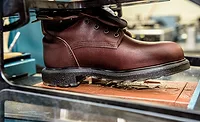
Steel toe — Steel toe, or protective toecap, footwear utilizes steel or composite cap to help reduce toe injuries from falling or rolling objects. In addition to falling or rolling objects, protective toecap impact-resistant footwear must be worn where there are hazards of sharp objects, hot objects and saw cutting. This would include workplaces where heavy materials and/or heavy equipment are used.

Metatarsal guard — Made of aluminum, steel fiber or plastic to protect the top of the foot, commonly called the instep, protective footwear with metatarsal impact resistance must be worn where there are hazards of falling objects, rolling objects, sharp objects, hot objects and saw cutting. Galvanized steel foot guards provide extra protection for the bridge of the foot.

Puncture resistant — This protective footwear utilizes a steel mid-sole to provide protection from sharp objects (such as nails, wire, tacks, scrap metal or glass) penetrating through the sole of the shoe into the wearer’s foot. This footwear is also applicable for protection against hot objects or saw cutting.

Electrical hazard — This type of protective footwear is designed to provide protection against open circuits of 600 volts or less. While no metal is allowed in the sole or the heel, the protective toe can be made of steel or composite.

Conductive — In workplaces where there is a hazard of static ignition, conductive sole protective footwear must be worn. Conductive footwear incorporates a sole that is constructed of a conductive material designed to electrically ground the foot. Conductive soles, however, offer no protection where there is a hazard of an electric shock.

Static dissipating — In some workplaces, where flammable or explosive materials are present or where the buildup of static electricity must be minimized, workers may be required to wear static dissipative footwear. Static dissipative footwear incorporates a sole that allows small charges of electricity to be dissipated into the walking surface, thus reducing the accumulation of static electricity. SD footwear is generally used in the electronics industry to prevent damage to electrical circuits.

Chemical resistant — Chemical-resistant footwear is usually constructed with impermeable rubber or neoprene. This footwear is to be worn in areas with potential chemical or corrosive splashes. Check the MSDS to match footwear with individual chemicals.

How do they fit?

Protective footwear should be comfortable — not too loose or too tight. When wearing the footwear, you should be able to slip one finger in the back of the shoe or boot. This will ensure you have enough room for your toes in the front. You should be able to move your toes freely and bend your foot without feeling the steel toe.

Protective boots or shoes will not shrink or stretch to fit your feet, so you must get a good fit initially. Take the boots or shoes home and walk around in them. Make sure they are comfortable and fit right. If you find they do not after wearing them for an hour or so, you should be able to take them back for another size. Check the return policy of the supplier where you purchase your boots or shoes to make sure this is acceptable.

Wear them well

When you first purchase your boots or shoes, treat them with a water repellent to protect the leather or canvas. You may not work near or with water, but if you wear your boots outside on a rainy day, you’ll be glad they are water treated. Water repellent treatment is available at most shoe and boot stores or a local general retailer.

Regularly inspect your footwear for cuts, separated seams or other wear and tear. If damage exists, or if something substantially heavy falls onto your steel toe and weakens it, it’s probably time to buy a new pair of protective boots or shoes.

Train your employees regularly on the proper use and limitations of their protective footwear. Show them how to properly wear and care for their particular footwear.

Share This Story

Looking for a reprint of this article?
From high-res PDFs to custom plaques, order your copy today!

Recommended Content

JOIN TODAY
to unlock your recommendations.

Already have an account? Sign In

  • forklift safety

    Exploring the latest technologies in forklift safety

    With more staff and more stock in warehousing now more...
    Facility Safety
    By: Josh Cramer
  • welding

    All about welder’s flash or arc eye

    A flash burn is a painful inflammation of the cornea,...
    Environmental Health and Safety
  • dangerous jobs

    The 10 most dangerous jobs in the U.S.

    On-the-job deaths have been rising — hitting the highest...
    Transportation Safety
    By: Benita Mehta
Manage My Account
  • eMagazine Subscriptions
  • ISHN Newsletter & Other Newsletter Alerts
  • Online Registration
  • Manage My Preferences
  • Subscription Customer Service

More Videos

Sponsored Content

Sponsored Content is a special paid section where industry companies provide high quality, objective, non-commercial content around topics of interest to the ISHN audience. All Sponsored Content is supplied by the advertising company and any opinions expressed in this article are those of the author and not necessarily reflect the views of ISHN or its parent company, BNP Media. Interested in participating in our Sponsored Content section? Contact your local rep!

close
  • man wearing the the Sundström SR200 Full Face Mask Respirator
    Sponsored byOHD

    5 Fit Testing Mistakes That Could Cost You

  • This image shows Magid AcuSpex polarized blue mirrored safety glasses.
    Sponsored byMagid Glove and Safety

    Construction PPE Guide: What Crews Need for Each Task

  • lone worker in confined space
    Sponsored byAlphasense Ltd.

    GET THE LEAD OUT of your Safety Oxygen Sensors!

Popular Stories

SpaceX 7 launch

OSHA Investigating Fatal Fall at SpaceX Starbase

Worker Impairment

How to Tell When a Co-Worker is Impaired? A Safety Pro’s Challenge

psychology in the workplace

Most Workplaces Measure Psychological Safety, Ignoring Psychosocial Risks

top 10 most dangerous jobs

Poll

Seasonal Readiness

With the federal heat stress prevention rule on the horizon, which area of your safety program needs the most attention?
View Results Poll Archive

Products

Surviving an OSHA Audit A Management Guide, 2nd Edition

Surviving an OSHA Audit A Management Guide, 2nd Edition

See More Products

ISHN Podcasts

Related Articles

  • Safety leadership big foot sightings

    See More
  • Forty foot four stage mast mounted on a fourteen foot trailer released by Larson Electronics

    See More
  • challenges of foot protection programs

    5 ways to overcome challenges of foot protection programs

    See More

Related Products

See More Products
  • 9780367861148.jpg

    LEAD Safety A Practical Handbook for Frontline Supervisors and Safety Practitioners

  • download (1).jpg

    Safety Rebels Real-World Transformations in Health and Safety

  • safety law.jpg

    Safety Law: Legal Aspects in Occupational Safety and Health

See More Products

Events

View AllSubmit An Event
  • March 26, 2026

    Electrical Safety Essentials: A Practical Guide for Safety Professionals

    ON DEMAND: This one-hour webinar provides general safety professionals with a practical, non-technical overview of electrical hazards, injury mechanisms, and prevention strategies aligned with OSHA 29 CFR 1910 Subpart S and related standards.
View AllSubmit An Event

Related Directories

  • PK Safety

    After 75+ years in the safety business, we understand the importance of staying safe in your work and home environments. We’ve vetted thousands of safety equipment and products including gas detectors, confined space gear, fall protection and respirators. We are also a Factory Authorized Service Center for gas monitors with factory trained certified technicians in house.
×

Become a Leader in Safety Culture

Build your knowledge with ISHN, covering key safety, health and industrial hygiene news, products, and trends.

JOIN TODAY
  • RESOURCES
    • Advertise
    • Contact Us
    • Directories
    • Manufacturing Division
    • Store
    • Want More
  • SIGN UP TODAY
    • Create Account
    • eMagazine
    • Newsletters
    • Customer Service
    • Manage Preferences
  • SERVICES
    • Marketing Services
    • Reprints
    • Market Research
    • List Rental
    • Survey/Respondent Access
  • STAY CONNECTED
    • LinkedIn
    • Facebook
    • YouTube
    • X (Twitter)
  • PRIVACY
    • PRIVACY POLICY
    • TERMS & CONDITIONS
    • DO NOT SELL MY PERSONAL INFORMATION
    • PRIVACY REQUEST
    • ACCESSIBILITY

Copyright ©2026. All Rights Reserved BNP Media, Inc. and BNP Media II, LLC.

Design, CMS, Hosting & Web Development :: ePublishing