Lessons from ground zero
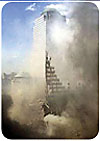
Aviolent explosion rips through your office complex. Multiple fires are burning. An ominous plume of heat, fire, dust, debris and an unknowable mixture of perhaps asbestos, silica, lead and other metals floats into the atmosphere. Winds push the plume toward nearby homes and businesses. Workers are missing and you don’t know how many may be dead.
Firefighters and police and EMTs, over which you have no authority, arrive on the scene. The fire chief says, “Get out of our way.†His guys, and the police, don’t wear proper protection.
Your own workforce is shocked. Some rush past the fires and debris, into the plume, searching for comrades. In their panic, they neglect PPE. So does your CEO when he arrives. Scanning for TV film crews and reporters, he declares, “We’re in control.â€
But you’re not. People are coming in and out of your site in droves. It’s chaotic. You’re operating in the fog of disaster.
Facing the unknown
How do you communicate risk information when confronted with an unprecedented emergency involving unknown health threats?What do you say to your own workforce? To those outside your control, such as the firefighters? To the crowd of reporters? To threatened residents and business owners? And to your CEO, who won’t wear a hard hat or respirator or safety glasses because, “We don’t want to scare people�
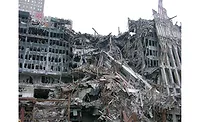
If all this sounds familiar, it’s a hypothetical version of the cloud of terror, toxic contaminants, and confusion that descended on the 16-and-a-half-acre World Trade Center site on the morning of September 11th, 2001.
This past September we saw innumerable news reports and editorials decrying how 9/11 workers were betrayed, inadequately warned of the risks they faced. More than 8,000 lawsuits have been filed by ill firefighters, and thousands more report health problems believed to be related to exposures in the World Trade Center area.
But formal (bulletins, alerts, meetings) and informal and improvised risk communication efforts on the ground had positive outcomes. They received no attention compared to controversial public risk assessments. Not one life was lost in the work area closest to ground zero during the recovery effort. OSHA calculations show that in more than 3.7 million work hours, only 57 serious injuries were recorded at the WTC site.
Here are seven risk communication lessons from the ten-month rescue, recovery and cleanup ordeal at ground zero:
Know what you don’t know
1) Beware of overly optimistic risk assessments. One week after 9/11, EPA Administrator Christine Whitman declared, “I am glad to reassure the people of New York and Washington, D.C., that their air is safe to breathe.†Risk communication expert Peter Sandman calls the statement “horrible crisis communication†and “optimism masquerading as information.â€EPA’s decision to offer assurances when officials genuinely did not realize how serious the health risks would turn out to be was “profoundly mistaken,†says Sandman.
“Over-reassuring messages usually backfire,†he explains. Many people in lower Manhattan were skeptical about whether the air in their homes and offices was safe to breathe. People who are not sure how frightened they ought to be “smell a rat†when hearing what sounds like PR spin, says Sandman. “They resolve their ambivalence by becoming all the more fearful.â€
“Err on the alarming side. Worry more about being cautious,†he concludes.
Public statements influence workers
2) Make the distinction between communicating to your workers and the public. In the aftermath of 9/11, the decision to over-reassure civilians about the offsite risks made it more challenging to warn emergency responders about the very real onsite risks.Sandman offers a possible resolution. Officials could have said something along these lines, he explains:
“Even though we think the air several blocks from the World Trade Center site is probably safe enough for people to start reclaiming their normal lives, we wish we could say the same about the air at the site itself. Recovery workers are spending long hours in dust and debris that very well might be dangerous (and they) really need to keep wearing their safety gear. If people further away also want to wear face masks for a few more days, that extra margin of safety can’t hurt.â€
Don’t be misled into thinking that your workers won’t be influenced by your risk messages to the general public and media in an emergency. Workers at ground zero took the “weakness of the government’s warnings as tantamount to permission to disobey†safety precautions, says Sandman. According to one source on the scene, OSHA personnel spent a lot of time explaining to workers why they needed to wear respirators due to immediate exposures, while people blocks away did not need protection.
Clarity is essential
3) Be specific as possible in your communications. Indeed, a less convoluted form of risk communication than found in public statements took place on “the pile,†the six-story-high mountain of tangled steel and concrete rubble.In a presentation to OSHA’s construction advisory panel on December 6, 2001, by the agency’s New York Regional Administrator Patricia Clark and Stewart Burkhammer, a Bechtel manager who spent two months at ground zero as consulting ES&H director for the site, the two described “rather free and frank†discussions to get the attention of contractors to safety issues.
Using risk assessments, safety pros defined areas where respiratory protection was needed: people who were working over, on or under the pile, and task-specific jobs like cutting and burning and dry debris loading and unloading of trucks, said Clark.
These safety pros were not reticent about informing contractors, firefighters, even politicians and celebrities who visited the site, of the risks they faced — though they often lacked leverage in the most dangerous of areas “on the pile†to back up their risk assessments with discipline or penalties.
“We spent a lot of time with the contractor safety representatives to try to get them to understand what we wanted to accomplish,†said Burkhammer.
In one frightening near catastrophe, 14 firefighters down in a trench looking for bodies were told to get out of the hole as a steel beam weighing 16 tons was hoisted overhead. The beam ripped free of its rigging and plunged into the hole just after the last firefighter climbed out.
One day the film actress Julia Roberts, wearing shorts, a tank top and tennis shoes, was escorted by firefighters to ground zero, recalled Burkhammer. “She was heading right for the plume, she had no respirator, no hard hat, no safety glasses, nothing,†he said. “We… very politely explained to her that she was walking into a death trap, and she turned around and left.â€
“They were issuing warnings†about the need to wear respirators, a high-ranking New York City firefighter who spent a lot of time at ground zero recently told Peter Sandman. “Maybe they weren’t issuing citations, but they were issuing warnings.â€
Use emotional intelligence
4) Understand the emotions and fears you’re dealing with. In the grip of strong emotions — anger over what has happened and possibly the loss of lives, and a determination to take action — firefighters, rescue workers and others on the scene are impatient with safety precautions about possible long-term health risks, explains Sandman. “They knew they should probably wear (masks at ground zero), but they didn’t want to.â€â€œI’ve been in this business many years and I have never seen so much macho as on the pile,†one OSHA former official who requested anonymity told us. “Remember, this was a terrorist attack and we were fighting the Taliban, fighting Al Qaeda. These workers in a sense were defending our country when they rushed the pile and drove an American flag into it. There was macho stuff in spades on the pile.â€
“Heroes don’t let personal risk stop them,†says Sandman. “And they don’t let precautions slow them down.â€
Dealing with distraught, exhausted but extremely determined rescuers, OSHA and the other safety pros at ground zero knew the limits of their interventions.
“I was lucky I didn’t get thrown off the site when I first arrived,†a source told us. “The fire chief said, ‘We don’t need civilians telling us how to do our job. Get out of our way.’ I couldn’t blame the guy. The fire department lost more than 300 lives at the trade center. So we backed off.â€
OSHA’s New York Regional Administrator Patricia Clark, in a December 2001, presentation to OSHA’s construction advisory committee, said, “Initially… we were trying to be less obtrusive. We didn’t want (OSHA staff) writing (notes) out there. After a while, we needed to really look at trends and try to analyze what was happening.â€
Hammer away
5) Expect resistance to your message. Getting firefighters and policemen to understand that respirators were there for their protection was a “big, big problem,†said Burkhammer. “Yes, (respirators) were a pain in the butt and they caused a lot of heat in breathing, but they were going to prevent a lot of potential problems down the road.â€Almost three months after 9/11, Clark said at the construction advisory meeting, “We’re getting very good compliance from the contractor employees, better from fire, less good from police, overall.â€
“The biggest problem we had was getting Mayor Guiliani to wear a hard hat,†said Burkhammer. “We finally got a hard hat on him. We never could get a respirator or safety glasses on him, but we did get a hard hat on him. The only reason we did that, we ordered a special hard hat that said, ‘VIP - Mayor,’ and it worked.â€
Burkhammer’s bottom line philosophy for breaking through resistance: “Don’t give up. Just keep hammering away and hammering away and hammering away and hammering away.â€
For weeks after 9/11, a safety briefing was held every morning at 8:00 a.m. at Public School 89, with representatives from federal, state and city agencies; contractors and subcontractors; and the city’s fire department and police force squeezed into little grade school chairs. Toolbox safety meetings were held with contractors. Flyers and alerts were regularly distributed.
There’s also a time and place to be blunt. “A couple of times I would go to the directors’ meetings at night and sit there and say, ‘I’m not going to be the one to go tell the mayor we just killed somebody, so clean up your act’,†recalled Burkhammer. “It worked in a lot of instances.â€
Build relationships
6) Open communication channels with local fire departments and law enforcement before you’re confronted with a crisis. “One of the things we learned,†a former OSHA official told us, “is OSHA needs better involvement with emergency departments.†Initially after the twin towers collapsed, OSHA personnel were rebuffed by the incident command under the direction of a New York City fire department battalion chief. “They didn’t know who we were, our expertise, what we could contribute; they had never trained with us,†he explained.One of the lessons documented in OSHA’s official account of its ground zero activity, “Inside the Green Line,†is the need to strengthen ties between OSHA and regional and local emergency responders. The same could be said for the relationship today between many industrial and construction sites and local responders.
“To be most effective, these relationships should be established before an emergency occurs,†the report states.
Get proactive
7) Communicate and instruct as much as possible in advance of any emergency. “We spend a lot of time in life being great reactors,†Burkhammer told the construction advisory meeting in December 2001. “The World Trade Center is a classic example. A lot of things were done by feel and by guess. I think we’re very poor proactors. The World Trade Center showed that also. Most people, I don’t think, were prepared for anything of this magnitude.“Each and every one of us has to take a real hard look at our companies and how we plan our businesses, how we go about assessing our offices. As safety and health professionals, we have to start pressing harder internally to keep our employees out of harm’s way.â€
Looking for a reprint of this article?
From high-res PDFs to custom plaques, order your copy today!