ISHN logo
search
cart
facebook twitter linkedin youtube
  • Sign In
  • Create Account
  • Sign Out
  • My Account
ISHN logo
  • NEWS
    • Today's News
    • Global Safety News
    • Government Regulations
  • PRODUCTS
    • Product Innovations
    • Featured Products
  • TOPICS
    • Environmental Health and Safety
    • Facility Safety
    • Workplace Health
    • Occupational Safety
    • PPE
    • More Topics
  • CONSTRUCTION
  • TECHNOLOGY
  • COLUMNS
    • Best Practices
    • Dave Johnson: What’s going on
    • Editorial Comments
    • Leading Safety
  • MULTIMEDIA
    • ISHN Podcast
    • Videos
    • Cold Stress Education Quiz
    • Webinars
    • White Papers
  • MORE
    • Buyer's Guide
    • Newsletters
    • Convention Companion
    • Polls
    • Events
    • ISHN Store
    • Sponsor Insights
  • EMAGAZINE
    • eMagazine
    • Archived Issues
    • Contact
    • Advertise
  • JOIN TODAY!

OSHA foot protection citations

August 29, 2003
OSHA general industry standards that broadly deal with personal protective equipment (PPE) can be found under 29 CFR 1910.132-138. 1910.136 specifically addresses foot protection, and portions of the more general 1910.132 are also applicable to foot safety. These standards require that you assess the need for particular PPE items, including safety footwear, throughout your facility. This is best accomplished by evaluating each job task, as opposed to merely considering general occupational functions.

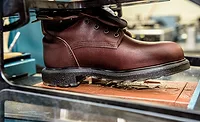
The majority of OSHA citations regarding foot protection call for ANSI-approved safety-toed footwear. Approval is tied to the ability to resist compression and impact. The safety toes are commonly made of steel, but a new composite material has been approved. Employees may balk at wearing the shoes, complaining that they will be uncomfortable. But with the correct fit and suitable socks, there shouldn't be any significant problem. ANSI-approved foot guards can be worn over conventional footwear, but special diligence must be used to ensure that there are no attendant tripping hazards.

Judgement call

In considering whether to cite, OSHA must exercise professional judgement in its decision-making process. For instance, there is no specific criteria as to the weight of an object that might reasonably fall or roll onto one's foot. Note that a 50-pound bag of liquid or powder being carried might be dropped onto a foot with little, if any, physical damage being caused. The material might be dispersed in a relatively innocuous manner, or the bag might break.

The usual background for citation involves the carrying of dense metal parts. The hazard is exacerbated when the article has sharp surface(s). There is also an added hazard when the item is somewhat slippery - a condition often resulting from lubrication. Be mindful, too, of the increased potential for dropping the item when there are no properly fashioned grips or no "designed-in" portions to easily grasp. Such parts as chuck lathes, press dies and tooling fixtures are but three examples of "culprits" generally leading to citation. There is also the hazard of objects such as nails piercing the sole of the shoe, in which case OSHA's main focus is not on the toes but on a special metal bottom on the interior of the footwear.

One OSHA study indicated that the typical foot injury was caused by objects falling less than four feet and the median weight was about 65 pounds. In my experience, OSHA citations have been based on objects weighing far less. However, with especially heavy items, and regular exposure anticipated, OSHA will cite, albeit infrequently, for the lack of metatarsal protection. This is most typically done for foundry operations. Once again, over-the-shoe appliances are available.

Various hazards

OSHA standards recognize the need for foot protection for other types of hazards. Some examples of those injury sources include molten metal, hot surfaces, vapor ignition, wet/slippery floors and similar footing surfaces, acids/corrosives and electrical current.

There are special types of footwear designed to protect against such hazards - either for the particular hazard or for a combination of the hazards. At times, suitably impervious boots, or spats, are needed to preclude hot or corrosive substances (or welding sparks) from contacting the skin. If the threat of dangerous chemical splash exists and spats are not used, then pants should be worn over the boots. Tucking the pant legs into the boots may leave an opening that could result in the footwear becoming a receptacle for the harmful substance.

SIDEBAR: Help from OSHA

When trying to determine the PPE needs of your workplace, OSHA can help. OSHA publication 3151, "Assessing the Need for Personal Protective Equipment: A Guide for Small Business Employers," is just one helpful resource available from the agency.

Share This Story

Looking for a reprint of this article?
From high-res PDFs to custom plaques, order your copy today!

Recommended Content

JOIN TODAY
to unlock your recommendations.

Already have an account? Sign In

  • forklift safety

    Exploring the latest technologies in forklift safety

    With more staff and more stock in warehousing now more...
    Workplace Training Strategies
    By: Josh Cramer
  • welding

    All about welder’s flash or arc eye

    A flash burn is a painful inflammation of the cornea,...
    Environmental Health and Safety
  • dangerous jobs

    The 10 most dangerous jobs in the U.S.

    On-the-job deaths have been rising — hitting the highest...
    Construction Industry Safety and Health
    By: Benita Mehta
Manage My Account
  • eMagazine Subscriptions
  • ISHN Newsletter & Other Newsletter Alerts
  • Online Registration
  • Manage My Preferences
  • Subscription Customer Service

More Videos

Sponsored Content

Sponsored Content is a special paid section where industry companies provide high quality, objective, non-commercial content around topics of interest to the ISHN audience. All Sponsored Content is supplied by the advertising company and any opinions expressed in this article are those of the author and not necessarily reflect the views of ISHN or its parent company, BNP Media. Interested in participating in our Sponsored Content section? Contact your local rep!

close
  • man wearing the the Sundström SR200 Full Face Mask Respirator
    Sponsored byOHD

    5 Fit Testing Mistakes That Could Cost You

  • This image shows Magid AcuSpex polarized blue mirrored safety glasses.
    Sponsored byMagid Glove and Safety

    Construction PPE Guide: What Crews Need for Each Task

  • lone worker in confined space
    Sponsored byAlphasense Ltd.

    GET THE LEAD OUT of your Safety Oxygen Sensors!

Popular Stories

SpaceX 7 launch

OSHA Investigating Fatal Fall at SpaceX Starbase

Worker Impairment

How to Tell When a Co-Worker is Impaired? A Safety Pro’s Challenge

psychology in the workplace

Most Workplaces Measure Psychological Safety, Ignoring Psychosocial Risks

top 10 most dangerous jobs

Poll

Seasonal Readiness

With the federal heat stress prevention rule on the horizon, which area of your safety program needs the most attention?
View Results Poll Archive

Products

Surviving an OSHA Audit A Management Guide, 2nd Edition

Surviving an OSHA Audit A Management Guide, 2nd Edition

See More Products

ISHN Podcasts

Related Articles

  • Top 20 industries for OSHA respiratory protection program citations

    See More
  • challenges of foot protection programs

    5 ways to overcome challenges of foot protection programs

    See More
  • FOOT PROTECTION

    See More

Related Products

See More Products
  • 0470387408.jpg

    Preparing for OSHA s Voluntary Protection Programs: A Guide to Success

See More Products
×

Become a Leader in Safety Culture

Build your knowledge with ISHN, covering key safety, health and industrial hygiene news, products, and trends.

JOIN TODAY
  • RESOURCES
    • Advertise
    • Contact Us
    • Directories
    • Manufacturing Division
    • Store
    • Want More
  • SIGN UP TODAY
    • Create Account
    • eMagazine
    • Newsletters
    • Customer Service
    • Manage Preferences
  • SERVICES
    • Marketing Services
    • Reprints
    • Market Research
    • List Rental
    • Survey/Respondent Access
  • STAY CONNECTED
    • LinkedIn
    • Facebook
    • YouTube
    • X (Twitter)
  • PRIVACY
    • PRIVACY POLICY
    • TERMS & CONDITIONS
    • DO NOT SELL MY PERSONAL INFORMATION
    • PRIVACY REQUEST
    • ACCESSIBILITY

Copyright ©2026. All Rights Reserved BNP Media, Inc. and BNP Media II, LLC.

Design, CMS, Hosting & Web Development :: ePublishing