SOUND advice

Choosing the right tool for sampling noise levels in the workplace is a relatively simple matter, right? You might hear: “Sure, just place a personal dosimeter on the worker and send them on their way. Make some observations and notes about their work and get the exposure data at the end of the day…job done.”
Others would argue: “It’s doesn’t make sense for me to require workers to wear a dosimeter all day. They are stationary with a constant noise source, so I can just make a spot measurement with a sound level meter (SLM), right?”
Depending on circumstances, both answers can be “right” from a regulatory compliance standpoint, but many industrial noise environments present other challenges regarding how to sample and which tool to use for optimum results. For example, getting noise exposure data at a construction site poses difficulties not encountered on a production line, but the sampling methodology may be the same. And what is minimally required by the regulations may not always best protect the worker.
Let’s examine the similarities and differences between the two basic types of noise measurement instruments — personal dosimeter and sound level meter — to see how either can be used to meet the minimum requirements of the law and, better still, incorporate “best practice” into a quality hearing conservation program (HCP).
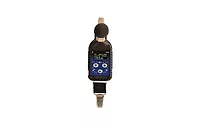
Dosimeters, while small and “wearable,” can be adapted to do area measurements; modern SLMs can produce dose and projected dose metrics. Both tools have found their place for compliance purposes, with dosimeters preferred for personal exposure monitoring and SLMs for performing area measurements for plant surveys, spot checks and responding to noise complaints. So, while there are unique distinctions between them, either can be used successfully to sample effectively and meet regulatory requirements — if you understand and apply the proper methodology.
Sampling — what the regs allow
Regulatory requirements have been adapted somewhat to recognize newer instruments’ ability to record detailed historical data of noise exposure, and to make on-board calculations that were previously impossible before the days of datalogging technology. Now, instead of acquiring only a single dose value from the sampling period, as was the case in the early days of occupational noise measuring instrumentation some 40 years ago, you can also get the projected dose and a time-weighted average (TWA). Moreover, you can have these calculated multiple ways to report the dose to more than one exposure standard.More importantly, from a sampling standpoint, regulations now take into account the fact that different methodologies may be acceptable, or even preferable, depending on the type of work and work environment being measured.
Personal dosimetry has been the accepted norm in the United States for decades. Dosimetry has been the mainstay of OSHA compliance monitoring because when used properly it accurately accounts for all the noise exposure encountered by the worker — on the day the sample was taken.
In other parts of the world, SLMs have been the tool of choice for collecting representative exposure data, but the methodology for acquiring and compiling this information is quite different than if done with a personal dosimeter.
An SLM can be effectively substituted for a personal dosimeter and still be accepted for compliance purposes in certain instances. One example of this would be on an assembly line where the noise levels are relatively static for a task or group of tasks that are performed in a repeatable and predictable fashion.
In the 1990s NIOSH did a study in conjunction with the auto industry to verify the acceptability of this technique. The resulting method, called “T-BEAM” (Task-Based Exposure Assessment Method) was adopted as an appendix to the ANSI Noise Exposure measurement standard and noted by OSHA as an acceptable substitute for dosimetry, if certain conditions are met (see OSHA “Standard Interpretations” 02/01/2001 - Acceptability of Task-Based Noise Exposure Assessment Modeling [T-BEAM]). Based on the principles of classic industrial engineering techniques, representative samples of noise are taken for a given task, time and place and compiled in a way that is similar to a time-and-motion study.
ANSI and ISO standards provide structure and guidance in performing these measurements with acceptable levels of accuracy and repeatability. A recent example is ANSI A10.46-2007, “Hearing Loss Prevention in Construction and Demolition Workers.” This standard provides a comprehensive means for determining risk of hearing loss from overexposure to noise on the worksite and ways to effectively limit the exposure, and thus, in the view of this author, represents best practice in hearing loss prevention for the construction trades. Be aware, however, that regulatory bodies do not always adopt new measurement standards for compliance purposes, and even if they do, the process may be a lengthy one.
Beyond the basics
Getting detailed exposure data is just one of the many uses of noise measurement instruments. They can also be used for proper selection of hearing protection devices (HPDs) and application of engineering controls.If the goal is to reduce hearing compensation liability, some experienced practitioners would argue: “Dosimeters only give you part of the story. More detailed information about the noise environment should be gathered using an SLM or an SLM with Octave Band analysis capability (OBA).” This is absolutely true, because sound level meters — especially those with frequency analysis capability — can be powerful tools for determining the best type of HPDs to use and for implementing engineering controls to quiet the workplace to acceptable levels.
But once again, due to advances in technology, either type of instrument can be used — if one recognizes the capabilities and limitations of each and adapts the methodology accordingly. For example, dosimeters typically measure only “broadband” noise, that is, all frequencies (from low to high) that are known to be the cause of long-term hearing loss given chronic exposure. This is known as the “A weighting” frequency filter.
While virtually all regulatory compliance measurements use the A weighting scale for sampling the noise to determine dose and TWA, that data has not been used for determining which type or style of hearing protectors to use, so that hearing loss is prevented without the risk of physical injury that comes from overprotection (especially in workers who already have some hearing loss).
Some dosimeters and many SLMs provide a dual detector scheme that measures the A weighting scale and the “C” weighting scale simultaneously, with the resulting difference being an approximation of how much low-frequency noise is present, helping in HPD selection. However, an even newer technique using advanced software algorithms is capable of using simple A weighted data to arrive at the same or better conclusion, especially for workers with some form of existing hearing loss.
Understand each type
As you can see, there are many ways in which both dosimeters and sound level meters can be used to meet regulatory requirements and diminish the risk of noise-induced hearing loss (NIHL) in the workplace. However, understand that there are some applications where performance limits of a certain type of instrument make it simply inadequate. For example, if measuring noise on a firing range, a dosimeter will be overwhelmed by the extreme high pressure levels generated and thus produce meaningless data.With a good understanding of what information each type of device can provide, the user can select the proper tool to get the job done efficiently and cost-effectively while meeting the letter of the law and reducing risk and compensation liability.
Sidebar: Noise dosimeter or sound level meter?
Follow these suggestions when using a dosimeter or sound level meter either as intended or as a substitute for the other:
Dosimeters:
• Place the microphone within the hearing zone at least a few inches away from the head (to minimize false readings).
• Use the windscreen (foam microphone covering) to minimize artifacts and false peaks.
• Place the instrument on the worker in a way that allows free range of motion; route the microphone cable safely (if applicable).
Sound level meters:
• Hold with arm extended to minimize the influence your body has on the measurement.
• Follow ANSI or ISO recommendations for orientation of the microphone to the noise source.
• Make sure it is safe to use in the intended environment.
If using a dosimeter for general sound level measurements:
• Use a microphone that mounts directly to the instrument on an extension boom.
• Hold dosimeter away from body to minimize reflections.
• If performing “task-based” analysis, hold dosimeter in the hearing zone of the worker.
• For general office measurements use “Leq,” or turn off the dosimeter threshold since anything below the threshold is not measured.
If using a sound level meter to acquire exposure data:
• Hold the SLM so the microphone is at/near the hearing zone of the worker.
• Secure the SLM to your body with a wrist strap to prevent damage from dropping.
• Make sure the average SPL (TWA) is being calculated correctly (the settings for exchange rate, threshold, etc., are critical to this).
Looking for a reprint of this article?
From high-res PDFs to custom plaques, order your copy today!