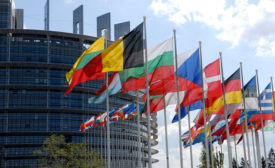
The European Commission has announced plans to amend five health and safety at work Directives, in order to align them with the Globally Harmonized System (GHS), but critics charge that the changes won’t make workers any safer.
A new study, funded by the Canadian Cancer Society, will examine the human and economic impact of workplace exposure to 44 known or suspected carcinogens and their links to 27 types of cancer. The study's main goals are to quantify - for the first time - how serious the problem is in Canada by estimating the number of new cancer cases and cancer deaths that can be attributed to workplace factors, and also to weigh the economic impact.
REACH, the European chemical regulation has been under implementation since June 2007. Five years later, the ETUI chemical hazards expert Tony Musu takes stock of this ambitious reform.
More than 70 leading scientists are calling on Congress to reject an attempt to block a biennial government assessment of the cancer risks of posed by industrial chemicals and other agents.
Before the GHS was created and implemented by the United Nations, there were many different regulations on hazard classification in use in different countries.
The National Institute for Occupational Safety and Health (NIOSH) has announced plans to hold a public meeting to review its approach to classifying carcinogens and establishing recommended exposure limits (RELs) for occupational exposures to hazards associated with cancer.
This standard establishes the elements and activities for pre-project and pre-task safety and health planning in construction.
With access to over one million professionals and more than 60 industry-specific publications,Clear Seas Research offers relevant insights from those who know your industry best. Let us customize a market research solution that exceeds your marketing goals.