For the first time, NSC is hosting an Auto Safety Tech Zone on the Expo floor with Ford, Toyota, FCA US and General Motors. All four car manufacturers will display vehicles equipped with cutting edge safety technologies that are paving the way toward advanced driver systems.
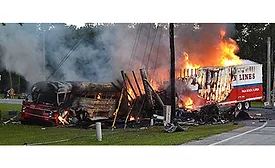
An accident that killed a bus driver and three migrant workers will be the subject of an upcoming National Transportation Safety Board (NTSB) meeting in Washington, D.C.
As tech companies and automakers, cheered on by the federal government, race to test and promote autonomous vehicles, several surveys show that most motorists don’t want to drive, ride in or be on the road anywhere near them.
The U.S. Department of Transportation and the National Highway Traffic Safety Administration (NHTSA) have released new federal guidance for Automated Driving Systems (ADS): A Vision for Safety 2.0. This is the latest guidance for automated driving systems to industry and States. Click here to view.
The National Transportation Safety Board (NTSB) has determined that a truck driver’s failure to yield the right of way and a car driver’s inattention due to overreliance on vehicle automation are the probable cause of the fatal May 7, 2016, crash near Williston, Florida.
Just after noon on March 29, a pickup truck crossed the center line of a rural road in South Texas and slammed into a church bus, killing 13 members of the First Baptist Church of New Braunfels. A police report said the 20-year-old pickup driver, who survived, had taken medication and was texting.
Occupational health experts are criticizing the U.S. Department of Transportation’s decision to withdraw a rule that would have required workers in safety sensitive jobs to be screened for a sleep disorder that could affect their work performance.
The National Transportation Safety Board (NTSB) will meet on Sept. 12, 2017 to determine the probable cause of the fatal, May 7, 2016, crash of a Tesla car near Williston, Florida.
Forget about student loan debt. There's a far more serious debt that occurs earlier in a young person's life, one that - according to the National Transportation Safety Board (NTSB) - could endanger their safety, along with the safety of those sharing the road with them.
People who don’t buckle up when they ride in the rear seat because they think it’s safer back there are wrong. Instead, they pose a serious danger to themselves and those riding up front, according to a new study and crash test video by the Insurance Institute for Highway Safety.