The American Journal of Clinical Nutrition recommends drinking up to 3 liters of fluid a day. Water is vital for all cell function. It helps your brain to produce hormones and neurotransmitters, supports the lubrication of joints, keeps your skin cool through sweating or respiration, and your body to excrete waste.
Better sleep habits may help reduce heart disease risk, aid in weight loss
April 1, 2020
Sleeping well, long enough and having regular bedtimes, in addition to meeting the American Heart Association’s (AHA) Life’s Simple 7 (LS7) guidelines, may help reduce the risk of heart attacks, strokes and other cardiovascular diseases.
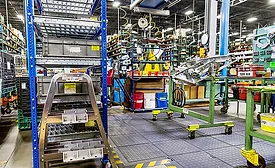
Warehouse hazards are often the cause of workplace accidents. Choosing the correct type of storage will greatly reduce the potential hazard in a facility. The correct storage medium will reduce improper lifting, reaching and travel distance to retrieve an item.
Workplace eye injuries from mechanical or chemical means have increased due to the rise of industrialization globally. The two most common reasons behind such injuries are either the workers were not wearing eye protection or they had worn wrong eye protection at the time of the accident.
We sat down recently to talk to Dr. Douglas J. Casa, CEO of the University of Connecticut-based Korey Stringer Institute (KSI). The mission of the KSI is to provide research, education, advocacy and consultation to maximize performance, optimize safety and prevent sudden death for the athlete, warfighter and laborer.
Nearly 30 unions and advocacy groups on Friday, March 13 urged the U.S. employee safety regulator to impose a suite of emergency measures to safeguard public-facing workers against the coronavirus.
The outbreak of the coronavirus disease 2019 (COVID-19) presents new challenges in the workplace. Businesses can get ready to respond to the crisis by creating a multi-faceted plan and by being able to adapt to an ever-changing situation in a way that supports the entire organization.
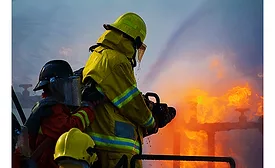
In the United States, the number of acres burned each year from wildland fires has grown, increasing work-related risks to wildland firefighters. One invisible risk is carbon monoxide (CO), produced from the burning of fuels, such as in fires or from gasoline-powered engines. In a recent study led by Scott Henn, NIOSH industrial hygienist, he describes conditions that increase this risk.
Firefighters’ deaths lead to a lawsuit against a construction company; nurses get the recognition they deserve and new studies show what we’ve known all along: staying active can help you live longer.
The airports across the United States have been using aqueous film-forming foam (AFFF), the premier firefighting foam in the United States for several decades. AFFF contains per- and poly-fluoroalkyl substances (PFASs), which are a large family of man-made fluorinated chemicals with thermal stability that enhances its ability to rapidly extinguish hazardous fires.