Teammates, coaches, and cultures for Safety
|
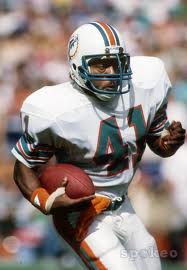
Arguably, Fulton Walker of the Miami Dolphins had one of the finest special teams' performances in Super Bowl history. In 1983, Super Bowl XVII, Fulton had four kickoff returns for 190 yards and one touchdown. His touchdown of 98-yards was the first-ever kickoff to be returned for a touchdown in Super Bowl history. Fulton’s Super Bowl feat stood for nearly 15 years!
Recently, I was talking to Fulton about his record setting return and I told him that I watched it for the first time since 1983 and had gotten goose bumps! Fulton is a friend and former teammate at West Virginia University. He laughed a familiar laugh and I asked him, “What went on before the return? How were you feeling and was your return set up in any particular way?”
The Rest is Super Bowl History
Fulton said he "felt great" that Sunday and told his Head Coach, Don Shula what he wanted to do. Fulton recalled saying, “coach they’re coming up real hard on the left side. I want to take it real quick to my right and then break it back off to the left.” Coach Shula believed in what Fulton was saying and instructed his team to set up the return in the way Fulton, believed it could work. The rest is Super Bowl history.
Great Teams and Great Safety Cultures
Great safety cultures have corollaries and similarities that are marked in similar ways to this great play. And from my perspective, there’s much we can learn from Fulton’s record setting return. I like to simply call it “the return.”
1. Raise Your Hand. Great safety cultures have individual performers who believe in themselves and are confident enough to step up and say, "I can do it!” Workers raise their hands and say, “this is what I think we can do.” Fulton did that before his return. Great cultures for safety have individual performers who have the confidence and courage to want to do something extraordinary. They want to do more for others around them because they see how their contributions make a difference. Great workers, much like great Super Bowl performers, understand when something needs to be accomplished, differently.
2. Coaches Coach. Coaches step up to support great individual performers because a history of trust has been developed. Fulton had a short history with Coach Shula but the coach believed in Fulton. Similar events unfold within safety cultures that become extra-ordinary. Informal and formal leaders step up to provide coaching support to “set things up” so that greater outcomes can be achieved. Coaches bridge the gap between individual performers and the kinds of team support that’s required to make a bigger and broader impact – organization wide. Great safety coaches build trust and open communications, and in turn, workers raise their hands. And great safety coaches have a way of saying, “here we go – we can make this work!”
3. Team Synergy and Balance. Special teams, like the kick-off return team of Fulton Walker’s, involve special people with a special synergy. Many of these individuals may not be starters, but each knows their individual “special team performances” can help to win or lose a big game. Individuals have to believe and trust in one another and commit to their specific responsibilities. At times, each has to believe in one another in order to achieve something substantial. In great safety cultures, "special individuals" come together with particular skill-sets and specific responsibilities. Granted, some individuals just don’t work well together or don’t have the kinds of skills that work best for a particular team or group. Finding the right balance is sometimes difficult and experimentation with team makeup and membership is necessary.
4. Execute for Existence. No matter the level of trust or the degree of belief in one another, great teams have to execute. They have to put out and perform. Look at Fulton Walker, even after two great Super Bowl performances and several great seasons with the Miami Dolphins, he was on the trading block and headed to the Oakland Raiders. Trading your team members or getting rid of them may be a bit more difficult but there is a bottom line. Workers have to be “coached up” and held accountable to do what they are expected to do. You may have formal work teams or a loose knit groups of people working together in specific ways but success is often required. Good things have to happen and results have to be tracked in some way.
I'm sure you've realized that this writing is about much more than great plays, players, and teams. It’s about leaders having the insight and desire to bring people together in order to achieve something special for safety. It’s about creating great safety cultures by identifying and utilizing key performers, bringing the right people together, developing trust, open communications, team cohesiveness, and holding people accountable for specific outcomes.
Fulton Walker was an outstanding performer who had an infectious smile and laugh that I still enjoy. Well, it's time to go, I'm about to call my old friend Fulton to rehash "the return" and have some laughs!
Originally posted at www.davidsarkus.com
