Armed for unseen hazards
Employee safety hazards may be invisible - yet cause as much damage as an approaching cyclone. Case in point: hazardous gases, vapors and combustibles in the workplace, including carbon monoxide, ammonia, hydrogen fluoride, carbon dioxide and hydrogen cyanide, among others. These potentially toxic contaminants must be monitored to protect workers from adverse health reactions and maintain OSHA compliance.
OSHA standards regulate minimum levels of permissible exposure limits (PELs) and require periodic monitoring of employee exposure. If readings regularly fall below these limits for hazardous gases, users may find that periodic monitoring is sufficient. Areas known for higher concentrations of gases, fumes or vapors may demand continuous monitoring.
Accurate air monitoring equipment and good documentation are necessary to effectively detect hazardous levels and ensure safety. To this end, new gas detection technologies have entered the market, offering more flexibility and advanced options. Several formats are available, including badges, tubes, single- and multi-gas detectors, photo-ionization detectors and combination types.
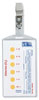
Detection badges: Gas detection badges can be used for both personal and area monitoring of hazardous chemicals. Worn by employees, the badges track exposure as workers move around the facility throughout the day. They provide a time-weighted average (TWA) for a specific gas.
Badges are available in two types. One type changes color to indicate the presence of a specific gas. Color-change indicators are designed for a single chemical and one-time use but have the advantage of showing immediate results. Another badge type is sent to a laboratory for analysis after use. These badges can be used to sample a broader array of chemicals with higher accuracy at lower levels of concentration.
Gas detection badges are lightweight, easy to use and nonintrusive. They require no additional equipment to operate and minimal training. Yet employee exposure has already occurred by the time the badge records it. Because badges are single-use, they need to be replaced regularly, and users must manually calculate their TWA. Additionally, color-changing badges require some interpretation, which may lead to inaccurate readings.

Detection tubes: Tubes offer instant measurements of a wide variety of gases and vapors. Economical and easy to read, they are efficient for most industrial and laboratory environments that use chemicals. Each tube can be cross-sensitive to other gases, which may affect its readings.
Users can select from two types of gas detection tubes: short-term detection for area monitoring or diffusion tubes for personal monitoring.
Short-term detection tubes employ a hand-operated pump for a quick sampling of gas levels. Depending on the tube, measurements can take from 10 seconds to 15 minutes. Tubes contain a direct-reading scale for spot checking a variety of contaminants and can safely perform field testing and sampling of ambient air and soil gas on hazardous-waste sites. However, these tubes are also single-use and offer readings valid only at the exact spot tested at the time the area was sampled.
Diffusion tubes allow gas to enter the tube through diffusion, react with the reagent and produce a color change with exposure levels indicated by markings on the tube. They record longer-term measurements and offer average over time (TWA) readings. Because diffusion tubes are designed for personal monitoring, pinpointing the gas source may be difficult. With workers moving through a facility as the tube builds up to a readable level, they may need to retrace their steps to identify the potentially toxic location.

Single- and multi-gas detectors: Either worn by a worker or used as a handheld device, the compact single- and multi-gas detectors display immediate, continuous readings of gas concentrations. Visible and/or audible alarms alert users to high toxic gas concentrations or low oxygen levels. Single- and multi-gas monitors are typically higher in price than badges or tubes but also offer longer life spans. Users will need to learn how to operate these units, and they do require calibration.
Single-gas detectors target a predetermined gas only, such as carbon monoxide (CO), hydrogen sulfide (H2S) or oxygen. This device delivers precision without the flexibility of the multi-gas model. The single-gas monitor is most efficient when the potential gas is limited to one area. Advanced versions calculate for Short-Term Exposure Limit (STEL) and TWA.
Multi-gas detectors are a better choice for sensing several gases at once and typically include a sensor for combustibles. Multi-gas detectors are used in confined spaces where gas concentrations build quickly, as well as for hazmat response, search-and-rescue missions, post-inspection fire safety and more. Some units have data logging capabilities for later download to a computer for record-keeping purposes.
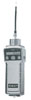
Photo-ionization detectors (PID): These detectors take real-time readings of volatile organic compounds (VOCs) and hazardous gases or vapors in parts per million (ppm), making them ideal for confined spaces (especially industrial settings) in which low levels of VOCs may be present. Their sensitivity to a broad band of VOCs eliminates the need for multiple sensors. Depending on the unit, samples can be drawn from an extended range (horizontally or vertically) allowing employees to monitor air quality from a distance. Other options may include multimode operation (for example, survey mode or hygiene mode) and data logging features.
Because PIDs provide immediate VOC readings, they eliminate the time and cost involved in sending results to a laboratory for analysis. Although PIDs detect multiple airborne hazards, they should be calibrated using the targeted gas for the most accurate results.
Combinations with PID: Some devices combine the technologies above. For example, the multi-gas monitor with PID offers the advantages of both types of detectors. For combination units, functionality and resourcefulness are significantly increased and so is the cost for purchasing these units.
In conclusion, when selecting an appropriate gas detection device consider the following criteria:
- Determine whether personal monitoring or area monitoring is needed.
- Assess the format of device that best suits the environment measured.
- Select the relevant type within this format.
- Opt for any advanced functionality that will increase efficiency.
- Compare price to budget.
Looking for a reprint of this article?
From high-res PDFs to custom plaques, order your copy today!