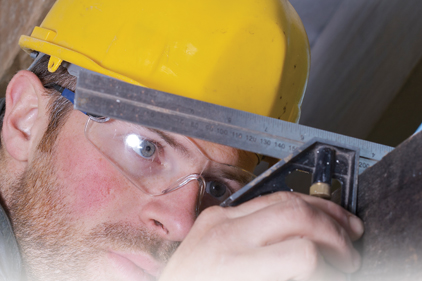
The importance of wearing proper eye protection appropriate for the risk cannot be underestimated as about 70 percent of eye injuries result from flying or falling objects or from sparks striking the eye. These factors represent about 700,000 injuries per year, according to Prevent Blindness America. An estimated 90 percent of these injuries could have been prevented by the use of proper eye protection products.
Offering workers a broad selection of safety eyewear to ensure proper fit for all face types is very important to help prevent injury. Proper fit generally results in better compliance of use. However, since safety spectacles are produced in mass rather than individually fit for each wearer, no one design fits every wearer equally as well. Poorly fitting eyewear that is uncomfortable may result in less use.
Selecting eyewear
Safety spectacles are designed to protect the eyes and surrounding area, according to the ANSI/ISEA Z87.1- 2010 Standard. This standard is specific as to the minimum areas of the wearer’s face to be provided coverage by the eyewear. These areas are expanded if the eyewear is being used for impact protection. If a wearer uses ill-fitting eyewear, that coverage area may be compromised. Coverage issues can result from wearing eyewear that is too large or too small. Slippage of the eyewear down the nose due to loosely fitting eyewear compromises the coverage area at the top of the eye. Eyewear that is too small for the wearer’s head size may compromise coverage protection needed around the sides of the eyes. Wearing non-safety rated prescription eyewear as impact protection will generally not provide coverage of the peripheral or side areas of the eye.
Reduce pain or discomfort
Well-fitting eyewear is important! All protection is lost if poor fitting spectacles produce discomfort sufficient to discourage a worker from wearing them.
Some common types of pain or discomfort from poor fitting spectacles include eye strain, including eye strain headaches, compression headaches, soreness on cheeks, pressure on the nose bridge as well as pressure at any of the eyewear’s contact points with the head or face.
Eyestrain and eyestrain headaches are caused by eye muscles having to work to create a better focus. This can occur from glasses with poor optics (e.g., lens astigmatism or an imbalance in refractive power of the lenses) or if the lenses are not properly centered in front of the eyes, as may occur if loose fitting eyewear constantly slips on the face. Symptoms of eyestrain include mild to severe headache just above the eyebrow and may include watery eyes, hazy vision, itching or burning eyes.
External compression headaches are caused by pressure exerted by eyewear temples against the sides of the head and may trigger migraines in some people. Compression headaches can be prevented by providing eyewear that is sufficiently wide at the temples. If wider eyewear cannot be properly secured on some users, choosing eyewear with temple arm ends made from a flexible material that curve inward and hug at the back of the head versus at the temple area may solve the wearers’ compression headache while keeping the eyewear secure.
Eyewear that produces a continuous rubbing against the face can produce soreness over time. Soreness on the cheek area can be alleviated by wearing eyewear that fits close to the cheeks without touching. Choosing eyewear with a ratcheting temple may allow the wearer to adjust the tilt of the front of the eyewear and remove the irritation to the face area.
Pressure on the nose should be present but light. Too much pressure can cause pain and soreness at the nose bridge and can even cause the thin skin on the nose to break down. This is more likely on spectacles with hard, inflexible nose pieces. Longer temples, the use of adjustable temples, or lighter weight safety glasses may improve the wearer’s comfort. Too little pressure, however, can allow the glasses to slip down the nose.
The tops of the ears and the nose form the three resting points for safety eyewear. Each resting spot should be in constant and equal contact with the eyewear. If the eyewear becomes misaligned or creates too much pressure on one of more of the contact points, soreness may occur. Furthermore, if the temples are not far enough apart or if the temple pieces are not long enough to reach comfortably behind the ears, the resulting pressure may cause discomfort.
In a related matter, the quest for comfort can be overdone. Some users may consider wearing one of the newer close fitting styles of spectacles with soft padding around the lenses in situations where in fact goggles are needed for splash or dust protection. These types of spectacles do not provide the seal against the face that goggles do and should not be used as substitutes.
Seek the best solution
As noted previously, safety spectacles are not custom made to the wearer’s head and face dimensions and there are many differences between eyewear styles. If one style does not provide all-day comfort, select a different style to provide the optimum comfort solution for the wearer.