ISHN logo
search
cart
facebook twitter linkedin youtube
  • Sign In
  • Create Account
  • Sign Out
  • My Account
ISHN logo
  • NEWS
    • Today's News
    • Global Safety News
    • Government Regulations
  • PRODUCTS
    • Product Innovations
    • Featured Products
  • TOPICS
    • Environmental Health and Safety
    • Facility Safety
    • Workplace Health
    • Occupational Safety
    • PPE
    • More Topics
  • CONSTRUCTION
  • TECHNOLOGY
  • COLUMNS
    • Best Practices
    • Dave Johnson: What’s going on
    • Editorial Comments
    • Leading Safety
  • MULTIMEDIA
    • ISHN Podcast
    • Videos
    • Cold Stress Education Quiz
    • Webinars
    • White Papers
  • MORE
    • Buyer's Guide
    • Newsletters
    • Convention Companion
    • Polls
    • Events
    • ISHN Store
    • Sponsor Insights
  • EMAGAZINE
    • eMagazine
    • Archived Issues
    • Contact
    • Advertise
  • JOIN TODAY!
Columns

PSYCHOLOGY OF SAFETY: Punishment to fit the crime?

By E. Scott Geller
February 8, 2006

I am haunted by four recent unfortunate events. One is a catastrophe reported nationwide by the media, another is an incident which is big news in our local newspapers, and the other two misfortunes are not known publicly, but traumatic all the same. Here they are:

On January 2nd, an explosion rocked the Sago mine in Tallmansville, W.Va., leading to the deaths of 12 miners.

At the Gator Bowl on the same day, football enthusiasts nationwide saw the quarterback of the Virginia Tech football team stomp his foot on the leg of the player who had tackled him.

A contractor was killed last December when an auger machine attached itself to a weed barrier under the soil and pulled him into the bit.

Two months ago, a friend of mine had a loud and intense verbal encounter with his girlfriend, and the event was reported to the police by a neighbor.

Common ground

These four events are disturbing, but what connects them in my thoughts? And how are they relevant to the psychology of safety? Well, I’m bothered by the common approach to solving these four diverse problems. For each, reactive punishment is the treatment of choice, apparently with the presumption that positive change will result.

News accounts and editorials surrounding the mine disaster are filled with calls for more aggressive enforcement and stiffer penalties. The Mine Safety and Health Administration has lost its bite, critics contend.

What about the talented quarterback? Following a chorus of criticism, including the Virginia governor-elect saying the incident “made my heart sink” — the quarterback (who led Virginia Tech to an 11-2 season) was dismissed. Initial punishment, as determined through conversations with the university president, athletic director and football coach, was a two-game suspension next season. But suspension was changed to dismissal when these university officials learned the quarterback had received a speeding ticket on December 17th for driving 35 miles per hour in a 25 mph zone some time after 2 a.m. The star quarterback had been suspended from the team for the entire 2004 season because of a conviction of reckless driving and possession of marijuana. In the context of a last-chance opportunity, the speeding ticket was apparently the last straw.

Through communications with the safety director of the company that hired the subcontractor, I’ve learned about the focus of numerous OSHA reports and meetings activated by the fatality at the construction site. While safety inspectors look for violations of OSHA standards and explore the need for additional regulations, the company legal department looks for ways to avoid a fine.

And what about my friend, who lost control of his anger last November? He spent two consecutive weekends in a crowded county jail. This dehumanizing and delayed punishment for his neighbor-disturbing outburst is presumed to have a positive impact on his anger management. I must also add that my friend spent four months in jail eight years ago for possession of marijuana. Why is this relevant? Because the courts used this information to determine “appropriate” punishment for his recent misbehavior.

“It’s the culture stupid!”

I borrowed this heading from several talks I’ve heard at safety conferences, and it’s so relevant here. Our culture looks for quick-fix solutions to its problems. And no solution is as swift and efficient as punishment, with financial penalties providing support for the enforcement process.

Will we ever own up to the ineffectiveness of punishment as a corrective measure?

Will we ever put more attention on proactive prevention than reactive retaliation?

Will the unsung heroes who provide critical proactive intervention, from school teachers and social workers to safety professionals, ever get the credit and financial support they need?

Will we ever actively care beyond our own soon, certain, and significant consequences?

Where’s the corrective action?

When my friend told me of his vociferous encounter with his girlfriend, I encouraged him to apologize immediately and in person to the neighbor who reported his outburst. He did.

The quarterback was also advised to express sincere regrets to the player he stomped. But newspaper accounts of the incident report the other player did not make himself available for an apology, and was quoted as calling the quarterback a “no-class individual.” This is all secondhand information, and many details are missing, but this is what the public saw.

Question: What corrective action had the quarterback received since his serious troubles in 2003?

I arranged for professional counseling for my friend, and suggested he pursue training in anger management. Was similar human dynamic therapy provided for the quarterback? Indeed, is any corrective intervention other than punitive consequences for misbehavior given athletes who need to improve their emotional intelligence?

At a 40-minute press conference on Saturday, our university president, athletic director, and football coach discussed the decision to impose the ultimate punishment on an athlete who needed another year of NCAA football to achieve a top ranking in the NFL draft. No commentary was offered that even remotely related to corrective action — past, present, or future. And none of the news reporters posed a question relevant to this critical issue.

While the media reflects culture, it also influences culture. This media event was a disheartening exemplar of our quick-fix reactive culture, giving no attention to corrective action.

There is some good news. The safety director of the construction company is determined to gain safety-related improvements from the accidental death of a worker. She is attempting to make every conversation about that awful event, even those with OSHA inspectors, include something constructive that could be done to prevent another fatality or serious injury at the variety of construction sites managed by her company. The fatality increased management and workers’ commitment to safety. Now she is focused on increasing the competence of the company at remaining injury-free — one day at a time.

Bottom line:

Destructive events like those reviewed here increase motivation to improve from everyone involved. This is prime time to learn how to prevent related mishaps and implement preventive intervention. Avoid the cultural impetus to use nonproductive and quick-fix punishment, and eventually we might see beneficial change in our culture. Your example can make a difference.

Note: For information on Dr. Geller’s new book on People-Based Safety, as well as five video/DVD/CD programs, accompanied by workbooks and leader guides produced by Coastal Training Technologies, visit www.people-based-safety.com; email: pbs@coastal.com; (888) 201-8740.

Share This Story

Looking for a reprint of this article?
From high-res PDFs to custom plaques, order your copy today!

E. Scott Geller, Ph.D., Alumni Distinguished Professor and Director, Center for Applied Behavior Systems, Virginia Tech, and senior partner, Safety Performance Solutions (SPS). For information on related books, training manuals, videotapes, audiotapes, and customized consulting call SPS at (540) 951-7233 (SAFE), email: pbs@coastal.com , and visit www.safetyperformance.com. For information on Dr. Geller’s new book on People-Based Safety, as well as five video/DVD/CD programs, accompanied by workbooks and leader guides produced by Coastal Training Technologies, visit www.people-based-safety.com; email: pbs@coastal.com; (888) 201-8740.

Recommended Content

JOIN TODAY
to unlock your recommendations.

Already have an account? Sign In

  • forklift safety

    Exploring the latest technologies in forklift safety

    With more staff and more stock in warehousing now more...
    Workplace Training Strategies
    By: Josh Cramer
  • welding

    All about welder’s flash or arc eye

    A flash burn is a painful inflammation of the cornea,...
    Environmental Health and Safety
  • dangerous jobs

    The 10 most dangerous jobs in the U.S.

    On-the-job deaths have been rising — hitting the highest...
    Transportation Safety
    By: Benita Mehta
Manage My Account
  • eMagazine Subscriptions
  • ISHN Newsletter & Other Newsletter Alerts
  • Online Registration
  • Manage My Preferences
  • Subscription Customer Service

More Videos

Sponsored Content

Sponsored Content is a special paid section where industry companies provide high quality, objective, non-commercial content around topics of interest to the ISHN audience. All Sponsored Content is supplied by the advertising company and any opinions expressed in this article are those of the author and not necessarily reflect the views of ISHN or its parent company, BNP Media. Interested in participating in our Sponsored Content section? Contact your local rep!

close
  • man wearing the the Sundström SR200 Full Face Mask Respirator
    Sponsored byOHD

    5 Fit Testing Mistakes That Could Cost You

  • This image shows Magid AcuSpex polarized blue mirrored safety glasses.
    Sponsored byMagid Glove and Safety

    Construction PPE Guide: What Crews Need for Each Task

  • lone worker in confined space
    Sponsored byAlphasense Ltd.

    GET THE LEAD OUT of your Safety Oxygen Sensors!

Popular Stories

SpaceX 7 launch

OSHA Investigating Fatal Fall at SpaceX Starbase

Worker Impairment

How to Tell When a Co-Worker is Impaired? A Safety Pro’s Challenge

psychology in the workplace

Most Workplaces Measure Psychological Safety, Ignoring Psychosocial Risks

top 10 most dangerous jobs

Poll

Seasonal Readiness

With the federal heat stress prevention rule on the horizon, which area of your safety program needs the most attention?
View Results Poll Archive

Products

Surviving an OSHA Audit A Management Guide, 2nd Edition

Surviving an OSHA Audit A Management Guide, 2nd Edition

See More Products

ISHN Podcasts

Related Articles

  • PSYCHOLOGY OF SAFETY: The power of safety communication

    See More
  • PSYCHOLOGY OF SAFETY: The power of a "guilt trip"

    See More
  • PSYCHOLOGY OF SAFETY: Benefits of behavioral safety (part 2)

    See More

Related Products

See More Products
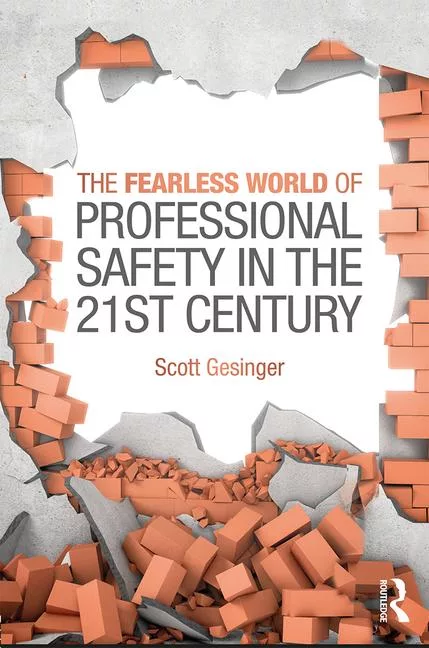
  • fearless world.jpg

    The Fearless World of Professional Safety in the 21st Century

See More Products

Related Directories

  • American Society of Safety Professionals (ASSP)

    The American Society of Safety Professionals (ASSP) is a global association of occupational safety and health professionals who are dedicated to workplace safety. We provide education, safety standards, advocacy and a professional community that supports our diverse members and the profession.
  • Alliance of Women’s Safety Apparel Manufacturers (AWSAM)

    The Alliance of Women's Safety Apparel Manufacturers is a collection of specialty manufacturers and distributors committed to providing properly designed and fitted PPE for women. Our foundational pillars are Awareness, Access and Advocacy. Our non-profit organization has 12 Founding Members and aligns the needs of women in the workforce and the companies they work for with specialty manufacturers dedicated to providing appropriate PPE for women. The Founding Members of the organization have made great strides in removing barriers to access that have existed for many years and kept women from being equally protected. Together, we create a platform that increases awareness of products made for women, encourages equal access to appropriately fitting PPE, and advocates for the safety of women in the workforce. In the spirit of co-opetition, we collaborate to envision what is next for women in industry as we work side by side to accomplish our mission, increase our impact, and share the journey with everyone seeking to elevate diversity and equality in their workplace.
  • Board of Certified Safety Professionals (BCSP)

    Since 1969, BCSP has been setting and certifying the technical competency criteria for safety, health, and environmental practitioners; ensuring safety through certification. In 2019, BCSP developed examCORE a comprehensive educational program for safety certification.
×

Become a Leader in Safety Culture

Build your knowledge with ISHN, covering key safety, health and industrial hygiene news, products, and trends.

JOIN TODAY
  • RESOURCES
    • Advertise
    • Contact Us
    • Directories
    • Manufacturing Division
    • Store
    • Want More
  • SIGN UP TODAY
    • Create Account
    • eMagazine
    • Newsletters
    • Customer Service
    • Manage Preferences
  • SERVICES
    • Marketing Services
    • Reprints
    • Market Research
    • List Rental
    • Survey/Respondent Access
  • STAY CONNECTED
    • LinkedIn
    • Facebook
    • YouTube
    • X (Twitter)
  • PRIVACY
    • PRIVACY POLICY
    • TERMS & CONDITIONS
    • DO NOT SELL MY PERSONAL INFORMATION
    • PRIVACY REQUEST
    • ACCESSIBILITY

Copyright ©2026. All Rights Reserved BNP Media, Inc. and BNP Media II, LLC.

Design, CMS, Hosting & Web Development :: ePublishing