ISHN logo
search
cart
facebook twitter linkedin youtube
  • Sign In
  • Create Account
  • Sign Out
  • My Account
ISHN logo
  • NEWS
    • Today's News
    • Global Safety News
    • Government Regulations
  • PRODUCTS
    • Product Innovations
    • Featured Products
  • TOPICS
    • Environmental Health and Safety
    • Facility Safety
    • Workplace Health
    • Occupational Safety
    • PPE
    • More Topics
  • CONSTRUCTION
  • TECHNOLOGY
  • COLUMNS
    • Best Practices
    • Dave Johnson: What’s going on
    • Editorial Comments
    • Leading Safety
  • MULTIMEDIA
    • ISHN Podcast
    • Videos
    • Cold Stress Education Quiz
    • Webinars
    • White Papers
  • MORE
    • Buyer's Guide
    • Newsletters
    • Convention Companion
    • Polls
    • Events
    • ISHN Store
    • Sponsor Insights
  • EMAGAZINE
    • eMagazine
    • Archived Issues
    • Contact
    • Advertise
  • JOIN TODAY!

OSHA respirable crystalline silica – general industry

PPE
January 1, 2018

History

During the 1930s, hundreds of workers who’d inhaled respirable crystalline silica (RCS) while toiling on a tunnel construction project in West Virginia died from silicosis, an incurable lung disease. The shocking wave of deaths caused U.S. Labor Secretary Frances Perkins to launch a national campaign aimed at preventing silicosis, the oldest known environmental lung disease. In March, 2016, OSHA issued a final rule to protect workers exposed to RCS in general industry and maritime. The agency will begin enforcing most provisions of the standard on June 23, 2018.

Case study

Steve Willis of Asheville, North Carolina, began working as a sandblaster when he was 22 years old. On the job, Steve used specialized equipment to blast surfaces with silica sand, a mineral abrasive, in order to smooth them, shape them or remove contaminants. The procedure created large quantities of dust, to which he was regularly exposed. In his late 40s, Steve noticed that he was often short of breath. Weight dropped from his already-lean frame and he experienced fatigue that no amount of rest could alleviate. After a chest X-ray and a CT scan, Steve was diagnosed with acute silicosis, a devastating disease that has left his lungs permanently scarred. His life expectancy is less than five years.

Key compliance requirements

  • Exposure limits must meet the PEL of 50 micrograms of RCS per cubic meter of air (μg/m3) averaged over an 8-hour day (8-hr TWA).
  • Engineering and work practice controls should be used to reduce and maintain employee exposure to RCS to or below the PEL.
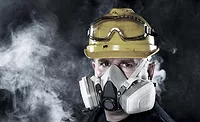
  • When those measures aren’t sufficient, workers must be provided with personal protective equipment.
  • The employer must establish and implement a written exposure control plan.

Why this standard is important

Approximately 2.3 million workers are exposed to RCP in their workplaces, which puts them at increased risk of developing silicosis, lung cancer, chronic obstructive pulmonary disease (COPD) and kidney disease.

RCP is created when cutting, sawing, grinding, drilling, and crushing stone, rock, concrete, brick, block, and mortar. Workers at greatest risk are those who move or blast rock and sand (miners, quarry workers, stonecutters) or who use silica-containing rock or sand abrasives (sand blasters; glass makers; foundry, gemstone, and ceramic workers; potters). Fracking operations are also a source of RCP. Coal miners are at risk of mixed silicosis and coal workers’ pneumoconiosis.

Enforcement Statistics

There are no enforcement statistics available for this standard yet.

Industries that may be cited:

  1. Coal mining
  2. Quarries
  3. Stonecutting
  4. Foundries
  5. Glassmakers
  6. Fracking

Compliance assistance resources

  • OSHA Safety and Health Topics: Silica
  • OSHA “Crystalline Silica Exposure” - Health Hazard Information for General Industry Employees
  • OSHA Small Entity Compliance Guide for the Respirable Crystalline Silica Standard for General Industry and Maritime
KEYWORDS: OSHA standards rulemaking silica

Share This Story

Looking for a reprint of this article?
From high-res PDFs to custom plaques, order your copy today!

Recommended Content

JOIN TODAY
to unlock your recommendations.

Already have an account? Sign In

  • forklift safety

    Exploring the latest technologies in forklift safety

    With more staff and more stock in warehousing now more...
    Facility Safety
    By: Josh Cramer
  • welding

    All about welder’s flash or arc eye

    A flash burn is a painful inflammation of the cornea,...
    Environmental Health and Safety
  • dangerous jobs

    The 10 most dangerous jobs in the U.S.

    On-the-job deaths have been rising — hitting the highest...
    Construction Industry Safety and Health
    By: Benita Mehta
Manage My Account
  • eMagazine Subscriptions
  • ISHN Newsletter & Other Newsletter Alerts
  • Online Registration
  • Manage My Preferences
  • Subscription Customer Service

More Videos

Sponsored Content

Sponsored Content is a special paid section where industry companies provide high quality, objective, non-commercial content around topics of interest to the ISHN audience. All Sponsored Content is supplied by the advertising company and any opinions expressed in this article are those of the author and not necessarily reflect the views of ISHN or its parent company, BNP Media. Interested in participating in our Sponsored Content section? Contact your local rep!

close
  • man wearing the the Sundström SR200 Full Face Mask Respirator
    Sponsored byOHD

    5 Fit Testing Mistakes That Could Cost You

  • This image shows Magid AcuSpex polarized blue mirrored safety glasses.
    Sponsored byMagid Glove and Safety

    Construction PPE Guide: What Crews Need for Each Task

  • lone worker in confined space
    Sponsored byAlphasense Ltd.

    GET THE LEAD OUT of your Safety Oxygen Sensors!

Popular Stories

SpaceX 7 launch

OSHA Investigating Fatal Fall at SpaceX Starbase

dust explosion

Tennessee OSHA Issues Record $3.1M Fine After Deadly Explosion at Munitions Plant

Worker Impairment

How to Tell When a Co-Worker is Impaired? A Safety Pro’s Challenge

top 10 most dangerous jobs

Poll

Seasonal Readiness

With the federal heat stress prevention rule on the horizon, which area of your safety program needs the most attention?
View Results Poll Archive

Products

Surviving an OSHA Audit A Management Guide, 2nd Edition

Surviving an OSHA Audit A Management Guide, 2nd Edition

See More Products

ISHN Podcasts

Related Articles

  • ClickSafety launches training to help construction leaders and workers meet new OSHA respirable crystalline silica standards, maintain safer work environments

    See More
  • PPE

    OSHA Occupational Exposure to Respirable Crystalline Silica

    See More
  • Oil and gas extraction workers exposed to respirable crystalline silica

    See More

Related Products

See More Products
  • 9780849365461.jpg

    Handbook of OSHA Construction Safety and Health, Second Edition

  • surviving.webp

    Surviving an OSHA Audit A Management Guide, 2nd Edition

  • 0470387408.jpg

    Preparing for OSHA s Voluntary Protection Programs: A Guide to Success

See More Products
×

Become a Leader in Safety Culture

Build your knowledge with ISHN, covering key safety, health and industrial hygiene news, products, and trends.

JOIN TODAY
  • RESOURCES
    • Advertise
    • Contact Us
    • Directories
    • Manufacturing Division
    • Store
    • Want More
  • SIGN UP TODAY
    • Create Account
    • eMagazine
    • Newsletters
    • Customer Service
    • Manage Preferences
  • SERVICES
    • Marketing Services
    • Reprints
    • Market Research
    • List Rental
    • Survey/Respondent Access
  • STAY CONNECTED
    • LinkedIn
    • Facebook
    • YouTube
    • X (Twitter)
  • PRIVACY
    • PRIVACY POLICY
    • TERMS & CONDITIONS
    • DO NOT SELL MY PERSONAL INFORMATION
    • PRIVACY REQUEST
    • ACCESSIBILITY

Copyright ©2026. All Rights Reserved BNP Media, Inc. and BNP Media II, LLC.

Design, CMS, Hosting & Web Development :: ePublishing