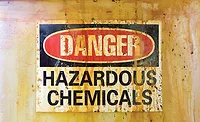
An OSHA Committee Reviews Hazard Communication
South Carolina Republican Strom Thurman followed by brandishing a large blue binder filled with data sheets. He claimed a construction company with 60 employees had spent $75,000 keeping it up to date, though there had never been a single request for an MSDS.
In his best-selling book, "The Death of Common Sense," author Philip K. Howard used hazcom horror stories to help make his case-a brick maker cited for supplying bricks without MSDSs; a two-person Florida company cited for not having data sheets for Windex and Joy cleaning solutions.
Enough is enough, OSHA has said, it's time to do something. So the agency has created a committee. In October, the panel listened for two days as small businesses recited familiar complaints about the 12-year-old hazard communication rule. This month, the work group, an offshoot of the National Advisory Committee on Occupational Safety and Health, hears what large companies have to say. In January, experts will give the group ideas for improving hazcom training, labeling, and MSDSs. By April, the committee will issue a final report with recommendations for simplifying data sheets, reducing paperwork, improving training, and revising enforcement to get at the most serious hazcom violations.
Is this another government committee sending proposals into a bureaucratic black hole, or serious medicine for fixing hazcom headaches?
Agency officials and committee members say this is a sincere effort, and others who have talked to OSHA about the project agree. Of course politics plays a role. The Clinton administration specifically singled out the hazard communication standard for review and set the April deadline for recommendations when it unveiled the "new OSHA" in a report earlier this year. It's important for the agency to be sensitive to small business concerns at a time when regulatory burdens are under scrutiny.
OSHA also faces pressure from the Office of Management and Budget to reduce paperwork demands on employers. In fact, the Paperwork Reduction Act of 1995 mandates a ten percent cut, and what better place for OSHA to look than the massive hazcom standard? To meet another requirement of the law, OSHA will publish a Federal Register notice early next year asking for public comments on ways to reduce the hazcom burden.
Plus, agency personnel like Jennifer Silk, who developed the standard in the early 1980s and defends it to this day, truly want to make it better. Silk is technical advisor to the hazcom committee.
"There is serious interest here," says Joanne Goodell, OSHA's staff coordinator for the hazcom work group. Goodell hustled to find money before the fiscal year 1995 budget ran out to pay a consultant to write what she says will be a 30- to 50-page final report. "We're in good shape to produce a serious document."
Henry Lick, manager of industrial hygiene for Ford Motor Company and chairman of the work group, promises a "no holds-barred" report. "We're on a fact-finding mission," he says. "OSHA wants us to take a look at all the issues and tell the agency what to do."
Current status
Lick's committee has a lot to look at. The regulation aims to reduce injuries and illnesses from chemical exposures by using labels, data sheets, and training to enlighten employers and employees about the risks of hazardous substances. It's a huge undertaking. More than five million workplaces must comply with hazcom requirements. An estimated 650,000 hazardous chemicals fall under the purvey of the rule.Chemical manufacturers and importers are required to determine if their products are hazardous. All hazardous chemicals must be shipped to downstream users with warning labels and MSDSs. Employers do not have to evaluate chemicals they use and prepare MSDSs and labels, but they must have up-to-date data sheets for each hazardous chemical on site, train employees in their safe use, and have a written program describing efforts to communicate hazards.
According to OSHA, a typical manufacturing plant uses 82 hazardous chemicals, and a non-manufacturing facility has 19. The agency estimates that an average manufacturer spends five hours developing a written program, one hour every year updating it, and another hour each year obtaining and maintaining MSDSs. Non-manufacturers spend about half that amount of time.
Safety and health pros know how easy it is to get tripped up over compliance. "An inspector can always ask about your hazcom program and find a violation real fast," says one industrial hygienist. It's a well-known fact that the hazcom rule is OSHA's most often cited standard. In fiscal year 1994, inspectors found more than 15,000 violations. Nitpicking ones make it into books and congressional hearings, but it's also a fact that the number one hazcom violation is for not having a written program-the regulation's most basic component.
The litany of hazcom hassles can almost be recited from memory:
- Chemical companies flood businesses with MSDSs, many for non-hazardous substances. One small businessman complained to the review committee that he received 200-300 data sheets, although only 30 were required. But liability fears drive the onslaught.
- The threat of lawsuits is also a big reason why MSDSs are so long, wordy, and hard to understand. Attorneys don't want to leave anything out.
- Still, another problem that crops up is MSDSs that omit important data. This points out the need for a standardized format, according to critics.
- Training requirements are vague, presenting problems for small businesses.
- Inspectors have a history of embarrassing employers with minor infractions.
Possible remedies
So what kind of solutions might the review committee come up with? At this point anything is possible, from major surgery on the standard to voluntary guidelines. But sources say big business and OSHA really don't want to open the standard for a rewrite. Large companies don't see hazcom as a problem; they have already integrated it into existing safety and health programs. This has involved major investments, and there's no interest in spending more money to meet new requirements.Some problems OSHA could address rather easily, according to hazcom experts. Inspectors could be directed to focus only on major flaws in hazcom programs and getting them fixed, instead of racking up citation numbers. Guidelines for effective training could be issued, and a small business outreach campaign launched.
Simplifying MSDSs and cutting down on paperwork are tougher challenges. Limiting MSDSs to two pages, for example, just doesn't accommodate the need for liability protection, according to one source. Plus it sets a dangerous precedent for OSHA limiting information about safety and health risks.
The idea of having OSHA or some other party operate a national MSDS clearinghouse to be accessed by employers or employees when the need arises would relieve companies of the responsibility for maintaining data sheet files, but one knowledgeable source says it's just not practical.
Another idea is to have chemical producers and importers clearly identify on their MSDSs which ones are covered by the hazcom rule, so users could separate the wheat from the chaff. But it's doubtful they would want to go to the time and expense to make these determinations.
It will be interesting to see what the committee comes up with. As Goodell says, in many respects the problems with hazcom go beyond OSHA. "The way we sue each other, we're all at fault" for generating the paper trail.
Looking for a reprint of this article?
From high-res PDFs to custom plaques, order your copy today!