The Role Belief Plays in Risk Management
Bifurcation of responsibility creates long-term issues in workplace safety

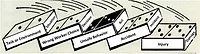
There are organizations that still believe that the risk of accidents occurring are the result of workers flagrantly ignoring good work practices, failing to use common sense, neglecting to follow company policies and procedures, making mistakes and/or using poor judgement. Many organizations' supervisors believe that workers are primarily responsible for their own safety and should engage in safe work practices, use good judgment and be constantly vigilant when working in potentially hazardous environments.
These same supervisors also believe that their primary responsibility is to meet production goals, performance objectives, and worker safety management is the primary responsibility of safety personnel. The typical traditional interventions utilized to manage worker safety include training, retraining, signage, focused inspections, or some form or reward or disciplinary action. This practice of bifurcation of responsibility has failed to produce significant or long-term improvement in the management of safe operations.
Belief associated with Risk Management
Several research studies have identified that workers (as well as management) have different perspectives on risk and the potential negative resulting outcomes from exposure to them. They also harbor beliefs about accident causations and preventive measures. This becomes more important in industries such as construction where there is more variability and uncertainty than others. This situation results from projects being unique, in diverse locations, a mobile workforce, differing project constraints, different and multiple subcontractors and their supervision, different organizational cultures and values among all involved, to name a few. In spite of all these conditions, there are some construction firms that manage their projects in such a manner that their results are far superior to that of the industry at large.
Many organizations devise operating systems that encompass values and standards specific to their core beliefs about work, people, and performance. This is also true of the people who perform the work as well. So, the project work system and the work practice are influenced by the underlying beliefs of the people involved, thereby affecting the perception of risk, beliefs about accident causation, and the overall risk management framework. This thinking establishes the basis for whether operating risks are acceptable, manageable, or deemed unavoidable.
This colors management's outlook on risk in general and influences the measures taken by them to overcome the potential harmful effects of the risks encountered at the worksite. It also influences the workers' evaluation of their exposure to risk and their willingness to use protective systems provided, follow safety procedures, or act upon articulated safety messages. Understanding the underlying drivers opens up a more systematic and targeted avenue to holistically address worksite risks and, therefore, more effectively reduce or eliminate potential accidents.
In the existing competitive economy, many organizations are highly concerned with identifying, evaluating, and managing occupational and environmental risks. The beliefs people have, to some extent, influences their perceptions of risks, and these perceptions affect their behavior with respect to performance and safety. Risks are generally perceived in relation to whether they are judged to be tolerable or intolerable, manageable or unmanageable, or beneficial or harmful. Broadly speaking, safety may be seen as the level of risk that is judged acceptable in a particular work environment.
Risk perception is a complex phenomenon that can be determined by social, psychological, physical, political, and/or cultural factors.
Studies on this subject have shown that risk perception is a complex phenomenon that can be determined by social, psychological, physical, political, and/or cultural factors, to name a few. It is contingent on a great number of factors linked either to the risk itself, to characteristics of the perceiver and his or her personal history, or to the culture and values of the society, organization or crew. A subjective evaluation of risk can be influenced by beliefs about the risk. There are many possible factors at play, such as its familiarity, its utility, the perceived probability of the occurrence of an adverse outcome, and its possible severity. Another important factor is whether the risk is voluntarily taken on or somehow imposed either naturally, technologically, operationally, or otherwise. Specific factors regarding risk:
- Ability — workers may contribute to this problem by primarily relying on experience, self-confidence, and their physical abilities to perform their task safely in spite of the existing risks in the work environment. This may be because they have performed such work in similar conditions in the past, without having any negative outcomes, such as getting injured.
- Personal reasons — may cause a worker to avoid following safety measures due to a "macho" view of their abilities, or the fact that coworkers may ‘look down’ on the use of company expected use of safety practice or personal protective equipment.
- Peer pressure — This could happen to a new employee who wants to be accepted into the (group) crew and to gain such acceptance will mimic group behavior even if it is not in line with company required safety practices or procedures.
- Force of habit — After having performed similar work over a period of time the worker develops a way, an approach to performing it. This then becomes a habit and to some degree habits are rather hard to change.
- Perception — The worker may not perceive the existence of the risk of injury or fail to assess the extent or severity of the exposure in the task they are assigned to perform. As a result, they will proceed with the work without taking the necessary precautions and eventually have an accident.
- Carelessness — After doing similar work for some time a worker can perform it without much forethought or concentrated focus. This then tends to allow them to think of other things while performing the work. If conditions stay the same the worker can do the work safely. But if a change in conditions occurs the worker cannot react fast enough and so may have an accident and/or get injured. After the accident the investigator may attribute the accident to carelessness or inattention on the part of the worker, which does not get at the real cause of the accident.
- Error — Everyone makes mistakes. In fact, some researchers have found that on average people make over five mistakes per hour. So, if making mistakes is inevitable then in those situation accidents and injuries are apt to occur. To deal with these possibilities an effort must be made to make tasks error-proof. This requires that all tasks be evaluated for the risk of injury prior to the commencement of work and where possible those risks should be eliminated or at least their negative outcome rendered less severe.
- Exposure duration — The task is expected to take very little time to perform so even though the exposure is recognized, thinking like "it will only take a minute, and I can deal with it" may encourage a worker to believe that they can get it done before any adverse outcome can happen.
- Production — Workers may deem the governing safety measures as an impediment to their ability to achieve expected production goals. They may understand the risk but assume that they can deal with it to get the job done. They may feel that to stay employed, they must meet production goals despite the risk, thereby causing them to consciously and willingly engage in the at-risk behavior, in order to complete perceived or actual production goals.
Conclusion
Worker beliefs involving the impact of risk associated with the tasks to which they are assigned may have a profound impact on the safety outcomes of the worksite. The perceived benefit of risk taking should be a factor that is assessed when considering or evaluating the motivation underlying the resulting worker behavior. Depending on worksite situation, beliefs can positively or negatively affect project safety and its management.
Beliefs about the ability to control risk are important to any accident analysis and the explanations of causation. By gaining insight into the effect of such beliefs and taking those into account, accidents and their causation may be analyzed more realistically. This likely will lead to a more robust set of preventive measures which can be devised and implemented to more effectively deal with inherent risks associated with construction tasks.
Numerous research studies have identified the importance that beliefs about risk play in workplace safety and its management. Researchers have also verified that subjective judgment by people is a major component in any risk assessment. If, to some extent worker judgment is faulty, the risk management process and efforts will likely be misdirected resulting in inferior results. It has been asserted that many accident preventive measures are driven by causal inferences rather than the actual drivers of such events.
All this highlights the role of the organization, operations, the project as well as the individual worker. The organization must enable and support a safety culture. Management must create performance enabling systems and provide reasonable compensation and benefits. Operations should create a supportive and responsive work climate. Task design, task demand, reasonable production goals should be considered before assigning the task to a worker. Unique risks should be discussed with the worker.
Project supervision must know each worker’s knowledge, capability and motivation and match their capabilities to the task risks as well as task demand they are going to assign them to. Management should plan, organize, direct and control in aways that considers the worker’s capabilities to the performance and production targets. All this requires open communication, coaching and counselling to build trust and enhance safety outcomes.
Looking for a reprint of this article?
From high-res PDFs to custom plaques, order your copy today!