


5 Fit Testing Mistakes That Could Cost You
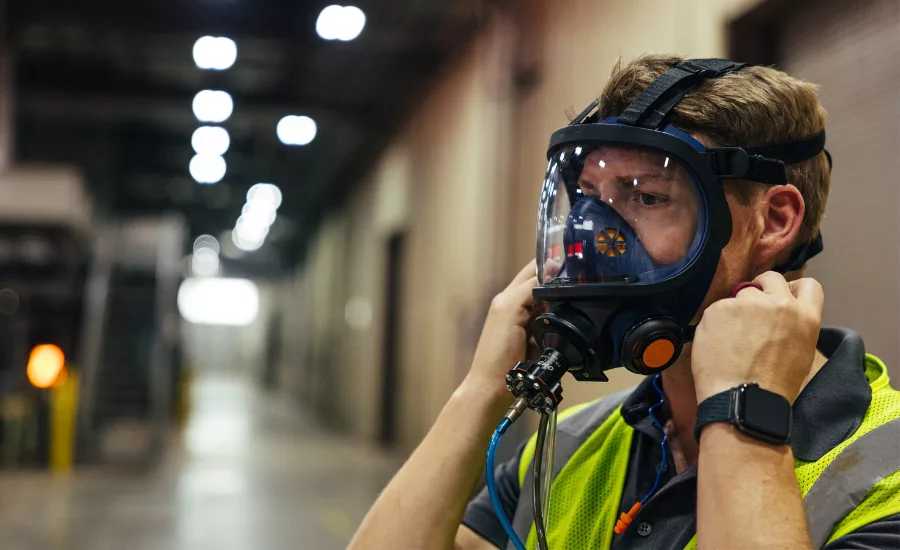
Respiratory protection consistently ranks among OSHA's top five most-cited violations. Many organizations still aren't fit testing at all. But even among those that are, citations often come not from skipping the test entirely, but from something in the program falling through the cracks.
Most fit testing programs don't fail because people don't care. They fail on the details. A missed retest. A record that can't be located. A result that nobody questioned.
These five mistakes are some of the most common oversights in respirator fit testing programs. Each one creates compliance risk. More importantly, each one leaves workers less protected than they should be.
1. Not Retesting When a Worker's Face Changes
OSHA requires an additional fit test whenever conditions change that could affect respirator fit. Most safety managers know to retest when the respirator model changes. Fewer track the changes that happen to the person wearing it.
A weight change of 20 pounds or more can alter facial geometry enough to break a seal that passed six months ago. Dental work, facial scarring, Botox, and dermal fillers can all affect how a facepiece sits against the skin.
These aren't hypothetical edge cases. They're the kinds of changes that happen gradually, go unreported, and never trigger a retest because nobody thought to ask.
The fix: Build retesting triggers into your program that go beyond the respirator itself. Include questions about physical changes during annual fit tests, and train supervisors to flag situations where a retest may be warranted. A fit test is only valid for the face that took it.
2. Treating Documentation as an Afterthought
OSHA requires employers to maintain records of fit tests performed on each employee. If those records can't be produced during an inspection, OSHA treats it as if the test never happened.
The most common problem is straightforward: no records exist at all. The test was done, but nobody documented it. After that, the gaps get more specific. Missing test dates. Incomplete respirator model information. Exercise records that don't match the protocol used. Test results stored on a single local machine with no backup, lost when the hard drive fails.
Either way, the result is the same. No usable record means no proof of compliance.
The fix: Standardize your recordkeeping from day one. Every fit test record should include the employee's name, the test date, the test type (qualitative or quantitative), the respirator make, model, and size, the pass/fail result, and the name of the person who administered the test. Back up your data. If your records live on one computer, they're one hardware failure away from not existing at all.
Cloud-based compliance platforms like OHD Logic Cloud solve this by centralizing fit test records, automating documentation, and keeping your data accessible and audit-ready from anywhere. No spreadsheets to maintain, no local files to lose.
3. Not Accounting for Real-World Conditions
Fit tests are typically conducted in controlled indoor environments. A health clinic. A training room. A quiet office down the hall. These settings are designed to verify that a respirator can achieve an adequate seal under standardized conditions.
But the workplace is rarely controlled. Workers wear respirators in heat, humidity, and during physical exertion. They bend, lift, climb, and talk. The movement patterns on a job site, fire ground, or plant floor go well beyond the exercises performed during a fit test.
A passing fit factor is an essential starting point. It confirms that the respirator can provide a proper seal for that individual. And when possible, conducting fit tests closer to the actual work environment can give you a more realistic picture of how well that respirator performs. However, maintaining a seal in the field depends on how the respirator is worn and used throughout the workday.
This doesn't diminish the value of fit testing; it reinforces its role as one critical part of a broader protection system. It means that a passing result should be the beginning of the conversation about protection, not the end of it. Fit testing establishes capability. Real-world use determines consistency.
The fix: When possible, account for workplace conditions when performing fit tests. Reinforce the importance of performing a user seal check every time a respirator is donned. Train workers to recognize when a seal may be compromised during use. The fit test verifies that the right respirator can achieve a seal. Workplace habits determine whether that seal holds.
4. Ignoring Fit Test Failures Instead of Investigating Them
When a worker fails a fit test, the most common response is to retest. If that doesn't work, try a different size. If that doesn't work, try a different respirator entirely. Eventually someone passes, and everyone moves on.
But that approach skips the more important question: why did the test fail in the first place?
Root causes vary. Improper donning technique. A worn or damaged face seal. Wrong size selection. Facial hair that should have been addressed before the test. A facepiece that simply doesn't match the worker's face geometry. Each of these points to a different fix, and none of them are solved by just retesting until you get a pass.
When you see a pattern of failures across your workforce for a particular make and model, that's worth investigating too. It could indicate a training gap in donning technique, a sizing issue, or a respirator that doesn't fit your worker population well.
The fix: Treat each failure as diagnostic data. Document what you believe caused the failure, not just the result. Look for patterns. A single failure is a data point. A recurring pattern is an opportunity to strengthen your entire program.
5. Treating Fit Testing as a Compliance Checkbox
Annual fit testing becomes routine. Routine becomes rote. Rote becomes "just get through it."
When fit testing is treated as a compliance checkbox, organizations miss its real value: verifying that workers are actually protected. The goal is not just to produce a piece of paper that satisfies an auditor. It's to confirm that the respirator a worker relies on in a hazardous environment actually provides the protection it's rated for.
Compliance is the floor, not the ceiling.
The organizations with the strongest safety records use fit testing as a tool for continuous improvement. They identify trends in pass/fail data. They catch equipment issues before they become protection gaps. They use the process to reinforce a culture where respiratory protection is taken seriously at every level of the organization.
The fix: Reframe fit testing internally. Yes, OSHA requires it. But it's also how you verify that your respiratory protection program is actually working. When leadership treats fit testing as a tool for protection rather than just a regulatory obligation, the rest of the organization follows.
The Common Thread
These five mistakes persist because fit testing sits at the intersection of compliance, logistics, and culture. No single person owns all three, and the gaps tend to form at the seams.
Fixing them doesn't require a bigger budget. It requires attention to the details that separate a compliant program from a protective one.
OHD builds fit testing instruments and software designed to close these gaps. The QuantiFit2 delivers the fastest, most accurate fit test for elastomeric respirators, portable enough to test anywhere your workers are. The AeroFit handles both N95 and elastomeric fit testing with silent operation and a user experience designed to simplify the testing process. Logic Cloud ties it all together, centralizing fit test records from both instruments into a single compliance platform, so your documentation is always audit-ready.
OHD is the only manufacturer with both quantitative fit testing technologies. We can help you find your fit with the QuantiFit2 or AeroFit. Learn more about partnering with us.
Supplier Spotlight: OHD
Improve workplace safety with precise respirator fit testing and monitoring solutions from OHD.
Learn more about OHD at ISHN's EHS Buyers' & Resource Guide here →Looking for a reprint of this article?
From high-res PDFs to custom plaques, order your copy today!


