
For 30 years Alphasense has developed high precision, reliable gas (and particle) sensors used in instruments for safety applications and Environmental monitoring. Alphasense sets standard in sensing technology and are well-known worldwide.

GET THE LEAD OUT of your Safety Oxygen Sensors!
For decades, regulatory bodies have worked to reduce or eliminate hazardous materials from everyday products. In 2003, the European Union introduced the Restriction of Hazardous Substances (RoHS) Directive 2002/95/EC to limit the use of substances such as lead, mercury, and chromium in Electrical and Electronic Equipment (EEE). As a result, circuit boards in safety instruments—including gas detection devices—are now commonly manufactured without hazardous materials, as indicated by their CE marking.
Exposure to hazardous substances poses serious risks to human health. This exposure can occur through direct contact or through improper disposal. For example, if products containing lead or mercury are not discarded correctly, these substances may leach into groundwater and create long-term drinking water concerns. To address this, the EU established the Waste Electrical and Electronic Equipment (WEEE) Directive to ensure proper recycling and disposal of EEE.
Hazardous Considerations for Safety Instruments with Oxygen Sensors
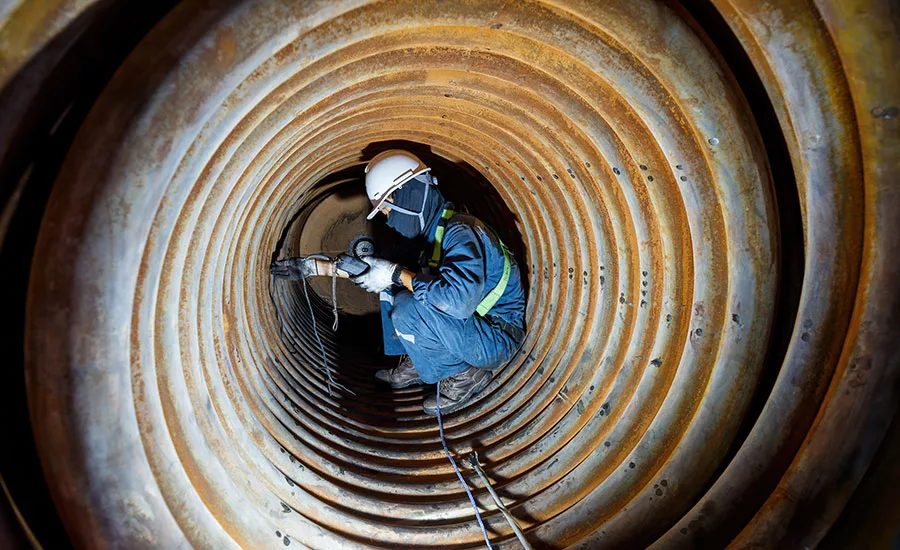
While EU Directives and environmentally conscientious professionals have worked to eliminate hazardous materials as much as possible, there are still safety applications where no other materials can be substituted. One such example is lead-based oxygen sensors, widely used in portable and fixed gas monitoring devices to protect workers in confined spaces and potentially hazardous environments.
Lead-based oxygen sensors have long been valued for their fast response times and accurate, reliable oxygen detection, enabling workers to react quickly to potentially life‑threatening conditions.
Because no non-hazardous alternative has historically matched their performance or size constraints, the European Commission continues to grant an exemption under the RoHS Directive for lead-based oxygen sensors. Economic burden is also a consideration. An alternative technology to lead-based oxygen sensors does exist, but it is prohibitively expensive and much too large for a worker to use in confined spaces where personal or portable devices are required. As a result of these considerations, the EU continues to provide an exception to the RoHS directive for lead-based oxygen sensors.
Photo: Olivier Le Moal / Shutterstock
Considerations for a Lead-Free Oxygen Sensor
For the EU to discontinue this RoHS exception, a viable replacement must equal or surpass the performance of today’s lead-based sensors, including:
Performance Requirements
A viable replacement must equal or surpass the performance of today’s lead-based sensors, including:
- Fast response time – immediate indication of oxygen level changes for safety applications
- High sensitivity – sufficient resolution
- Precision – accurate, stable oxygen measurements
- Sensor lifetime – equal to or greater than current lead-based oxygen sensors
Design Requirements
New sensors must serve as direct, drop‑in replacements, requiring:
- Seamless use in both new and existing safety devices
- No need to redesign instruments or their circuitry
- Standard 2-pin sensors with no bias requirements
Other Requirements
- Economically viable for manufacturers and end users
- Leak‑free design to ensure safety and longevity
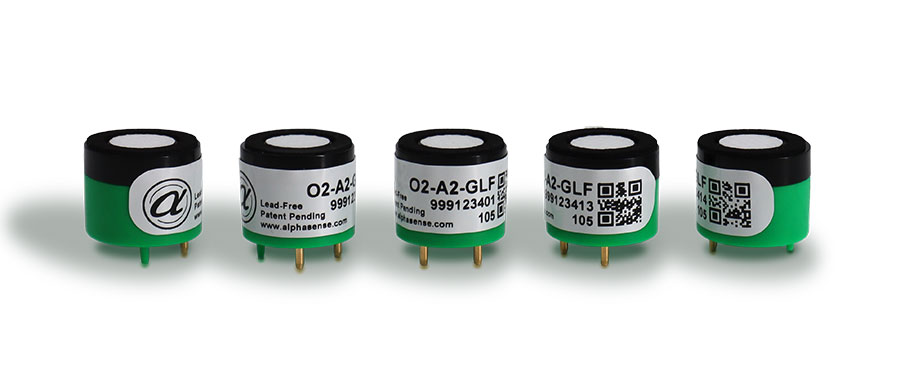
Image: Alphasense Ltd.
Lead-Free Oxygen Sensors: A New, Innovative Option for Safety
Alphasense has recently developed a new, innovative lead-free oxygen sensor that meets the needs outlined above, including, most importantly, response time. Because rapid response is essential in safety applications to prevent asphyxiation risks, matching the performance of lead-based sensors is vital.
Testing shows that the new lead‑free sensor delivers equivalent or slightly faster response times compared with traditional lead-based sensors during oxygen depletion from 20.9% O₂ to 0.0% O₂.
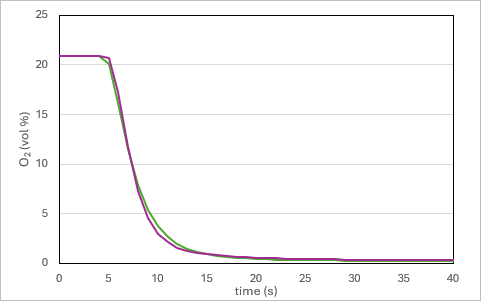
Comparative response time: lead-based vs. lead-free oxygen sensors. Green Line is the Lead-Free Oxygen Sensor. Purple Line is Lead-Based Oxygen Sensor. Graph: Alphasense Ltd.
Additional tests demonstrate strong alignment across other performance characteristics. To request a full comparative technical report, please contact Alphasense.
This innovative sensor is not only environmentally friendly — it is also economically practical. As a true drop‑in replacement, it minimizes or eliminates the need for redesigning instrument circuitry, reducing transition costs. Additionally, because it contains no lead, it simplifies disposal and reduces recycling expenses, unlike traditional lead‑based variants that require special handling and compliance procedures.
Preparing for Regulatory Change
With the introduction of a viable, high‑performance, lead‑free oxygen sensor for safety applications, it is increasingly likely that the EU’s RoHS exemption for lead-based oxygen sensors will not be extended beyond its scheduled expiration in January 2027.
Will your products be ready?
Looking for a reprint of this article?
From high-res PDFs to custom plaques, order your copy today!


