Are you ready for the future of work?
Five trends that could affect your business

1 Forget the rigid corporate ladder
The past several decades have seen the collapse of the corporate ladder, according to an article in The Guardian, a London-based newspaper. By one estimate, companies have flattened out by about 25% in the past 25 years, eliminating layers of management. Increasingly, employees, especially in smaller firms, have more freedom to pitch ideas to senior executives without going through hierarchical layers of management
Many career paths are now following a zigzag rather than a straight path, according to the article. Employees can find growth by assuming different roles, acquiring new experiences, new skills, and new networks -- a portfolio of transferable skills.
This is the path that the millennial generation will travel. Millennials expect much more entrepreneurial environments – more freedom to operate, less control. Your younger employees want the freedom to take full ownership of particular jobs or projects, with minimal supervision. They expect access to top management without going through layers of middle management.
2 The robots are coming
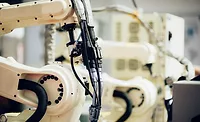
Automation could be a significant factor in PPE sales in future decades. Entire professions could become obsolete, according to The Guardian. A 2013 study estimated that 47 percent of jobs in the U.S. could be susceptible to automation during the next two decades. Robots could potentially eliminate 40 to 75 million jobs worldwide by 2025, according to one study.
Relating to demand for PPE, many areas of manual work are being affected. Robots in factories and warehouses are becoming more mobile, versatile and affordable. Anything that involves basic hand-eye co-ordination –– digging a ditch or painting a house, laying pipes or setting bricks –– will be capable of being performed by be low-cost, efficient mechanical devices that can do that work.
A large fraction of the current workforce is engaged in jobs that are routine, repetitive and predictable. These types of jobs are ripe for automation.
3 Low-cost online outsourcing will increase
Websites that match employers with contractors are growing fast. We’re talking about a huge global market of independent contractors who are available to work on demand from remote locations on a diverse array of digital jobs.
Online platforms match employers with contractors, inviting them to bid for each task, according to The Guardian. Management consultants McKinsey estimate that by 2025 some 540 million workers worldwide will have used one of these platforms to find work.
Many companies will benefit from instant access to a pool of cheap, willing talent, without going through a time-consuming recruitment process. And of course there is no need to pay independent contractors healthcare benefits, vacation time and incur other overhead costs.
The downside: an emerging global generation of workers will have little or no financial security, job stability or prospect of career progression. Outsourcing could lead to a race to the bottom, with employers hunting for the cheapest labor. And it’s not just unskilled labor that’s being contracted out online; legal services, medical diagnosis, architectural services and accounting are among the more sophisticated skillsets that can be found in online talent pools of contractors.
The upside: Many people don’t want to work 9 to 5 in an office any more. They want more flexible work, in terms of the hours and location. This free agent nation can be tapped by employers in several ways. Firms may want to use online “matching” services to test out contractors to see if they’re a good fit before offering them a permanent job. And contractors can likewise test out potential employers.
This online matching of contractors to specific employer needs comprises what is called “cloud labor. According to some estimates, the use of cloud labor is doubling each year.
4 Workplace monitoring will increase
This is another trend with implications for workplace safety and health innovation. Already we’re seeing wearable technology and remote sensors being marketed to track employee whereabouts, productivity, and personal health and safety indicators, such as stress levels, sleep patterns and exercise.
With emerging technologies, companies can monitor where employees are, what they’re doing, and also gauge how they’re feeling – whether they’re stressed, tired or not getting enough exercise outside work.
Some tracking technologies are now widely used. Low-cost GPS systems record the progress of delivery drivers. Earpieces relay orders to warehouse employees and can also track their performance and downtime.
Look for increased monitoring of intimate details about personal health and wellbeing. Last year, sales of devices such as the Fitbit and Jawbone, which track exercise, food intake, sleep patterns and other health-related information, totaled 26.4 million, according to The Guardian article. That figure is expected to rise to 72.1 million by the end of this year. According to the technology research company Gartner, about 10,000 companies worldwide offered their staff fitness trackers in 2014 and Gartner predicts in 2016 most companies with more than 500 employees will offer them.
The selling point of these wearables: an employee’s work performance, productivity and concentration correlates to sleep patterns and levels of anxiety and stress outside the workplace.
Some large companies already embrace this idea. BP gives out Fitbit fitness trackers to its North American staff as part of an incentive program to reduce healthcare costs. If employees prove they’ve increased their fitness – hitting a steps-per-day target, for example – they can reduce their health-insurance premium.
The downside: sales of wearables can be stymied by invasion of privacy concerns. Many employees object to being monitored. The idea may be to improve employee health, but awareness of “Big Brother” scrutiny and employers monitoring employees to meet targets can cause stress and anxiety, which can lead to health problems, not wellbeing.
Another case against wearables: Will employers use personal data against employees? Will they share the data with third parties? Expect many employees to be wary and demand high levels of transparency.
5 Forget quitting at 65
As people live longer they are expected to work longer, according to The Guardian. Pressure comes from governments struggling to afford pensions for a longer-living population, and also from employees, who find it harder to make their retirement savings stretch as the average life expectancy rises.
These factors lead to speculation that traditional retirement as we know is coming to an end, or at least or transitioning to a stage in which older workers will stop working gradually rather than abruptly upon reaching retirement age.
The downside: many employees, especially in low-skill, physically demanding jobs, will feel a sense of loss in job security and economic security if retirement is postponed or phased in gradually. Having to work longer than you planned can be scary.
One reason is age discrimination, despite legal protections against it. The odds are often stacked against older people applying for jobs if they are forced to work longer. Young employers can be seen as more tech savvy, adaptable, cheaper, and more likely to stay with an employer for a longer period.
Bottom line: employees of all ages must assume ownership of their careers and keep their skills up to date and their market value viable.
An older workforce, especially in physically demanding jobs, has obvious safety and health implications. PPE may have to take into consideration the effects of added weight and restricted mobility on older workers. Comfort, breathability and flexibility will be important for more easily fatigued employees in their 60s. Ergonomically friendly products could be more in demand.
Looking for a reprint of this article?
From high-res PDFs to custom plaques, order your copy today!