ISHN logo
search
cart
facebook twitter linkedin youtube
  • Sign In
  • Create Account
  • Sign Out
  • My Account
ISHN logo
  • NEWS
    • Today's News
    • Global Safety News
    • Government Regulations
  • PRODUCTS
    • Product Innovations
    • Featured Products
  • TOPICS
    • Environmental Health and Safety
    • Facility Safety
    • Workplace Health
    • Occupational Safety
    • PPE
    • More Topics
  • CONSTRUCTION
  • TECHNOLOGY
  • COLUMNS
    • Best Practices
    • Dave Johnson: What’s going on
    • Editorial Comments
    • Leading Safety
  • MULTIMEDIA
    • ISHN Podcast
    • Videos
    • Cold Stress Education Quiz
    • Webinars
    • White Papers
  • MORE
    • Buyer's Guide
    • Newsletters
    • Convention Companion
    • Polls
    • Events
    • ISHN Store
    • Sponsor Insights
  • EMAGAZINE
    • eMagazine
    • Archived Issues
    • Contact
    • Advertise
  • JOIN TODAY!
Environmental Health and SafetyWorkplace Health

Glass -- a transparent solution to noise pollution

noise
January 14, 2016

We can’t see or smell it, but it’s one of the most insidious pollutants of the modern world.

Noise. Whether it's the neighbors upstairs having a party at 5 am (complete with herd of elephants), or a jet aircraft coming into land with you directly underneath the flight-path.

How we perceive noise is personal and subjective. A person on a bus may be enjoying their music, but the noise leaking from his or her earphones can be deeply irritating to everyone else.

Nor does it have to be a loud noise. For example, a gently-ticking bedside clock may lull some people off to sleep; for others, it's an irritant guaranteed to keep them awake.

In the UK, noise is defined as being “a sound, especially one that is loud or unpleasant or that causes disturbance.” In the USA, it's defined as “unwanted or disturbing sound.”

Sound becomes noise when it either interferes with normal activities such as sleeping, conversation, or disrupts one's quality of life.

Unwanted noise probably affects most of us every day, and adversely affects the lives of millions of people. Usually, it's just annoying.

However, it can be more than just an irritant. Research has demonstrated a link between noise and health problems, including stress-related illnesses, high blood pressure, and sleep disruption.

Lack of sleep from noise pollution may also have an unexpected impact on our waistlines. Research in Sweden and published in the British Medical Journal suggests that disrupted sleep makes people less willing to exercise, and more likely to put on weight.

In 1990, about 30 million people in the USA were exposed on a daily basis to occupational noise levels above 85 decibels a harmful threshold. That compares with just over 9 million people in 1981, and has, no doubt, further increased.

In the developed world, according to the World Health Organization (2001), as many as 15% of the working population are exposed to sound in excess of 85 decibels.

Worryingly, more than five million children in the USA, aged between six and nineteen, suffer from noise-induced hearing impairment (Havas 2006). In the UK, exposure to noise has impaired children's reading comprehension (Clark and Stansfeld 2005).

In the workplace, noise pollution has an impact on staff morale, efficiency and productivity. A 2013 study by the University of Sydney found that a lack of sound privacy was the biggest drain on employee morale.

Prosaically, we perceive noise either physiologically or psychologically; the former being when we simply hear the noise, the latter when we take the trouble to listen to the noise. It's the difference between listening to our own music and being forced to listen to someone else's.

In the UK, more than 422,000 noise complaints were received by local authorities during 2013-2014. That's a lot of noise, and a lot of complaints.

There are, of course, a number of ways in which sound can be reduced, from better office layout to sound-proofing, and providing a workplace free of unacceptable noise intrusion is a legislative requirement.

Often overlooked, one sound-proofing material is glass -- either for external glazing or as internal screens, and which can reduce noise levels dramatically.

Glass controls noise by reflecting the noise back towards its source, and absorbing noise energy within the glass.

Noise pollution can come in a variety of low, medium or high frequency sounds. Higher pitched sound, carried by short sound waves, are easier to absorb. Noise at lower frequencies, for example traffic noise, is less easy to deal with.

It's therefore important to choose the correct acoustic glazing type, to best deal with the frequency or pitch of the noise to be absorbed, as well as the level of decibels to be reduced.

Sound insulation within a glazing system is achieved by building in cavity space between panes of glass, using thicker glass, an efficient insulating window frame, or specially laminated acoustic glass.

Acoustic glass is a sandwich of two or more sheets of glass, heat or pressure bonded together with one or more interlayers. The interlayers act as a noise dampener, weakening the energy of the sound waves as they travel through the glass.

Glass does have other benefits because natural light matters. Research by Mirjam Muench has found that people working under artificial light become sleepier earlier than those who work in natural light.

In addition, studies demonstrate that people work best when they have a view of the external world, on top of the ambient light from it.

Glass walls help light flood in, bringing the outside inside, and psychologically connecting us with the world beyond our office.

In the same way that specialist glazing systems provide fire compartmentation, they also compartmentalize sound, from curtain walling shutting out external noise, to internal glazed partitioning and smoke-sealing doors containing noise inside a building.

As designers and employers have become increasingly aware of the benefits of a quiet and conducive workplace, so systems have become increasingly specified for their sound-proofing qualities.

Source: www.wrightstyle.co.uk

KEYWORDS: hearing conservation hearing loss hearing protection noise

Share This Story

Looking for a reprint of this article?
From high-res PDFs to custom plaques, order your copy today!

Recommended Content

JOIN TODAY
to unlock your recommendations.

Already have an account? Sign In

  • forklift safety

    Exploring the latest technologies in forklift safety

    With more staff and more stock in warehousing now more...
    Workplace Training Strategies
    By: Josh Cramer
  • welding

    All about welder’s flash or arc eye

    A flash burn is a painful inflammation of the cornea,...
    Environmental Health and Safety
  • dangerous jobs

    The 10 most dangerous jobs in the U.S.

    On-the-job deaths have been rising — hitting the highest...
    Construction Industry Safety and Health
    By: Benita Mehta
Manage My Account
  • eMagazine Subscriptions
  • ISHN Newsletter & Other Newsletter Alerts
  • Online Registration
  • Manage My Preferences
  • Subscription Customer Service

More Videos

Sponsored Content

Sponsored Content is a special paid section where industry companies provide high quality, objective, non-commercial content around topics of interest to the ISHN audience. All Sponsored Content is supplied by the advertising company and any opinions expressed in this article are those of the author and not necessarily reflect the views of ISHN or its parent company, BNP Media. Interested in participating in our Sponsored Content section? Contact your local rep!

close
  • man wearing the the Sundström SR200 Full Face Mask Respirator
    Sponsored byOHD

    5 Fit Testing Mistakes That Could Cost You

  • This image shows Magid AcuSpex polarized blue mirrored safety glasses.
    Sponsored byMagid Glove and Safety

    Construction PPE Guide: What Crews Need for Each Task

  • lone worker in confined space
    Sponsored byAlphasense Ltd.

    GET THE LEAD OUT of your Safety Oxygen Sensors!

Popular Stories

SpaceX 7 launch

OSHA Investigating Fatal Fall at SpaceX Starbase

Automated loading dock equipment

After March 2026 Rivian Death, Safety Managers Reassess Loading Dock Systems Under OSHA's Warehouse Emphasis Program

psychology in the workplace

Most Workplaces Measure Psychological Safety, Ignoring Psychosocial Risks

top 10 most dangerous jobs

Poll

Seasonal Readiness

With the federal heat stress prevention rule on the horizon, which area of your safety program needs the most attention?
View Results Poll Archive

Products

Surviving an OSHA Audit A Management Guide, 2nd Edition

Surviving an OSHA Audit A Management Guide, 2nd Edition

See More Products

ISHN Podcasts

Related Articles

  • Silent Skies Act introduced to curb noise pollution from airports

    See More
  • Noise pollution: a forgotten environmental threat

    See More
  • Enviro group: Noise pollution a health threat near unconventional oil & gas sites

    See More

Related Products

See More Products
  • A Basic Guide to RCRA—Understanding Solid and Hazardous Waste Management, Second Edition

  • 111885960X.jpg

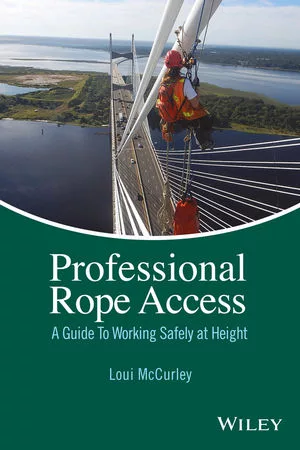
    Professional Rope Access: A Guide To Working Safely at Height

  • 0470387408.jpg

    Preparing for OSHA s Voluntary Protection Programs: A Guide to Success

See More Products

Events

View AllSubmit An Event
  • October 18, 2017

    ACGIH® TLV® For Audible Sound – Understanding the Proposed Notice of Intended Change to The Acgih® Tlv® for Noise

    Occupational noise exposures represent an important but under-recognized cause of disease and disability in the United States. Now titled as Audible Sound, the ACGIH® Threshold Limit Values for Physical Agents (TLV®-PA) Committee has proposed a revision to the TLV® for Noise.
  • September 22, 2016

    Bang! Damage from impulse noise and the effectiveness of hearing protection

    Some of the most hazardous sounds we hear are brief sounds – noises from impacts and impulses. These arise from sources like household tools, construction, industrial noise, firecrackers, guns, and even automotive airbags.
View AllSubmit An Event

Related Directories

  • Camfil Air Pollution Control

    Camfil APC is an industry leading global manufacturer of dust, fume and mist collection equipment for challenging industrial applications, with production facilities around the world including the Americas, Europe and Southeast Asia. Camfil makes filtration systems that improve indoor air quality in manufacturing and processing facilities and protect workers from toxic and combustible dusts. Camfil also makes replacement filter cartridges to fit most leading dust collection systems.
×

Become a Leader in Safety Culture

Build your knowledge with ISHN, covering key safety, health and industrial hygiene news, products, and trends.

JOIN TODAY
  • RESOURCES
    • Advertise
    • Contact Us
    • Directories
    • Manufacturing Division
    • Store
    • Want More
  • SIGN UP TODAY
    • Create Account
    • eMagazine
    • Newsletters
    • Customer Service
    • Manage Preferences
  • SERVICES
    • Marketing Services
    • Reprints
    • Market Research
    • List Rental
    • Survey/Respondent Access
  • STAY CONNECTED
    • LinkedIn
    • Facebook
    • YouTube
    • X (Twitter)
  • PRIVACY
    • PRIVACY POLICY
    • TERMS & CONDITIONS
    • DO NOT SELL MY PERSONAL INFORMATION
    • PRIVACY REQUEST
    • ACCESSIBILITY

Copyright ©2026. All Rights Reserved BNP Media, Inc. and BNP Media II, LLC.

Design, CMS, Hosting & Web Development :: ePublishing