Improving audits and inspections
Tips for collecting and analyzing safety data
Regular safety inspections and audits play an important role in establishing workplace safety strategies. However, inspections and audits become ineffective when safety professionals fail to look at the data collected or act on what is found during these important reviews.
This article reviews common types of safety inspections, shares tips for improving your organization’s inspection process, and explores the ways in which safety management software can assist EHS professionals in conducting thorough analyses of inspection data.
Types of inspections
Most organizations conduct a wide variety of inspections on an ongoing basis. For example, oil and gas companies may conduct daily rig inspections, and construction companies may complete weekly inspections of a jobsite.
However, it’s not always likely or expected that an inspection will cover the entire span of a worksite. When workspaces are extensive and complex, inspections are often targeted towards certain areas. A manufacturing facility, for example, might develop separate inspection checklists for its warehouses, delivery areas, and manufacturing floors.
Inspections can also be centered on tools and equipment, including personal protective
equipment (PPE). Pieces of equipment and tools that have never been used before, that are exposed to conditions causing deterioration, or have a high potential for serious accidents should be inspected at regular intervals to ensure that they’re safe and working properly.
EHS professionals, front-line employees or supervisors may all conduct regular inspections of work areas and equipment. However, EHS professionals also generally complete more in-depth weekly, monthly, or annual inspections.
Best practices
Are your safety inspections becoming routine? If you’re seeking to improve your organization’s current inspection program, consider putting the following suggested processes into practice.
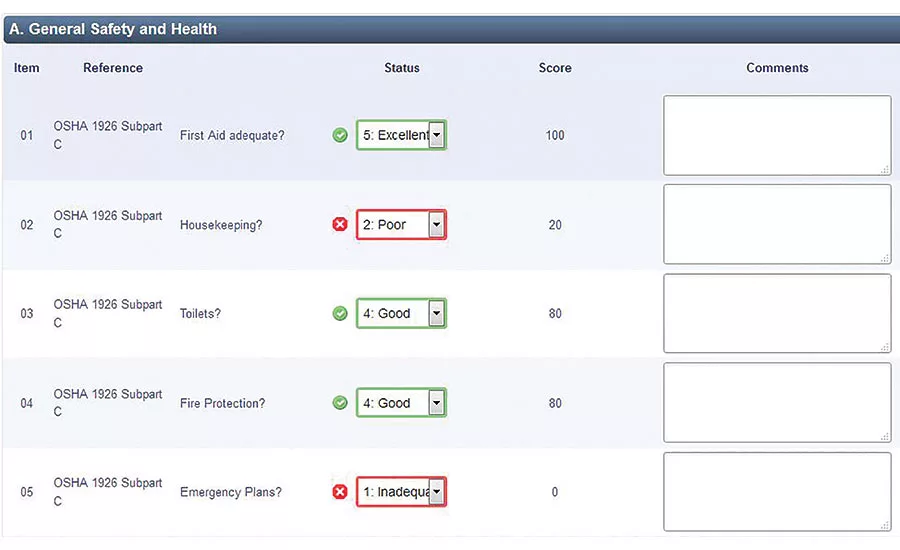
Use a checklist – Developing and using checklists for your inspections helps inspectors to focus on specific work areas and important hazards. Following a checklist also helps to add structure and proper organization to the inspection process. Using standardized checklist also eases analysis of inspection results, allowing EHS professionals to compare results among inspectors and identify common trends.
Establish a scoring mechanism – Think carefully about how you would like inspectors to evaluate each checklist item. A few checks or “X” marks may not provide a complete picture of an inspector’s findings. In contrast, a specific percentage or point based scoring system allows employees to easily understand just how close or far an inspected item is from a state of compliance. Using a points-based system can also serve to introduce an element of energy and competition to an inspection program, as workers will strive to improve scores.
Track open issues – Don’t allow documented issues to be ignored. It’s important that you track any recommended follow up activities and corrective actions to completion. If the same safety problems are being recorded over and over again, it’s a sure sign that corrective actions aren’t being closed out, so the same deficiencies are bound to be identified and marked again in future inspections.
Make the most of inspection data – Once findings have been recorded, you should start to develop a plan for what needs to be done with your newly gathered data. Inspection results should be shared with workers so that they are aware of identified hazards, and what can be done to correct them in a timely manner. Inspection data should also be reviewed and analyzed on a regular basis so that you can keep an eye out for trends and persistent problems.
How can safety management software help?
Many organizations find it difficult to perform detailed trend analyses of inspection results and struggle to ensure that all open issues are resolved in a timely manner. Using paper forms further complicates the process of analyzing results and tracking follow up activities. EHS professionals can spend considerable time and resources searching through files and archives to find the information they seek, instead of using this time to solve important issues.
Safety software can save safety managers valuable time and energy by allowing for detailed reporting and analytics of inspection data and follow up across an organization. For example, safety management software can send notifications and reminders to managers and employees informing them of open action items that need to be addressed. In addition, safety software can automatically take inspection results and provide detailed trend analysis on areas of deficiencies or areas of compliance across a single job site, or multiple locations or sites. EHS professionals can easily drill down to view what percentage of inspections have been completed, as well as which checklists contain the most recorded deficiencies.
In addition to assisting with data analysis and reducing administrative burdens, safety managers can also use safety software to set up automated, recurring safety inspection schedules. Inspectors and supervisors can then receive automatic alerts informing them of upcoming or overdue inspections, ensuring that these important reviews occur regularly.
When inspectors are ready to conduct their inspections, mobile technology makes it easier than ever for workers to complete inspections in the field without using paper and share their findings faster than ever before. With safety management software, key team members can conduct inspections on a wide variety of mobile devices, including iPhones and tablets. For organizations or team members without internet access, an offline mobile application can allow inspectors to synch their inspection data to safety software when Internet access becomes available. A safety inspection done on paper could take hours or days to make it to the office. Using safety software and mobile technology to conduct inspections allows for real-time analytics and no duplication of data entry.
Overall, using safety software can greatly benefit the inspection data collection and analysis process. By taking advantage of the valuable tools offered by safety management software, organizations can strengthen their safety inspection program and establish an ongoing commitment to improving workplace safety.
Looking for a reprint of this article?
From high-res PDFs to custom plaques, order your copy today!