ISHN logo
search
cart
facebook twitter linkedin youtube
  • Sign In
  • Create Account
  • Sign Out
  • My Account
ISHN logo
  • NEWS
    • Today's News
    • Global Safety News
    • Government Regulations
  • PRODUCTS
    • Product Innovations
    • Featured Products
  • TOPICS
    • Environmental Health and Safety
    • Facility Safety
    • Workplace Health
    • Occupational Safety
    • PPE
    • More Topics
  • CONSTRUCTION
  • TECHNOLOGY
  • COLUMNS
    • Best Practices
    • Dave Johnson: What’s going on
    • Editorial Comments
    • Leading Safety
  • MULTIMEDIA
    • ISHN Podcast
    • Videos
    • Cold Stress Education Quiz
    • Webinars
    • White Papers
  • MORE
    • Buyer's Guide
    • Newsletters
    • Convention Companion
    • Polls
    • Events
    • ISHN Store
    • Sponsor Insights
  • EMAGAZINE
    • eMagazine
    • Archived Issues
    • Contact
    • Advertise
  • JOIN TODAY!
Workplace Health

What you need to know about ionizing radiation
By Dave Johnson
ionizing radiation
May 13, 2016

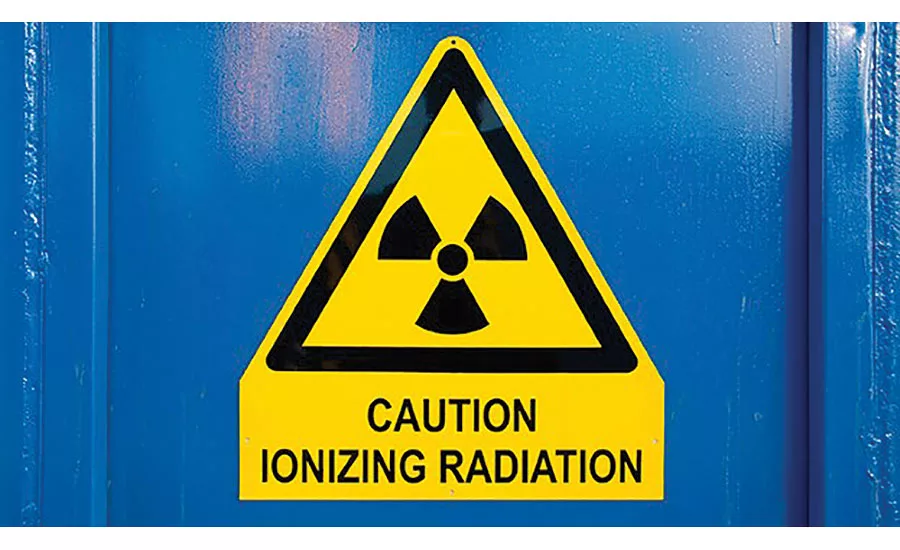
That “CAUTION IONIZING RADIATION” yellow and black warning sign is intimidating enough to frighten anyone – as though any thought of radiation exposure is enough to us running for SCBAs, chemical suits, and bunkers.

Let’s not get carried away, though. We’re all exposed to natural sources of ionizing radiation on a daily basis, such as soil, water, vegetation, and in human-made sources such as X-rays and medical devices. More than 60 naturally-occurring radioactive materials are found in soil, water and air. Certainly ionizing radiation can cause diseases and death if we are exposed to too much, but ionizing radiation isn’t a risk unless a living organism is exposed to too much.

What's the danger?

Why can ionizing radiation be dangerous? When atoms in living cells become ionized, one of three things usually occurs – the cell dies, the cell repairs itself, of the cell mutates incorrectly and can become cancerous, according to www.physicscentral.com. The cells that reproduce the most and are the least specialized are most likely to be affected by ionizing radiation, for example, those cells that form a fetus. This is why special precautions must be taken for pregnant workers at risk of exposure.

Ionizing radiation sources are found in a range of occupational settings, including healthcare facilities, research institutions, nuclear reactors, and nuclear weapon production facilities, among others. These radiation sources can pose a health risk to workers if not controlled.

According to OSHA’s ionizing radiation standard (1910.1096), no employer can possess, use, or transfer sources of ionizing radiation that causes any individual in a restricted area to receive in any period of one calendar quarter a dose in excess of these limits: whole body (1.25 rems); hands and feet (18.75 rems); and skin of whole body (7.2 rems).

Definitions

A Restricted area is any area controlled by an employer to restrict access and protect individuals from exposure to radiation or radioactive materials.

Rem is a measure of the dose of any ionizing radiation to body tissue in terms of its estimated biological effect relative to a dose of 1 roentgen (r) of X-rays (1 millirem (mrem)=0.001 rem). The average person in the U.S. receives between 100 and 400 millirem (mrem) each year, depending on where they live. Scientists have not reached consensus on the health effects of very low doses of radiation (less than 10 rem). Exposure to doses of 10-50 rem may increase chances of cancer, and will have observable short-term effects on blood cells. Doses between 50-100 rem over a short time have observable effects, and over a long time will increase chances of cancer. Above 100 rem, if the dose is received in a short amount of time, those exposed might experience nausea and will require medical attention. Above 500 rem in a short timeframe exposure may cause death within days.

Evaluation and monitoring

According to OSHA’s ionizing radiation standard, employers must evaluate radiation hazards relating to the production, use, release, disposal, or presence of radioactive materials or other sources of radiation under a specific set of conditions. When appropriate, this evaluation includes a physical survey of the location of materials and equipment, and measurements of levels of radiation or concentrations of radioactive material present. Every employer must supply appropriate personnel monitoring equipment, such as film badges, pocket chambers, pocket dosimeters, or film rings, and must require the use of such equipment by each employee who enters a restricted area under circumstances where he receives, or is likely to receive, a specified dose in any calendar quarter (see OSHA’s standard for specific exposure levels that trigger monitoring).  Personnel monitoring equipment are devices designed to be worn or carried by an individual to measure the dose received (film badges, pocket chambers, pocket dosimeters, film rings, etc.).

Radioactive jobs

The average nuclear power plant worker receives less than one-fifth of the radiation exposure of a flight crew on the New York to Tokyo route. High doses of ionizing radiation over a short time are very rare in the nuclear industry due to robust safety protocols.

Mine workers are exposed to radiation from the decay of radon and uranium, but today with greater regulation, testing and ventilation, radiation exposure is up to 1,000 times less than it was in the past.

Radiology technicians working before 1950 have an increased risk of cancer, according to the National Cancer Institute. Since then, risks have been greatly reduced. Most work-related health standards now cap the annual radiation exposure at 5 rem, about 10 times the average background radiation that we receive every year, according to OSHA.

Transportation Security Administration (TSA) baggage screeners have had their radiation exposures evaluated by NIOSH, and NIOSH determined that they were not receiving enough safety training. Doses for some screeners exceeded the maximum dose allowed by law. NIOSH recommended continued monitoring of radiation exposure and improved safety training.

Share This Story

Looking for a reprint of this article?
From high-res PDFs to custom plaques, order your copy today!

Djohnson new pic 7.10.22

Dave Johnson was chief editor of ISHN from 1980 until early 2020. He uses his decades of expertise to write on hot topics and current events in the world of safety. He also writes and edits at Dave Johnson’s Writing Shop LLC and is editor-at-large for ISHN. Find him at https://www.facebook.com/Dave-Johnsons-Writing-Shop-101316571547263/, and on LinkedIn at https://www.linkedin.com/in/daveljohnsoneditor/.

Recommended Content

JOIN TODAY
to unlock your recommendations.

Already have an account? Sign In

  • forklift safety

    Exploring the latest technologies in forklift safety

    With more staff and more stock in warehousing now more...
    Workplace Training Strategies
    By: Josh Cramer
  • welding

    All about welder’s flash or arc eye

    A flash burn is a painful inflammation of the cornea,...
    Environmental Health and Safety
  • dangerous jobs

    The 10 most dangerous jobs in the U.S.

    On-the-job deaths have been rising — hitting the highest...
    Construction Industry Safety and Health
    By: Benita Mehta
Manage My Account
  • eMagazine Subscriptions
  • ISHN Newsletter & Other Newsletter Alerts
  • Online Registration
  • Manage My Preferences
  • Subscription Customer Service

More Videos

Sponsored Content

Sponsored Content is a special paid section where industry companies provide high quality, objective, non-commercial content around topics of interest to the ISHN audience. All Sponsored Content is supplied by the advertising company and any opinions expressed in this article are those of the author and not necessarily reflect the views of ISHN or its parent company, BNP Media. Interested in participating in our Sponsored Content section? Contact your local rep!

close
  • man wearing the the Sundström SR200 Full Face Mask Respirator
    Sponsored byOHD

    5 Fit Testing Mistakes That Could Cost You

  • This image shows Magid AcuSpex polarized blue mirrored safety glasses.
    Sponsored byMagid Glove and Safety

    Construction PPE Guide: What Crews Need for Each Task

  • lone worker in confined space
    Sponsored byAlphasense Ltd.

    GET THE LEAD OUT of your Safety Oxygen Sensors!

Popular Stories

SpaceX 7 launch

OSHA Investigating Fatal Fall at SpaceX Starbase

dust explosion

Tennessee OSHA Issues Record $3.1M Fine After Deadly Explosion at Munitions Plant

roofing dangerous jobs Getty.jpg

OSHA Finds Florida Roofing Company Willfully Exposed Workers to Safety Hazards After Worker’s Fatal Fall

top 10 most dangerous jobs

Poll

Seasonal Readiness

With the federal heat stress prevention rule on the horizon, which area of your safety program needs the most attention?
View Results Poll Archive

Products

Surviving an OSHA Audit A Management Guide, 2nd Edition

Surviving an OSHA Audit A Management Guide, 2nd Edition

See More Products

ISHN Podcasts

Related Articles

  • ionizing radiation

    What you need to know about ionizing radiation

    See More
  • What you need to know about management systems

    See More
  • selecting lightweight footwear

    What you need to know about selecting lightweight footwear

    See More

Related Products

See More Products
  • ISHN Instrument & Controls Industrial Hygiene Buyers Guide

  • Top Ten Pitfalls in OSHA Recordkeeping and How to Avoid Them

  • 2016_WM.jpg

    ANSI/ASSE Z9.11-2016 Laboratory Decommissioning

See More Products

Related Directories

  • S.E. International Inc.

    Quality handheld Radiation Alert instruments. Ionizing radiation detection equipment for alpha, beta, gamma, and x-rays.
  • EME Safety LLC

    EME Safety offers non-ionizing radiation training and survey services. We can provide EME safety training with CEUs through our IEEE credentialed courses. We can also provide survey services and in-person training. Training can be provided for a few hours to multiple days to meet your learning needs.
  • Magid Glove and Safety

    As your true partner in safety, our mission is to provide the expertise and revolutionary innovations in PPE that help you keep your workers safe. The relationships we build with our customers drive everything we do as we get to know you and your unique needs. Our skilled manufacturing provides the latest innovations and technologies in PPE that you can’t get anywhere else. Our worldwide network of suppliers gives you access to the top brands in safety. We have everything you need to increase safety, reduce spend, and supercharge your workers! Since 1946, fourth generation and family-owned, safety isn't just a job, it's our legacy.
×

Become a Leader in Safety Culture

Build your knowledge with ISHN, covering key safety, health and industrial hygiene news, products, and trends.

JOIN TODAY
  • RESOURCES
    • Advertise
    • Contact Us
    • Directories
    • Manufacturing Division
    • Store
    • Want More
  • SIGN UP TODAY
    • Create Account
    • eMagazine
    • Newsletters
    • Customer Service
    • Manage Preferences
  • SERVICES
    • Marketing Services
    • Reprints
    • Market Research
    • List Rental
    • Survey/Respondent Access
  • STAY CONNECTED
    • LinkedIn
    • Facebook
    • YouTube
    • X (Twitter)
  • PRIVACY
    • PRIVACY POLICY
    • TERMS & CONDITIONS
    • DO NOT SELL MY PERSONAL INFORMATION
    • PRIVACY REQUEST
    • ACCESSIBILITY

Copyright ©2026. All Rights Reserved BNP Media, Inc. and BNP Media II, LLC.

Design, CMS, Hosting & Web Development :: ePublishing