Evaporative cooling draws heat from your body
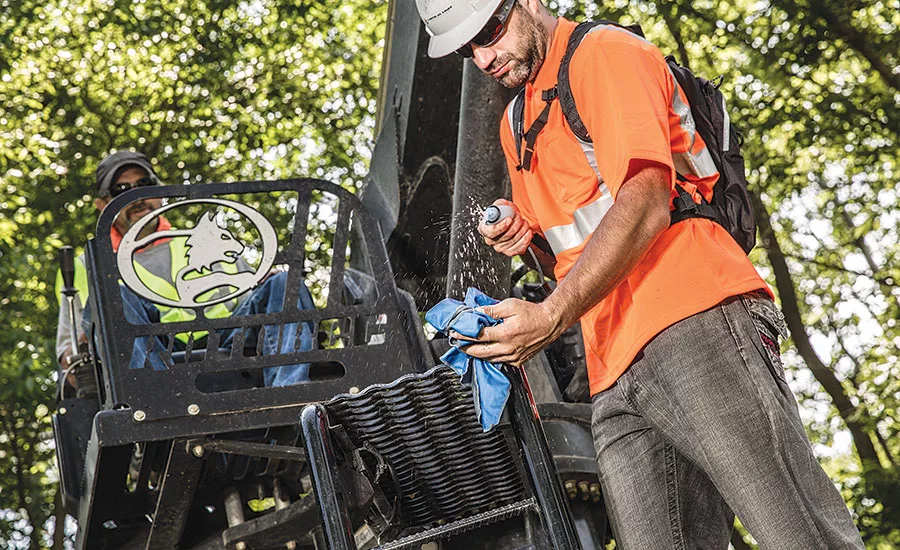
Photo courtesy of Ergodyne
You don’t have to be sweatin’ to the oldies or your favorite Richard Simmons DVD to generate heat. Actions as unconscious as breathing generate heat as part of the metabolism, the process of breaking down food for energy and rebuilding our bodies. Normally, this heat is a good thing, and essential for maintaining our core body temperature of about 98.6 degrees Fahrenheit (37 degrees Celsius).
But heat is not always friendly. Overheating can lead to serious heat-related illnesses, including heat rash, heat cramps, heat exhaustion, and heat stroke – especially for people who work in warm outdoor climates or hot indoor environments such as foundries, bakeries, boiler rooms, laundries, etc. These workers need a way to shed excess heat.
Evaporative cooling
Like friends when moving day rolls around, some things seem to evaporate just when you need them. But supplemental evaporative cooling is always your friend. Working on the same principles as sweat, evaporative cooling garments or accessories draw heat from workers’ bodies, using an external source of water. They can provide an enhanced cooling effect, even for workers still acclimatizing to new tasks, or to a change in environment.
These supplemental items can provide a real performance advantage, along with an additional margin of safety, when used with other strategies for working in hot environments, such as shade, cooling breaks and cooling stations, adequate hydration, sun protective garments, training, etc.
Evaporative cooling products don't just absorb sweat, or keep it out of your eyes, the way a terry cloth headband does during a game of racquetball. They provide supplemental moisture, hold that moisture close to the skin, and draw heat from your body as it evaporates.
The method of water retention varies somewhat with the properties and technology of the materials used. While any damp rag could provide some relief, fabrics that hold moisture for an extended period of time, and products that are comfortable to wear, will provide more effective results for more productive workers.
Of material concern
Acrylic polymer crystals are super absorbent beads that hold surprising amounts of water, then release that water slowly, allowing it to evaporate rather than run down your skin. Activated by soaking in ice water for two to five minutes, these products can usually be re-used, and the item hand washed, depending on how it is manufactured. Because they are beads, and not part of the fabric, they must be designed into pockets or compartments of the garment, so they don't shift or fall out.
Polyvinyl Acetate (PVA) is a synthetic fiber that forms the fabric of the garment or accessory. It is quickly activated by first dipping in cool water, then gently wringing out the excess. PVA products will provide extended cooling, up to four hours, depending upon environmental conditions. A bit stiff when completely dry, these thick fabrics soften instantly when wet, becoming cool and comfortable to touch and wear. Many PVA products are machine-washable.
Microfibers also form a range of evaporative garments and accessories. With more of a traditional fabric feel, these items are typically non-toxic and chemical-free and are activated with a quick soak with a light wringing of excess water. Since they are typically thinner, they hold less water, and provide a shorter period of active cooling – up to about 2.5 hours.
Microfiber fabric is always soft, giving it the edge from a comfort standpoint to some workers. It tends to wick moisture away from the surface of the skin for comfort, while still providing the evaporative cooling effect. Depending on their design and use, some microfiber products may come with high ultraviolet protection factor (UPF) ratings, neaning they resist radiation from the sun while absorbing heat from the worker – dual function heat protection.
Product designs, types, and acceptance
The materials covered above can be incorporated into a variety of workplace garments or accessories. To be effective, they must be worn and activated appropriately. They have to be compatible with other workplace and task demands, as well, including personal protective equipment (PPE), flame-retardant requirements, visibility needs, etc. Not to mention, they need to be durable enough for tough work environments.
Last but certainly not least – they have to be acceptable in comfort, fit, and appearance, so that workers want to wear and use them. A variety of types, styles, and sizes should be made available to suit individual tasks, workers, and personal preferences. Some examples include:
- Hats: Provide protection from the sun, as well as a cooling benefit. Since heat rises, and our bodies’ thermoregulation is so protective of our heads, hats are a smart place to start for evaporative cooling. For tasks where hard hats or helmets are required, evaporative liners may be another possibility.
- Headbands: Provide another option to achieve cooler heads. They are small, lightweight, easy to carry, and compatible with many other types of PPE. Bandanna-style accessories may also be worn around wrists, or other places where a worker needs cooling.
- Towels or neck shades: Can be worn loosely around a worker's neck, providing direct cooling relief via close contact with the skin and blood vessels near the surface, and a sensory effect felt throughout the body.
- Vests: Cover a major portion of a worker's torso. The large surface area of vests provides some serious cooling capacity in hot or dry environments.
Get smart
Evaporative cooling is a simple, effective, and relatively inexpensive cooling approach that can be used in outdoor and indoor environments, but works best in drier, low-moderately humid conditions with sufficient airflow. You can’t control how much heat you give off while you’re cutting a rug, but you can be smarter about the apparel you choose to wear when you’re on the job.
Looking for a reprint of this article?
From high-res PDFs to custom plaques, order your copy today!


