ISHN logo
search
cart
facebook twitter linkedin youtube
  • Sign In
  • Create Account
  • Sign Out
  • My Account
ISHN logo
  • NEWS
    • Today's News
    • Global Safety News
    • Government Regulations
  • PRODUCTS
    • Product Innovations
    • Featured Products
  • TOPICS
    • Environmental Health and Safety
    • Facility Safety
    • Workplace Health
    • Occupational Safety
    • PPE
    • More Topics
  • CONSTRUCTION
  • TECHNOLOGY
  • COLUMNS
    • Best Practices
    • Dave Johnson: What’s going on
    • Editorial Comments
    • Leading Safety
  • MULTIMEDIA
    • ISHN Podcast
    • Videos
    • Cold Stress Education Quiz
    • Webinars
    • White Papers
  • MORE
    • Buyer's Guide
    • Newsletters
    • Convention Companion
    • Polls
    • Events
    • ISHN Store
    • Sponsor Insights
  • EMAGAZINE
    • eMagazine
    • Archived Issues
    • Contact
    • Advertise
  • JOIN TODAY!

Comply with hazardous laboratory safety standards and keep up with the latest PPE innovation
By Mark Saner
Workrite Uniform Company
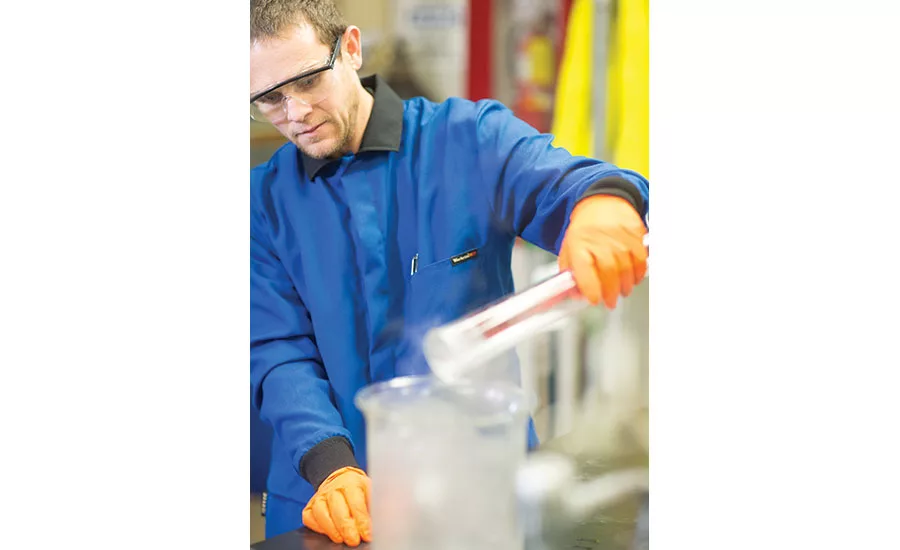
Photo courtesy of Workrite Uniform Company
July 1, 2016

In laboratory settings, the frequent use of heat and flame, combustible materials, and hazardous chemicals contributes to a variety of safety hazards that can lead to serious injuries or even death. Fortunately, a strong safety culture supported by proper work practices and the necessary PPE can go a long way toward preventing such accidents.

Resources

To help laboratories identify the specific procedures and protective equipment that are needed to establish safer conditions, regulatory organizations like OSHA and the National Fire Protection Association (NFPA) have developed standards and guidelines to outline key recommendations and requirements.

OSHA’s “Laboratory Safety Guidance” booklet provides further information on the hazards that may be present in laboratory settings as well as an overview of mandatory safety and health standards applicable to the industry.

OSHA’s lab standard

Among these key standards is OSHA 1910.1450, the standard on Occupational Exposure to Hazardous Chemicals in Laboratories. This standard serves to ensure that workers in nonproduction laboratories are informed about the hazards of chemicals in their workplaces and are provided with the appropriate clothing and other PPE. Specifically, the standard requires that:

1. Workers conduct their work under conditions that minimize risks from both known and unknown hazardous substances,

2. Employers perform risk assessments for hazardous chemicals and procedures prior to laboratory work and select appropriate controls, including PPE, to minimize risk, and

3. Lab coats are worn when working with hazardous materials.

NFPA lab standard

The NFPA 45 Standard on Fire Protection for Laboratories Using Chemicals establishes additional guidelines related to PPE. Designed to reduce hazards and protect personnel from the toxic, corrosive and other harmful effects of chemicals that may result from fires and explosions, this standard outlines protocol for controlling and preventing such accidents in laboratory operations.

According to NFPA 45, fire-retardant lab coats should be worn where pyrophoric reagents are used outside the inert atmosphere of a glove box. Additionally, the standard states that fire-retardant clothing must meet the requirements of NFPA 2112, the Standard on Flame-Resistant Garments for Protection of Industrial Personnel Against Flash Fire.

Addressing non-compliance

Compliance with these standards, as well as the numerous other standards governing laboratory environments, is an essential component in safety. However, due to the inconvenience and discomfort of certain PPE, as well as lack of information regarding standards and/or forgetfulness, laboratory workers do not always follow regulations. For that reason, PPE manufacturers are working to develop garments that maximize protection while also enhancing comfort and practicality.

For instance, some lab coats on the market today offer the flame-resistant properties of chemical-splash protection technology. Prior to this innovation, laboratory workers facing the risk of both thermal and chemical-splash hazards would have needed to wear both an FR lab coat and a chemical-resistant apron, or a non-breathable chemical suit, for protection. While effective, these options may restrict the wearer’s movement or provide poor breathability, contributing to discomfort.

You need to understand and apply the safety standards that regulate laboratory environments. You also need to be attuned to the latest PPE innovations available to address those standards. These actions can make a major difference in preventing accidents and avoiding injuries. Laboratories should regularly monitor updates from standards-writing organizations like NFPA and OSHA to stay on top of important developments in laboratory safety.

KEYWORDS: Combustible dust hazardous materials laboratory safety

Share This Story

Looking for a reprint of this article?
From high-res PDFs to custom plaques, order your copy today!

Mark Saner is currently the technical services manager for VF Imagewear/Bulwark Protective Apparel. Previously, he served as the FR technical manager for Workrite Uniform Company from 2006 until early 2018. He brings more than 40 years of experience in the fire and safety industries to his work.

Contact Mark at 1-800-521-1888 or visit www.workrite.com.

Recommended Content

JOIN TODAY
to unlock your recommendations.

Already have an account? Sign In

  • forklift safety

    Exploring the latest technologies in forklift safety

    With more staff and more stock in warehousing now more...
    Facility Safety
    By: Josh Cramer
  • welding

    All about welder’s flash or arc eye

    A flash burn is a painful inflammation of the cornea,...
    Environmental Health and Safety
  • dangerous jobs

    The 10 most dangerous jobs in the U.S.

    On-the-job deaths have been rising — hitting the highest...
    Occupational Safety
    By: Benita Mehta
Manage My Account
  • eMagazine Subscriptions
  • ISHN Newsletter & Other Newsletter Alerts
  • Online Registration
  • Manage My Preferences
  • Subscription Customer Service

More Videos

Sponsored Content

Sponsored Content is a special paid section where industry companies provide high quality, objective, non-commercial content around topics of interest to the ISHN audience. All Sponsored Content is supplied by the advertising company and any opinions expressed in this article are those of the author and not necessarily reflect the views of ISHN or its parent company, BNP Media. Interested in participating in our Sponsored Content section? Contact your local rep!

close
  • man wearing the the Sundström SR200 Full Face Mask Respirator
    Sponsored byOHD

    5 Fit Testing Mistakes That Could Cost You

  • This image shows Magid AcuSpex polarized blue mirrored safety glasses.
    Sponsored byMagid Glove and Safety

    Construction PPE Guide: What Crews Need for Each Task

  • lone worker in confined space
    Sponsored byAlphasense Ltd.

    GET THE LEAD OUT of your Safety Oxygen Sensors!

Popular Stories

SpaceX 7 launch

OSHA Investigating Fatal Fall at SpaceX Starbase

dust explosion

Tennessee OSHA Issues Record $3.1M Fine After Deadly Explosion at Munitions Plant

Worker Impairment

How to Tell When a Co-Worker is Impaired? A Safety Pro’s Challenge

top 10 most dangerous jobs

Poll

Seasonal Readiness

With the federal heat stress prevention rule on the horizon, which area of your safety program needs the most attention?
View Results Poll Archive

Products

Surviving an OSHA Audit A Management Guide, 2nd Edition

Surviving an OSHA Audit A Management Guide, 2nd Edition

See More Products

ISHN Podcasts

Related Articles

  • ANSI fall protection standards: Keep up with changing practices & equipment

    See More
  • factory plant Getty.jpg

    Plant Safety Protocols Need to Keep Up With the Heavily Automated Fulfillment Center

    See More
  • Keeping pace with the best: Here’s how to keep up with best safety practices

    See More

Related Directories

  • e-Hazard

    E-Hazard is dedicated to building an electrical safety culture with you. Our electrical engineering services and training will prepare your team for any electrical safety needs or concerns. E-Hazard can help with electrical training, arc flash studies, electrical audits, electrical safety programs, LOTO, infrared scanning, NFPA 70B, consulting and much more.
×

Become a Leader in Safety Culture

Build your knowledge with ISHN, covering key safety, health and industrial hygiene news, products, and trends.

JOIN TODAY
  • RESOURCES
    • Advertise
    • Contact Us
    • Directories
    • Manufacturing Division
    • Store
    • Want More
  • SIGN UP TODAY
    • Create Account
    • eMagazine
    • Newsletters
    • Customer Service
    • Manage Preferences
  • SERVICES
    • Marketing Services
    • Reprints
    • Market Research
    • List Rental
    • Survey/Respondent Access
  • STAY CONNECTED
    • LinkedIn
    • Facebook
    • YouTube
    • X (Twitter)
  • PRIVACY
    • PRIVACY POLICY
    • TERMS & CONDITIONS
    • DO NOT SELL MY PERSONAL INFORMATION
    • PRIVACY REQUEST
    • ACCESSIBILITY

Copyright ©2026. All Rights Reserved BNP Media, Inc. and BNP Media II, LLC.

Design, CMS, Hosting & Web Development :: ePublishing