PAPRs should fit both wearer & work environment
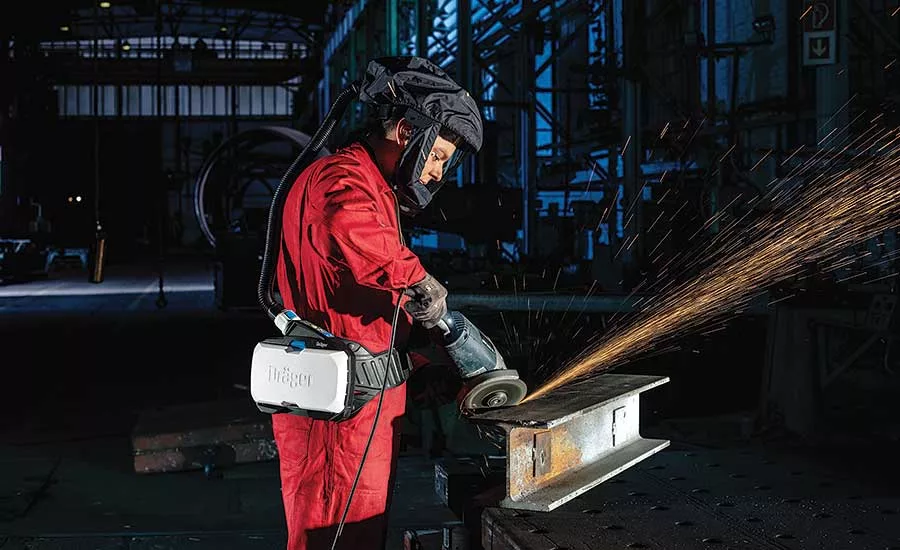
In the world of safety lies a plethora of devices and gadgets that offer unique capabilities with the aim of protecting end-users. While these devices can maximize one’s protection, safety goes beyond simply donning a device. Regardless of industry, workers must be equipped with the knowledge of which available safety solutions are best suited to their environment. Both decision-makers and end-users can benefit greatly from gaining an understanding of how their devices interact with the surrounding conditions, helping to ensure the selected device matches, if not exceeds, the level of safety they need.
When it comes to breathing protection, a powered air purifying respirator (PAPR) can critically improve its wearer’s safety, but it’s important to understand it isn’t a “one-size-fits-all” model. Each device should fit the wearer just as much as it fits the workplace environment.
Breathing resistance eliminated
PAPRs offer motor blowers that pull air through a filter and into the wearer’s breathing zone, reducing breathing barriers. This process not only alleviates some of the burden on the wearer’s body, but broadens the pool of who can don the device. PAPRs serve as an alternative for workers who have been medically disqualified from using negative pressure respirators as there is less strain imposed on the user. And while there is medical flexibility within the use of a PAPR, it’s important that all potential PAPR wearers still undergo medical evaluation to determine if they can safely don the device.
Increased regulatory flexibility
Per OSHA respirator regulations, facial hair is prohibited from obstructing the respirator sealing surface from the wearer’s face.1 Wearers are also required to be fit-tested annually to ensure respirators perform at their greatest safety levels.2 PAPRs, however, can be equipped with loose-fitting hoods or headcovers that accommodate limited facial hair—as long as the facial hair doesn’t come between the headgear seal and face. They also waive any fit-testing requirements.3 Not only does this allow for flexibility in requirements, but it reduces overall maintenance costs.
Enhanced assigned protection factors (APF)
Adhering to OSHA’s Respiratory Protection standard’s paragraphs (d)(3)(i)(A) and (d)(3)(i)(B), PAPRs’ assigned protection factor (APF) can vary, extending their practical application. In workplaces like water treatment plants that deal with higher concentrations of chemicals, PAPRs offering tightly-fitted face pieces with APFs of 1,000 present an ideal safety solution. But in industries where lower chemical concentrations are more common, such as food & beverage, half-face pieces offering 10 APF or full-face piece respirators offering 50 APF are perhaps better suited.
Full-face negative pressure respirators, however, are only guaranteed 50 APF if they offer a quantitative fit—without it, they only provide an APF of 10.4
Customization
Safety solutions manufacturers provide numerous PAPR configurations, so wearers can choose which PAPR works best for them. Whether a tight- or loose-fitting hood with chemical splash protection or ANSI Z89.1 head protection is ultimately selected, a PAPR can and should be chosen based on the wearer’s needs.
Maximizing the potential
To harness the full power of the PAPR, it’s crucial that workers set themselves up for success before beginning use—and this means laying the basic groundwork to ensure they understand the ins and outs of both their devices and environments.
Perform a risk assessment
The foundation on which a PAPR is chosen is built upon a risk assessment and identification of potential hazards. While most PAPRs can filter out particulates, gases and vapors, some PAPRs are specialized for particulates only.5 Thus, pinpointing potential risks in the environment becomes an important task.
Trained professionals who are qualified to perform the tests and understand the testing equipment should include the following considerations in their assessments:
- Oxygen levels: Oxygen levels must exceed 19.5 percent in all environments, whether open or confined.6
- Presence of potential airborne contaminants: Assessments must account for known and unknown hazards. In the construction industry, for example, large quantities of silica as byproduct of grinding materials can cause silicosis and eventual scarring in the lung tissue.7 Additionally, if the worksite has flammable or explosive hazards in the air, PAPR motors with electronically powered battery packs would pose as a threat, making the identification of these kinds of hazards even more imperative.8
- Contaminants physical characteristics: Knowing whether contaminants are gaseous or dust can be crucial in picking the proper PAPR—as previously stated, some PAPRs only filter out particulates, while others filter gases, vapors and particulates.
Conduct Proper Training
Maximizing the full value of the PAPR means wearers must engage in training sessions prior to use to ensure they understand how to maintain and operate it efficiently and effectively. In accordance to OSHA, training sessions must cover the following topics:9
- Why you need to use the respirator
- What the respirator can and cannot do to protect you
- How to properly inspect, put on and take off and use your respirator
- How to use the respirator effectively in emergency situations, including situations in which the respirator does not work properly
- What the requirements are for federal OSHA’s or your State OSHA’s Respiratory Protection Standards
- How improper fit, usage or maintenance can reduce your respirator’s ability to protect you10
- How to check the seal of your respirator in a “user seal check”11
- What procedures are for maintenance and storage of the respirator
- How to recognize medical signs or symptoms that may limit or prevent you from using a respirator
Regardless of industry, understanding the steps that can be taken toward enhanced safety is invaluable. Whether it’s purifying wastewater in the water treatment industry or angle grinding concrete in the construction industry, full comprehension of the workplace and the ins and outs of safety devices are must-haves in order to maximize the level of safety.
- https://www.osha.gov/pls/oshaweb/owadisp.show_document?p_table=INTERPRETATIONS&p_id=28997
- https://www.osha.gov/video/respiratory_protection/fittesting_transcript.html
- Ibid.
- Ibid.
- https://www.osha.gov/video/respiratory_protection/resptypes_transcript.html
- http://www.atsdr.cdc.gov/mhmi/mhmi-v2-b.pdf#page=3
- http://depts.washington.edu/silica/pdf/Construction_Silica_Exposure_and_Solutions-web.pdf
- http://www.ilo.org/wcmsp5/groups/public/---ed_protect/---protrav/---safework/documents/publication/wcms_190172.pdf#page=2
- https://www.osha.gov/video/respiratory_protection/training_transcript.html
- https://www.cdc.gov/niosh/docs/96-101/
- Ibid.
Looking for a reprint of this article?
From high-res PDFs to custom plaques, order your copy today!