ISHN logo
search
cart
facebook twitter linkedin youtube
  • Sign In
  • Create Account
  • Sign Out
  • My Account
ISHN logo
  • NEWS
    • Today's News
    • Global Safety News
    • Government Regulations
  • PRODUCTS
    • Product Innovations
    • Featured Products
  • TOPICS
    • Environmental Health and Safety
    • Facility Safety
    • Workplace Health
    • Occupational Safety
    • PPE
    • More Topics
  • CONSTRUCTION
  • TECHNOLOGY
  • COLUMNS
    • Best Practices
    • Dave Johnson: What’s going on
    • Editorial Comments
    • Leading Safety
  • MULTIMEDIA
    • ISHN Podcast
    • Videos
    • Cold Stress Education Quiz
    • Webinars
    • White Papers
  • MORE
    • Buyer's Guide
    • Newsletters
    • Convention Companion
    • Polls
    • Events
    • ISHN Store
    • Sponsor Insights
  • EMAGAZINE
    • eMagazine
    • Archived Issues
    • Contact
    • Advertise
  • JOIN TODAY!
Environmental Health and Safety

Comparing catalytic and infrared sensors
By Ulf Ostermann
ISHN0417_F8_pic.jpg
April 1, 2017

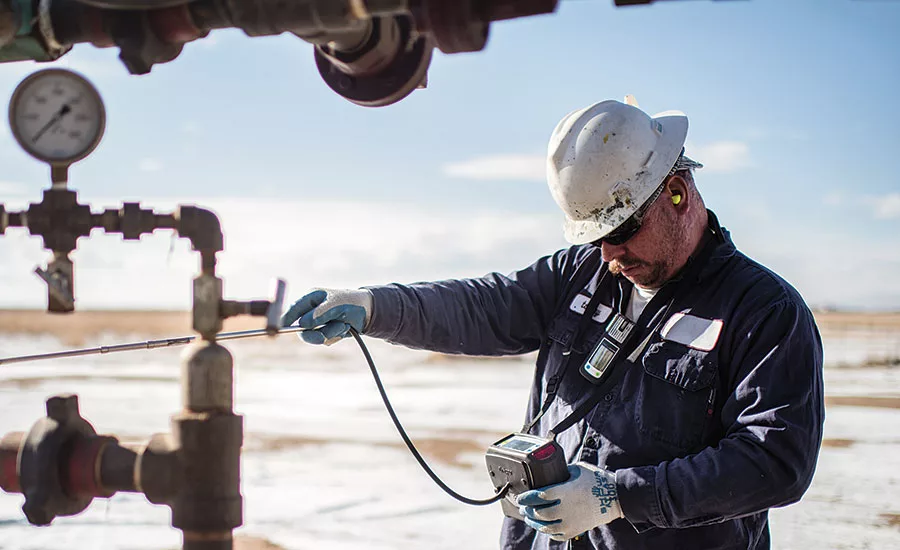
Explosive gas monitoring is all about safety. Numerous factors must be assessed and analyzed. Sensor capabilities play a vital role — fast response times and wide temperature ranges are musts. You also need to know when to use catalytic or infrared (IR) gas detector technology.

This assessment is based on each application’s unique environment. During the refining process, exposure to explosive hazards from either natural gas (methane/ethane) or oil vapors (higher hydrocarbons such as pentane or octane) is possible.

Explosive hazards at the gas/liquid separator may be encountered as the oil and water mixture is pumped into tank vessels, or when the separator tank must be cleaned. Later in the refining process during the gas sweetening, dehydration and separation process steps, explosive hazards may be present due to factors including: leakages in processing vessels, process parameters (e.g., temperature, pressure, etc.), maintenance of processing vessels, transportation of CO2 and H2S by-products, and conducting work in confined spaces.

Catalytic sensors

Catalytic sensor technology can measure known and unknown explosive gases and vapors in applications where oxygen is present. Flammable gases and vapors, from methane to nonane, oxidize at the surface of the catalytic bead or pellistor to produce heat energy that results in a change of resistance. This heat energy corresponds in linear proportion to the concentration.

Sensor poisoning

Catalytic bead sensors are subject to poisoning of the pellistor, which means it will exhibit reduced reactivity. Substances that may contaminate sensors include:

  • Silicones
  • Tetraethyl lead
  • Halogenated hydrocarbons
  • Sulfur compounds
  • Organophosphorus compounds

The impact of a poisoned pellistor on the methane sensitivity is much higher compared to other explosive gases or vapors. Methane is a more stable chemical compound and requires a greater activation energy to oxidize at the pellistor surface. A less active, poisoned pelllistor has less capability to reduce the activation energy. As a result, the poisoned pellistor or contaminated catalytic bead sensor has a lowered sensitivity towards methane.  

Conduct a bump test and calibration to ensure proper performance of catalytic sensors. Consider counter strategies to deal with contamination:

Infrared sensors

Infrared (IR) sensor technology is based on the carbon-hydrogen bonds of hydrocarbons that absorb infrared light of a certain wavelength. Small wavelength differences between different infrared sensors can lead to different detection performance.

Compared to catalytic bead sensors, infrared sensors are not subject to sensor poisoning. Tthe lifetime of the sensor corresponds to the lifetime of the instrument. Oxygen is not necessary for operation, which allows these sensors to be used for inert measurements.

While infrared sensors are applicable for lower explosive limit (LEL) measurements of hydrocarbons, they not applicable for:

  • LEL measurements of non-hydrocarbon components such as hydrogen
  • Acetylene
  • Measurement of unknown explosive gases

Appreciating the power behind a good sensor and understanding which applications it is most suited for should be used is needed to optimize the effectiveness of your safety program.

KEYWORDS: gas detection gas monitoring industrial hygiene monitoring and analysis infrared technology

Share This Story

Looking for a reprint of this article?
From high-res PDFs to custom plaques, order your copy today!

Ulf Ostermann is Product Manager, Safety Gas Detection Systems at Draeger, Inc.

Recommended Content

JOIN TODAY
to unlock your recommendations.

Already have an account? Sign In

  • forklift safety

    Exploring the latest technologies in forklift safety

    With more staff and more stock in warehousing now more...
    Workplace Training Strategies
    By: Josh Cramer
  • welding

    All about welder’s flash or arc eye

    A flash burn is a painful inflammation of the cornea,...
    Environmental Health and Safety
  • dangerous jobs

    The 10 most dangerous jobs in the U.S.

    On-the-job deaths have been rising — hitting the highest...
    Construction Industry Safety and Health
    By: Benita Mehta
Manage My Account
  • eMagazine Subscriptions
  • ISHN Newsletter & Other Newsletter Alerts
  • Online Registration
  • Manage My Preferences
  • Subscription Customer Service

More Videos

Sponsored Content

Sponsored Content is a special paid section where industry companies provide high quality, objective, non-commercial content around topics of interest to the ISHN audience. All Sponsored Content is supplied by the advertising company and any opinions expressed in this article are those of the author and not necessarily reflect the views of ISHN or its parent company, BNP Media. Interested in participating in our Sponsored Content section? Contact your local rep!

close
  • man wearing the the Sundström SR200 Full Face Mask Respirator
    Sponsored byOHD

    5 Fit Testing Mistakes That Could Cost You

  • This image shows Magid AcuSpex polarized blue mirrored safety glasses.
    Sponsored byMagid Glove and Safety

    Construction PPE Guide: What Crews Need for Each Task

  • lone worker in confined space
    Sponsored byAlphasense Ltd.

    GET THE LEAD OUT of your Safety Oxygen Sensors!

Popular Stories

SpaceX 7 launch

OSHA Investigating Fatal Fall at SpaceX Starbase

Automated loading dock equipment

After March 2026 Rivian Death, Safety Managers Reassess Loading Dock Systems Under OSHA's Warehouse Emphasis Program

psychology in the workplace

Most Workplaces Measure Psychological Safety, Ignoring Psychosocial Risks

top 10 most dangerous jobs

Poll

Seasonal Readiness

With the federal heat stress prevention rule on the horizon, which area of your safety program needs the most attention?
View Results Poll Archive

Products

Surviving an OSHA Audit A Management Guide, 2nd Edition

Surviving an OSHA Audit A Management Guide, 2nd Edition

See More Products

ISHN Podcasts

Related Articles

  • How infrared sensors measure LEL combustible gas

    See More
  • LED-driven infrared sensors

    See More
  • 06107_F30_pic.jpg

    Hand protection: Comparing ANSI and EN 388 cut test methods

    See More

Related Products

See More Products
  • 1119010160.jpg

    Guidelines for Combustible Dust Hazard Analysis

  • 1119772133.jpg

    Delivering Safety Excellence: Engagement Culture at Every Level

  • 3E

    Safety Professional's Reference and Study Guide, Third Edition

See More Products
×

Become a Leader in Safety Culture

Build your knowledge with ISHN, covering key safety, health and industrial hygiene news, products, and trends.

JOIN TODAY
  • RESOURCES
    • Advertise
    • Contact Us
    • Directories
    • Manufacturing Division
    • Store
    • Want More
  • SIGN UP TODAY
    • Create Account
    • eMagazine
    • Newsletters
    • Customer Service
    • Manage Preferences
  • SERVICES
    • Marketing Services
    • Reprints
    • Market Research
    • List Rental
    • Survey/Respondent Access
  • STAY CONNECTED
    • LinkedIn
    • Facebook
    • YouTube
    • X (Twitter)
  • PRIVACY
    • PRIVACY POLICY
    • TERMS & CONDITIONS
    • DO NOT SELL MY PERSONAL INFORMATION
    • PRIVACY REQUEST
    • ACCESSIBILITY

Copyright ©2026. All Rights Reserved BNP Media, Inc. and BNP Media II, LLC.

Design, CMS, Hosting & Web Development :: ePublishing