A Confined Space Blog post
Blood in your food: Injury and death on farms
Posted with permission from Confined Space.
There are many metaphors that are commonly used in Washington DC. One of those metaphors is to describe something at “the third rail of politics.” Wikipedia defines “third rail of politics” as “a metaphor for any issue so controversial that it is “charged” and “untouchable” to the extent that any politician or public official who dares to broach the subject will invariably suffer politically.”
For OSHA (and the entire federal government), one of those “third rails” that we learned to approach with extreme caution, was the agriculture industry, and more specifically, small farms.
In an excellent exposé on hazards in the farming industry, Politico reporter Ian Kullgren, describes how Your Farm Is Trying To Kill You and the success the agriculture lobby has had in fighting off any protections for farm workers, even children who work in one of America’s most dangerous industries.
In eight years at the Department of Labor during the Obama administration, whenever we orbited too close to issues affecting the agriculture industry in an effort to save lives, we emerged sometimes victorious, sometimes not, but always bloody and bruised.
When OSHA tried to protect workers — not through regulations, but through clarifications or new enforcement initiatives for existing regulations — we were consistently met with a solid wall of resistance from the agriculture industry, accusing us of destroying the great American family farm — when we were trying to safe the lives of workers — often teen-age kids –from suffocating in grain silos, when we tried to correct a misinterpretation of OSHA’s Process Safety Standard to compel small fertilizer establishments (like West fertilizer that exploded in 2013, killing 15 people and leveling part of the town) to take basic precautions with hazardous materials that other chemical establishments were required to take.
If it was a construction zone, it would be fenced in and you wouldn’t be allowed in without a hard hat. Farming is just as dangerous [as] construction, but there are no restrictions — Barbara Lee
Responding to pressure in an election year, the White House even withdrew a proposed regulation that would have protected children on farms. And not children of the farmers themselves (who would have been permitted to continue exposing their own children to life-threatening hazards), but other peoples’ children hired to come work at a farm.
Agricultural Killing Zones
Kullgren lays out the basic issues:
But the lack of safety and health protections on farms reaches far deeper than just physical injury:
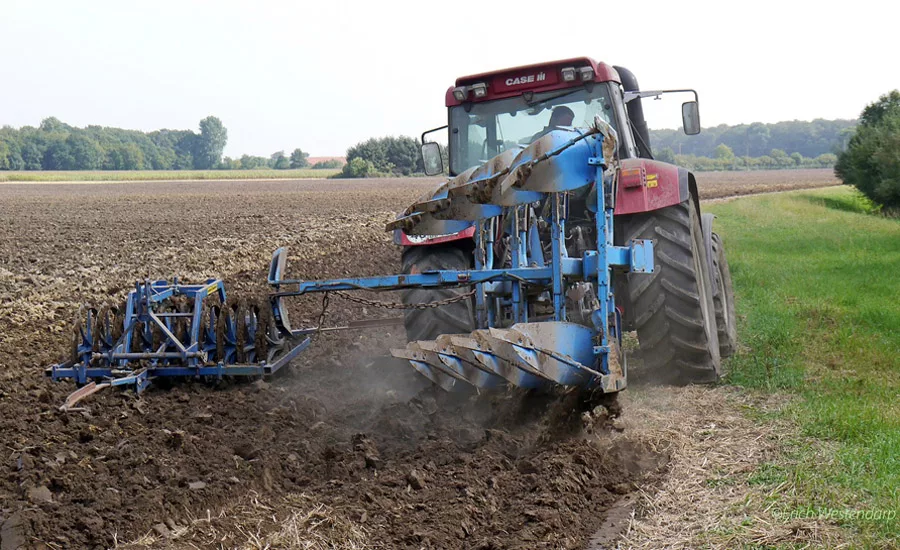
Tractors account for one-third of all deaths on farms and specifically tractor rollovers account for 80 of tractor deaths. Although new tractors have rollover protection devices, older tractors still in use don’t. Fewer than 60 percent of tractors in use in the U.S. have rollover protection, according to the National Institute for Occupational Safety and Health.
Killing the Children
Unlike most of the rest of American industry that long ago stopped employing children in dangerous industries, children in agriculture are still victims
Congress To OSHA: See No Evil, Correct No Evil
But the agriculture industry had been powerful enough to keep the government off of their backs:
What that means is that “If you’re in a government agency and you’re trying to think about how to regulate farmers,”Debbie Berkowitz, a senior policy adviser at OSHA under the Obama administration said, “you’re not going to get past thinking about it before they’re up on Capitol Hill lobbying like you’re trying to shut them all down. It’s like nothing I’ve ever seen.”
Size matters
And the ironic — or tragic — fact is that small farms are much more dangerous than large farms as “A 2008 CDC study found that tractor rollover protection systems were most prevalent on farms with $100,000 in sales or more. And more recent BLS data show that 69 percent of workers who died on farms between 2011 and 2015 were self-employed.”
The reason for that, according to Dennis Murphy, a Penn State agricultural safety specialist. “As you get more employees, you take on more of a management structure, and you start looking like more industrial employers and, therefore, you come under safety regulations,” Murphy said. “As you get bigger, you get new farms that tend to be more safe.”
The Bottom Line
It’s clear that the agriculture lobby has enormous power, even as Kullgren describes above, prohibiting OSHA from inspecting or enforcing violations on any small farm. But it’s actually worse than Kullgren describes. How?
A rider is language put on an agency’s budget bill forbidding it from spending money on an activity that Congress doesn’t want the agency to touch. In this case, small farms. While there are other riders on OSHA that restrict its enforcement authority, the small farm rider is the most drastic and destructive. For example, Congress has put a rider on OSHA’s budget bill that forbids OSHA from conducting “programmed” or pro-active safety (not health) inspections on some small businesses. But that rider at least allow OSHA to investigate and issue citations when a worker is killed or an employee makes a complaint, or identifies an imminent danger situation.
It doesn’t matter if five workers file an imminent danger complaint with OSHA, or an 18 year old kid is killed, or five 18-year old kids are killed. OSHA is not even allowed to investigate the incident, much less issue citations.
The small farm rider, on the other hand, prohibits OSHA from ever setting foot on a small farm — defined as a farm with fewer than 11 employees (family members don’t count). It doesn’t matter if five workers file an imminent danger complaint with OSHA, or an 18 year old kid is killed, or five 18-year old kids are killed. OSHA is not even allowed to investigate the incident, much less issue citations. Despite repeated requests from the White House to modify the rider to at least allow OSHA to investigate fatalities, Congress refused to consider a change.
OSHA’s initiatives in the agricultural industry met some success, but not without enormous effort and political cost. After a spike in suffocation deaths grain facilities in 2010, OSHA redoubled its enforcement efforts, generating a backlash from the agricultural industry. The result: Congressional oversight, threats of riders, constant briefings and press inquiries, often over whether a facility is a farm (that grows vegetables) or a processing facility (that stores and resells grain), for example.
In 2013, following the West Fertilizer explosion, the White House ordered OSHA to address a problem with the Process Safety Management standard’s “retail exemption.” The PSM standard exempted retail facilities. The standard didn’t define what a retail facility was, but the preamble to the standard made clear that the intent was to exempt gas stations and hardware stores that sold small quantities of hazardous materials in small packages. An early 1990’s interpretation of that rule exempted any facility that sold more than 50% of its hazardous materials to an end user, allowing small facilities, like West, to store huge amounts of highly hazardous materials.
When OSHA attempted to change that interpretation to its original intent, the agency was bombarded with resistance from the agricultural community (that feared that the new interpretation would significant raise prices of fertilizers like anhydrous ammonia), and accompanying Congressional oversight, lawsuits and a rider on OSHA’s budget prohibiting the agency from enforcing the requirements.
The bottom line is that sometimes agencies win these battles (e.g. grain handling where the enforcement initiative continued and grain deaths dropped), often they lose (child farm workers and retail exemption). But even where the cause is right and the prospects for winning are favorable, the power of the agriculture industry is intimidating. Government agencies only have a finite amount of resources, energy and political capital to fight these enormous battles, even where winning will clearly save lives. Given the choice, who can blame an agency from avoiding these battles and putting resources into something that is likely to be easier and more successful?
Even if more workers and children are dying in easily preventable circumstances.
Looking for a reprint of this article?
From high-res PDFs to custom plaques, order your copy today!