ISHN logo
search
cart
facebook twitter linkedin youtube
  • Sign In
  • Create Account
  • Sign Out
  • My Account
ISHN logo
  • NEWS
    • Today's News
    • Global Safety News
    • Government Regulations
  • PRODUCTS
    • Product Innovations
    • Featured Products
  • TOPICS
    • Environmental Health and Safety
    • Facility Safety
    • Workplace Health
    • Occupational Safety
    • PPE
    • More Topics
  • CONSTRUCTION
  • TECHNOLOGY
  • COLUMNS
    • Best Practices
    • Dave Johnson: What’s going on
    • Editorial Comments
    • Leading Safety
  • MULTIMEDIA
    • ISHN Podcast
    • Videos
    • Cold Stress Education Quiz
    • Webinars
    • White Papers
  • MORE
    • Buyer's Guide
    • Newsletters
    • Convention Companion
    • Polls
    • Events
    • ISHN Store
    • Sponsor Insights
  • EMAGAZINE
    • eMagazine
    • Archived Issues
    • Contact
    • Advertise
  • JOIN TODAY!
Today's Safety NewsWorkplace Health

Kicking the salt shaker habit may not be enough
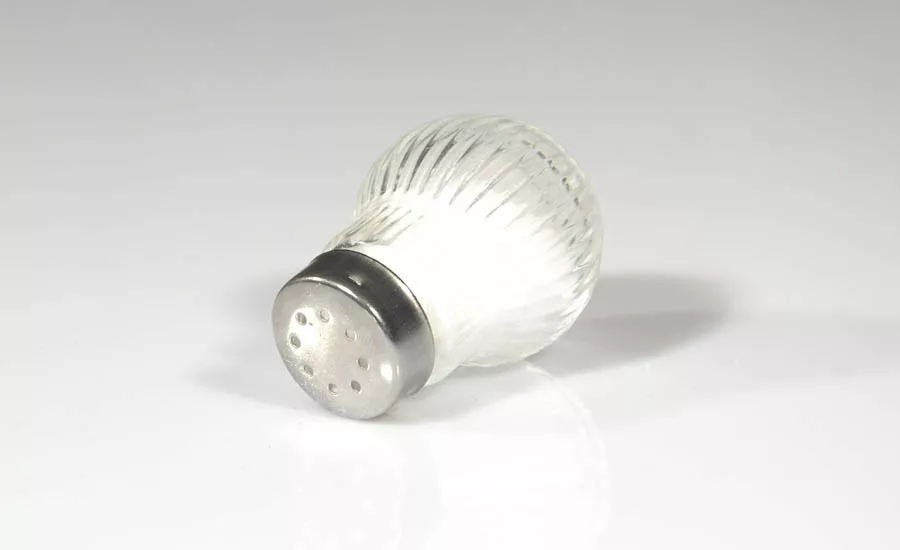
salt
May 15, 2017

Reducing the amount of sodium you put in home-cooked meals may not be sufficient to improve your health if you dine out regularly at restaurants, says a new study, because restaurant foods and commercially processed foods sold in stores contain so much of it.

The research in the American Heart Association’s (AHA)journal Circulation says restaurant and processed foods account for about 70 percent of dietary sodium intake in three U.S. regions.

Why it matters

Sodium is an important contributor to high blood pressure, one of the leading causes of heart attack and stroke. The AHA recommends a maximum of 2,300 milligrams (mg) of sodium a day, which is equivalent to 1 teaspoon of salt. For nearly 70 percent of U.S. adults, the maximum sodium intake recommendation is even lower – 1500 mg/day – based on their age, race or ethnicity, or existing high blood pressure.

Sodium can be difficult to avoid, especially when people eat a lot of processed food from grocery stores or restaurants. In fact, the average American adult consumes more than 3,400 mg of sodium per day. To address this serious health threat, in 2010 the Institute of Medicine recommended gradually decreasing sodium levels in commercially processed foods.

Key findings:

  • Sodium added to food outside the home was the leading source (70.9 percent) and sodium found naturally in food was the next highest (14.2 percent);
  • Sodium from salt added in home food preparation (5.6 percent) and added to food at the table (4.9 percent) were next highest.
  • Sodium in home tap water, dietary supplements and antacids contributed minimally (less than 0.5 percent).

“Telling patients to lay off the salt shaker isn’t enough,” said Lisa J. Harnack, Dr.PH., study lead author and professor at the University of Minnesota in Minneapolis. “Rather, commercially processed and restaurant foods should be the primary focus when educating patients on strategies for lowering sodium in the diet. Food manufacturers and restaurants should be encouraged to lower the sodium content in their food products to support Americans in consuming a diet consistent with sodium intake recommendations.”

Choose foods wisely

“If you’re aiming to limit your sodium intake to the recommended level of less than 2,300 milligrams per day, you’ll need to choose foods wisely when grocery shopping and dining out,” Harnack said. “For packaged foods, the nutrition fact panel may be useful in identifying lower sodium products, and for menu items diners can request sodium content information. Also, if you frequently add salt to food at the table or in home food preparation, consider using less.”

The study was limited in that it did not represent the overall U.S. population because participants were selected based on location and also may have changed their sodium consumption during the study because they knew that it was under watch.

The AHA says restaurant and prepackaged food companies must be a part of the solution and encourages packaged food companies and restaurants to reduce the sodium in their products to help make meaningful impact on the health of all Americans. The association has developed a sodium reduction campaign to help.

Co-authors are Mary E. Cogswell, Dr.PH.; James M. Shikany, Ph.D.; Christopher D. Gardner, Ph.D.; Cathleen Gillespie, M.S.; Catherine M. Loria, Ph.D.; Xia Zhou, M.S.; Keming Yuan, M.S.; and Lyn M. Steffen, Ph.D. Author disclosures are on the manuscript.

The Centers for Disease Control and Prevention supported the study.

Additional Resources:

  • A link to a YouTube video, an infographic and salt/sodium photos are available on the right column of the release: http://newsroom.heart.org/news/kicking-the-salt-shaker-habit-may-not-be-enough?preview=5a94bb9fe03ce4fc4a7772815bafb2d1
  • View the manuscript and editorial online.
  • About the American Heart Association Sodium Reduction Campaign
  • American Heart Association Diet and Lifestyle Recommendations
  • American Heart Association Sodium Intake Recommendations
  • American Heart Association’s Efforts to Encourage Sodium Reduction in the Food Industry

Follow AHA/ASA news on Twitter @HeartNews

For updates and new science from the Circulation journal follow @CircAHA

KEYWORDS: heart attack risk high blood pressure stroke

Share This Story

Looking for a reprint of this article?
From high-res PDFs to custom plaques, order your copy today!

Recommended Content

JOIN TODAY
to unlock your recommendations.

Already have an account? Sign In

  • forklift safety

    Exploring the latest technologies in forklift safety

    With more staff and more stock in warehousing now more...
    Workplace Training Strategies
    By: Josh Cramer
  • welding

    All about welder’s flash or arc eye

    A flash burn is a painful inflammation of the cornea,...
    Environmental Health and Safety
  • dangerous jobs

    The 10 most dangerous jobs in the U.S.

    On-the-job deaths have been rising — hitting the highest...
    Occupational Safety
    By: Benita Mehta
Manage My Account
  • eMagazine Subscriptions
  • ISHN Newsletter & Other Newsletter Alerts
  • Online Registration
  • Manage My Preferences
  • Subscription Customer Service

More Videos

Sponsored Content

Sponsored Content is a special paid section where industry companies provide high quality, objective, non-commercial content around topics of interest to the ISHN audience. All Sponsored Content is supplied by the advertising company and any opinions expressed in this article are those of the author and not necessarily reflect the views of ISHN or its parent company, BNP Media. Interested in participating in our Sponsored Content section? Contact your local rep!

close
  • man wearing the the Sundström SR200 Full Face Mask Respirator
    Sponsored byOHD

    5 Fit Testing Mistakes That Could Cost You

  • This image shows Magid AcuSpex polarized blue mirrored safety glasses.
    Sponsored byMagid Glove and Safety

    Construction PPE Guide: What Crews Need for Each Task

  • lone worker in confined space
    Sponsored byAlphasense Ltd.

    GET THE LEAD OUT of your Safety Oxygen Sensors!

Popular Stories

SpaceX 7 launch

OSHA Investigating Fatal Fall at SpaceX Starbase

dust explosion

Tennessee OSHA Issues Record $3.1M Fine After Deadly Explosion at Munitions Plant

Worker Impairment

How to Tell When a Co-Worker is Impaired? A Safety Pro’s Challenge

top 10 most dangerous jobs

Poll

Seasonal Readiness

With the federal heat stress prevention rule on the horizon, which area of your safety program needs the most attention?
View Results Poll Archive

Products

Surviving an OSHA Audit A Management Guide, 2nd Edition

Surviving an OSHA Audit A Management Guide, 2nd Edition

See More Products

ISHN Podcasts

Related Articles

  • Protecting hands against risk

    Protecting hands against just one risk may not be enough

    See More
  • Don't pass the salt shaker, please

    See More
  • injection

    Why your doctor may not be able to help you avoid diabetes

    See More

Related Products

See More Products
  • 1119906652.webp

    Alive and Well at the End of the Day: The Supervisor's Guide to Managing Safety in Operations, 2E

See More Products

Events

View AllSubmit An Event
  • May 28, 2026

    The Mental Health Crisis in Construction

    ON DEMAND: Each year, about 1,000 construction workers die from on-the-job incidents – but more than 5,000 die from suicide and 11,000 from overdoses.
View AllSubmit An Event

Related Directories

  • MSA - The Safety Co.

    WE KNOW WHAT'S AT STAKE. Unpredictable work environments are often part of the job. That's why it's critically important to have the right safety equipment at the moment it matters most. MSA's complete lines of safety solutions help protect those workers at the heart of your operation.
×

Become a Leader in Safety Culture

Build your knowledge with ISHN, covering key safety, health and industrial hygiene news, products, and trends.

JOIN TODAY
  • RESOURCES
    • Advertise
    • Contact Us
    • Directories
    • Manufacturing Division
    • Store
    • Want More
  • SIGN UP TODAY
    • Create Account
    • eMagazine
    • Newsletters
    • Customer Service
    • Manage Preferences
  • SERVICES
    • Marketing Services
    • Reprints
    • Market Research
    • List Rental
    • Survey/Respondent Access
  • STAY CONNECTED
    • LinkedIn
    • Facebook
    • YouTube
    • X (Twitter)
  • PRIVACY
    • PRIVACY POLICY
    • TERMS & CONDITIONS
    • DO NOT SELL MY PERSONAL INFORMATION
    • PRIVACY REQUEST
    • ACCESSIBILITY

Copyright ©2026. All Rights Reserved BNP Media, Inc. and BNP Media II, LLC.

Design, CMS, Hosting & Web Development :: ePublishing