Why chemical storage signs are necessary
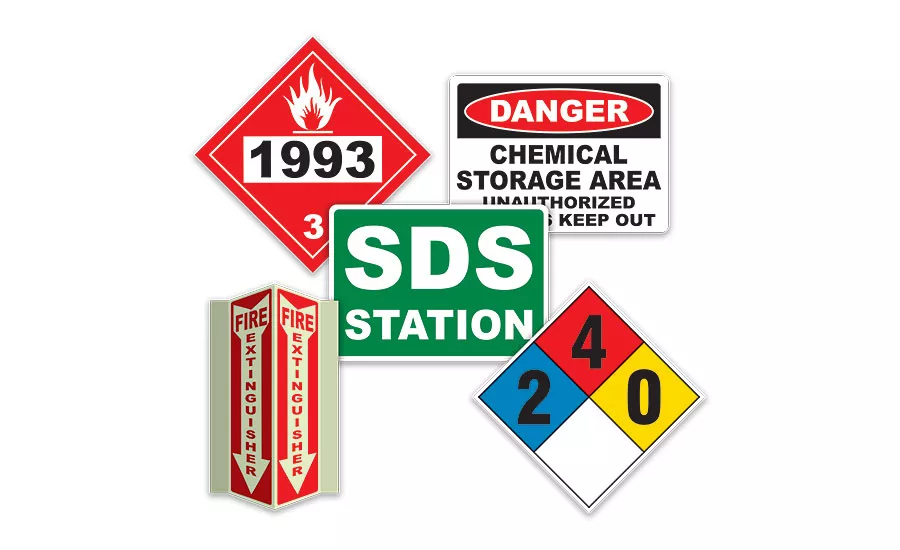
Society depends on the preparation, storage, transportation, use, and disposal of chemicals. Each of these phases introduces risks that, without appropriate information and awareness, can lead to accidents. Thankfully, we have several tools that ensure intelligent, safe chemical management: training, supervision, inspections, safety data sheets, and safety signs.
For many readers of this publication, the necessity of chemical storage signs and the associated compliance with OSHA, NFPA, and DOT requirements are already well-understood, but it is easy to fall so deep into these technical requirements that we start to lose sight of the bigger picture. Why exactly do we need all the chemical hazard signs we see every day?
Primary goals
First, it is helpful to define the two primary goals of safe chemical handling. One goal is to reduce the risk of accidents by assisting personnel in evaluating hazards. The second goal is to empower emergency responders when accidents do happen by warning them about what awaits, and providing the information necessary for firefighters and other emergency responders to select appropriate emergency control, evacuation, and cleanup procedures. Both goals depend on providing immediate information to protect the lives of firefighters and other emergency personnel, and to reduce the amount of damage caused by an accident.
Safety identification products help to achieve these goals by answering several questions. Where are the chemicals? What are the chemicals? What hazardous properties do the chemicals have (such as health risks, flammability, instability, or reactivity to water)? How can accidents be avoided around the chemicals? What response is necessary if an accident with the chemical does occur? Reflecting on accidents often reveals that part of the problem is a lack of awareness regarding the answers to one or more of those questions.
Take, for example, the recent events at a sulfur-based fertilizer producer in Florida that suffered two fires in the span of less than two weeks. The first fire was caused when a truck accidentally entered a hazardous area and heat from the tires ignited sulfur dust. Luckily, no injuries were reported. Ten days later, they weren’t as lucky. The second fire began when a sweeping device accidentally brushed against metal, creating a spark which again ignited the sulfur dust. Five employees who responded to the fire were hospitalized after inhaling hazardous fumes.
Signs and labels
There are numerous safety identification products related to chemical storage and handling that can help to prevent these types of events, especially when posted in correct locations on building exteriors and all access points to interior and exterior storage areas. Safety Data Sheets (SDS) should always be available to provide complete understanding about the identification, hazards, handling, and storage of chemical products. OSHA’s Hazard Communication Standard states that, “all employers with hazardous chemicals in their workplaces must have labels and safety data sheets for their exposed workers, and train them to handle the chemicals appropriately.”
In addition to detailed SDS information, on-the-spot safety signs are important to remind people of critical information when it matters most. Among the most common examples of this type of identification are labels on storage containers. Last year, inspectors from the Michigan Department of Environmental Quality shut down a company after finding themselves unable to identify the chemicals stored in nearly 5,000 open, unlabeled, rusty containers and recognizing the serious human and environmental dangers that such a facility presents.
Exact signage requirements depend on the facility and the chemicals handled, but the correct solution very often includes those mentioned above as well as spill response reporting and equipment signs, personal protective equipment (PPE) signs, drum status tags, and drum handling policy signs.
Beyond the message on each sign, it is important for signs to be designed properly. Effective safety signs must be obvious so that they can be understood rapidly. They must also be consistent across the country so that only the information specific to the chemical storage area needs to be parsed. This is where standards such as NFPA 704 come into play. The NFPA diamond design standard has been rigorously tested to meet the needs of effective signage.
Transporting chemicals introduces another diamond-shaped standard into the mix: hazmat placards. These placards, mandated by the US Department of Transportation (DOT) in Title 49 of the Code of Federal Regulations, serve to clearly mark each side of trucks as carrying hazardous materials and dangerous goods in the United States. They include colors, symbols, and numbers that define which specific groups of chemicals are being transported.
Numbers similar to those used on DOT hazmat placards are also used on hazardous waste drum labels. It is easy to overlook disposal when it comes to a safety program, but remember that hazardous waste storage is simply another phase of chemical storage and the same principles that apply to valuable chemicals also apply to waste. It is every bit as important to restrict access and provide answers to key safety questions regarding waste storage as it is for other chemical storage.
By taking a step back and thinking about the risks involved during each stage of chemical handling, it quickly becomes clear how important chemical storage signage is. Exploring of “why” shows us that the NFPA, OSHA, and DOT signage requirements are not bureaucratic hoops that we must jump through; they protect the lives of everyone involved in chemical management and emergency response.
Looking for a reprint of this article?
From high-res PDFs to custom plaques, order your copy today!