3 questions to ask about your hearing conservation program
I think it was George Burns who said, “You know you're getting old when you stoop to tie your shoelaces and wonder what else you could do while you're down there.” Now that I am 40(ish), each year brings new unpleasant signs of age and wear to my body. Some are self-inflicted; too many years of sports, an unfettered love of fried chicken, and a passionate approach to bacon consumption have left me with an aching body and an extra ten pounds that eludes elimination. Others are natural signs of my body deteriorating; challenging memory skills and poor eyesight requiring Hubble-strength lenses.
The latest addition to my growing list of concerns is my hearing. I won’t play the victim and pretend that I have not attended dozens of rock concerts where the decibel level rattled my fillings loose and left my ears ringing for days. However, my exposure to elevated noise levels has been infrequent and for short periods of time. It was not until I entered the industrial environment did I realize that millions of American workers are exposed to unsafe decibel levels for hours each day, five days a week-spanning decades of their working lives. The U.S. Department of Labor estimates that 22 million workers are exposed to potentially damaging noise at work annually. If not protected properly, this exposure can result in hearing degradation and a significant reduction in quality of life.
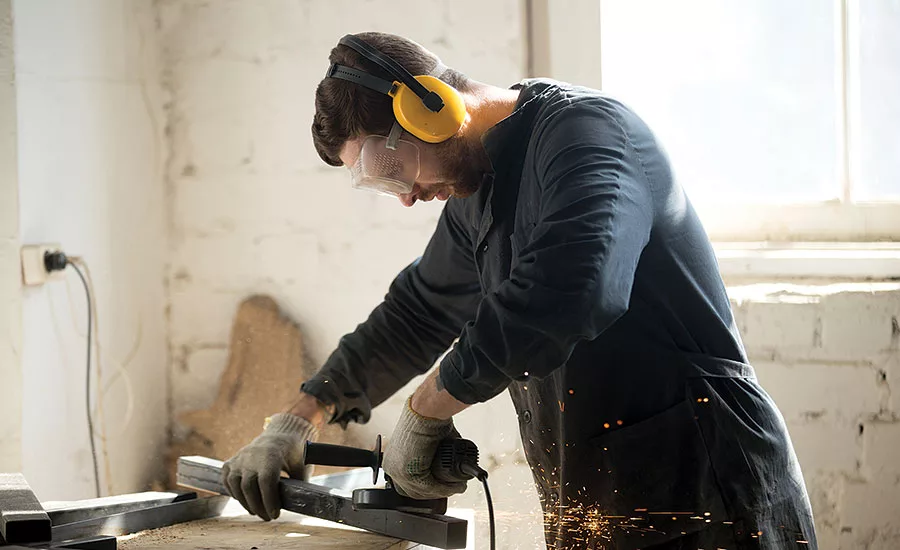
While most industrial facilities offer hearing protection to their employees, there are some very basic, yet overlooked, questions you can ask of your hearing conservation program (HCP) to determine if you are maximizing its effectiveness.
Question 1: Can I eliminate the hazard?
There are few sounds on the planet that evoke the shoulder-raising, grimacing face of discomfort like scratches on a chalkboard. While in most cases it is not realistic to remove all noise from a facility, a productive exercise can be to walk your facility to identify individual sounds polluting a particular workspace. Turn off machines if necessary to isolate each whine or grind. Once each sound is identified, ask your maintenance team to develop a way to eliminate or reduce the amount of noise pollution for each. The answer may be as easy as using lubrication or thread lockers while others may require machine guarding or replacement. PPE is an option, but first work with others within your facility to eliminate or reduce each noise hazard individually.
Question 2: Am I addressing noise pollution outside of the work environment?
Once again, I am victim of my own scrutiny. In addition to stage diving though my adolescence, I also rode a motorcycle for many years. As many motorcycle enthusiasts often do, I spent an embarrassing amount of money on exhaust systems to maximize the sound output of my bike. Wanting to enjoy the labor of my love, I never wore earplugs and was exposed to an unsafe combination of exhaust, wind and road noises for extended lengths of time. While it is normal to concentrate on workplace hearing conservation, it is impossible to separate hearing loss due to home activities from work activities. An effective HCP should include education and best practices regarding prevention measures at home. Some additional hazards against which your employees should protect:
- Headphones
- Firearms
- Home projects (tools and machinery used at home)
- Automobiles (not your Prius, but your 1969 Camaro)
- Boats
- Lawn equipment
Unfortunately, many employees’ safe practices end as soon as they exit the workplace. I work with several facilities that allow their employees to take earplugs for personal use. Addressing noise hazards at home as well as the workplace can help to maximize your HCP.
Question 3: Do my employees know how to use hearing protection properly?
It’s a simple question, but many in our industrial workforce do not know how to correctly insert ear plugs. For years I rolled and crammed ear plugs into my ears with no regard to technique. It wasn’t until I had an ear plug manufacturer rep see me do it and show me the correct way, did I know I was doing anything wrong. Since then, I have been cognizant of how others use ear plugs, and more often than not, they are mimicking my old behavior. As with all PPE, hearing protection programs should have training for new employees and refresher training for existing employees to ensure that everyone is educated on how to use and why. Most safety distributors will provide hearing protection training at no charge.
Vast amounts of resources are engaged to determine the type of glove or safety glasses to employ within a facility. Acute hazards are often prioritized over chronic hazards in safety programs, kicking the proverbial can of responsibility down the road of life. In these circumstances, safety programs relating to areas such as hearing conservation are given minimal effort and allow long-time employees to accumulate the effects of prolonged exposure to noise damage. Asking relevant questions and evolving your HCP will help protect your employees and their hearing.
Looking for a reprint of this article?
From high-res PDFs to custom plaques, order your copy today!