Protect construction workers from the neck up with these tips
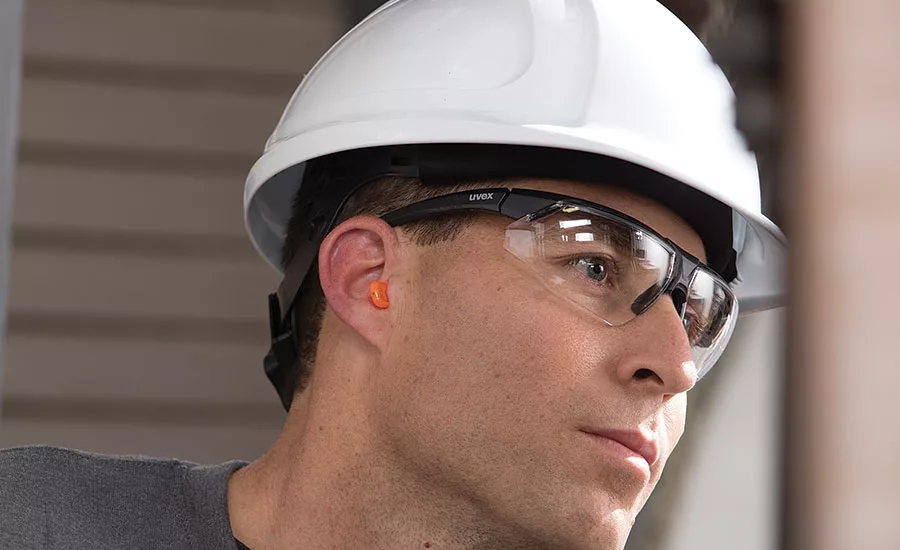
Credit: Getty Images
For America’s nearly seven million construction workers, the jobs are rigorous and the hazards plentiful. Injuries from falling objects, airborne fragments and extreme noise can all have devastating lifelong effects on cognition, vision and hearing. Likewise, injuries to the head and eyes are among the most costly to employers.
Construction workers experience the most fatal and nonfatal traumatic brain injuries (TBIs) among U.S. occupations.1 Hard hats are an individual’s first defense against falling objects, heavy equipment, and electric shocks and burns. While hard hats have been employed for more than a century, recent advances significantly improve the protection and comfort they deliver. If the hard hats on your site are more than five years old, it’s time to consider adopting hats with these vital innovations.
First, be sure all hard hats meet the American National Standards Institute’s Z89.1-2014 standard, determine the amount of protection required (Type I or Type II) and the level of electrical protection (Class G, E or C).
Next consider the suspension, where advances in fit, comfort and retention can be achieved. Look for soft, pliable materials that contour to the wearer’s head and deliver comfort; easy-to-use, ergonomic sizing and adjustability features that enable a quick custom fit; and multiple points of contact to dissipate energy upon impact and reduce the risk of injury.
Save sight
Construction workers experience more eye injuries than any other profession; in fact, 10,600 eye injuries result in missed days of work per year.2 Eye hazards range from flying nails, metal fragments and splinters; to airborne dust and grit from cement mixing, sawing or grinding; to chemical exposure; and light hazards such as the welding arc and ultraviolet rays. First and foremost, make sure the safety eyewear you select meets the ANSI Z87.1 standard for impact protection. Then, based on the hazards present, consider the type of eyewear (spectacles, sealed or goggles) that will best protect from physical hazards as well as the appropriate lens tints to protect from visible and invisible light hazards.
While protective function is essential, other top considerations include comfort, fit and anti-fog performance. Not wearing safety eyewear and not wearing the proper type are leading causes of eye injuries. Sixty percent of those suffering an eye injury were not wearing eye protection according to the Bureau of Labor Statistics, and OSHA estimates that proper protective eyewear can prevent nine out of ten eye injuries.3
Fog is the No. 1 challenge faced by safety eyewear users. It’s practically unavoidable and poses its own danger by obscuring workers’ view of hazards. To combat fog look for the most consistent, longest-lasting anti-fog lens coatings available. The most reliable coatings employ dual-action properties: hydrophilic to absorb moisture and hydrophobic to spread and shed excess condensation.
New materials and features make it easier than ever to outfit the workforce with eyewear that comfortably fits everyone’s unique facial profile. Breakthrough materials allow for grippier nose pads and temples for secure, reliable retention. Innovative adjustability features such as wire core temples and angle-adjustable ratcheting temples allow individuals to achieve a personal fit.
Avoid hearing loss
Noise-induced hearing loss (NIHL) is one of the most common permanent and preventable occupational injuries in the U.S., where 22 million workers are exposed to hazardous noise daily and 8 million suffer from NIHL.4 Unlike most other injuries, NIHL is painless, progressive and permanent.
Construction sites are notoriously noisy, where daily exposure to sounds from jackhammering (130 decibels), hammering nails (120 dB) and bulldozers (100 dB) can cause irreversible hearing damage.
Hearing protection is required when workplace noise averages more than 85 dB during an 8-hour day, but not everyone who wears earplugs or ear muffs is properly protected. Achieving a proper fit is key to attenuation; if the inserted earplug remains visible from a head-on view or if the seal of an earmuff is broken, hearing is not fully protected.
Earplugs are the most commonly worn hearing protection in construction. Disposable foam earplugs that are rolled and inserted into the ear canal are an easy and economical solution. However, they’re prone to getting grimy in workers’ hands while inserting or in pockets when not in use, and they’re easy to lose. Reusable, molded push-in earplugs are available in a variety of shapes and can last 2-4 weeks with proper care. New hybrid earplugs offer even more benefits including easy-to-grasp ergonomic stems, dimpled foam tips for easy push-in insertion and a comfortable fit, and optional cords that hang around the neck for quick removal and replacement.
Cap-mounted muffs are another popular solution. These are affixed to the hard hat then seal tightly around the wearer’s ears.
In construction, human capital is your most valuable asset. Don’t leave worker safety to chance. By understanding the advances in head, vision and hearing protection, you can provide the protection workers need – and the comfort they require to wear their PPE all shift long. When PPE is worn consistently, workers have a much better chance of staying safe on the job and returning home safe at the end of every shift.
- Centers for Disease Control and Prevention, NIOSH Science Blog, “Traumatic Brain Injuries in Construction,” March 21, 2016, http://blogs.cdc.gov/niosh-science-blog/2016/03/21/constructiontbi/
- Electronic Library of Construction Occupational Safety & Health, “Hazard Alert: Eye Injuries in Construction,” http://elcosh.org/document/2151/d000018/hazard-alert%3A-eye-injuries-in-construction.html
- CPWR, The Center for Construction Research & Training, “Hazard Alert: Eye Injuries,” https://www.cpwr.com/sites/default/files/publications/eye_injuries_new_english.pdf
- Centers for Disease Control and Prevention, NIOSH, “Noise and Hearing Loss Prevention,” https://www.cdc.gov/niosh/topics/noise/default.html
Looking for a reprint of this article?
From high-res PDFs to custom plaques, order your copy today!