ISHN logo
search
cart
facebook twitter linkedin youtube
  • Sign In
  • Create Account
  • Sign Out
  • My Account
ISHN logo
  • NEWS
    • Today's News
    • Global Safety News
    • Government Regulations
  • PRODUCTS
    • Product Innovations
    • Featured Products
  • TOPICS
    • Environmental Health and Safety
    • Facility Safety
    • Workplace Health
    • Occupational Safety
    • PPE
    • More Topics
  • CONSTRUCTION
  • TECHNOLOGY
  • COLUMNS
    • Best Practices
    • Dave Johnson: What’s going on
    • Editorial Comments
    • Leading Safety
  • MULTIMEDIA
    • ISHN Podcast
    • Videos
    • Cold Stress Education Quiz
    • Webinars
    • White Papers
  • MORE
    • Buyer's Guide
    • Newsletters
    • Convention Companion
    • Polls
    • Events
    • ISHN Store
    • Sponsor Insights
  • EMAGAZINE
    • eMagazine
    • Archived Issues
    • Contact
    • Advertise
  • JOIN TODAY!
Government Safety RegulationsEnvironmental Health and Safety

A Confined Space blog post

OSHA and industry reach beryllium settlement
By Jordan Barab
Confined Space blog
May 2, 2018

Posted with permission from Confined Space, a newsletter of workplace safety and labor issues.

OSHA and the Beryllium industry have reached a settlement regarding changes in OSHA’s Beryllium standard for general industry. The changes, which mostly focus on clarifications of “ancillary requirements” dealing mostly with regulated work areas, hygiene (cleaning of workers and equipment) and medical management, will be phased in in two major stages. The permissible exposure limit (PEL) will remain the same, as will requirements for engineering controls (for example) which don’t come into effect until 2020.

To address some of the simpler changes will OSHA will issue a Direct Final Rule and those changes that may be more controversial (and require comment) will be covered in a proposal to be issued by the end of the year. Because the proposal will likely be followed by a months-long comment period and possibly a hearing before a final standard is issued, years down the road, OSHA will, in the meantime, enforce the provisions of the proposed rule (or the DFR in the period before the proposal is issued.)

Simple Explanation

Regulated industries sue OSHA following the issuance of every major standard or regulation. While some of the lawsuits are anti-regulatory ideological exercises aimed at taking down the entire rule, others filed by the affected industries are often an attempt to clarify requirements that may not be clear and to define more accurate exactly how the standard will be enforced. Often, these clarification and enforcement issues are resolved in a settlement that requires OSHA to issue “Questions and Answers” (Qs & As) to immediately address some of the issues, to be followed by a detailed compliance directive that will describe in great detail how the standard will be enforced in the field. Occasionally, when there are actual mistakes in the regulatory text (such as a definition that may not have been written accurately) the regulatory text is changed through a “technical correction” which is published in the Federal Register.

In this case, however, Materion, the main industry representative (who reached an agreement with the United Steelworkers union (USW) that formed the basis of the original beryllium standard), didn’t trust clarifications made by Qs & As or a compliance directive, possibly fearing they could be changed by future administrations, and insisted on the language actually being clarified in the regulatory text. Because nothing is easy (especially at OSHA) when it comes issuing or modifying any standard or regulation, the settlement spells out a complex schedule of direct final rules, proposals, stays in enforcement of several sections and eventually a final standard that should (hopefully) make everyone happy.

Construction and Maritime

This agreement only addresses the General Industry Standard and has no effect on what the agency is planning to do about the construction and maritime beryllium standards. As we’ve described before, OSHA issued a proposal last June to keep the new PEL, but remove the “ancillary provisions” for construction and shipyard workers. The ancillary provisions would have required employers to provide exposure monitoring, regulated areas (and a “competent person” in construction), a written exposure control plan, personal protective equipment (PPE), and work clothing, hygiene areas and practices, housekeeping, medical surveillance, medical removal, and worker training for construction and shipyard workers exposed to beryllium from abrasive blasting using coal slag compounds that contain beryllium. OSHA will begin enforcing “the new lower 8-hour permissible exposure limit (PEL) and short-term (15-minute) exposure limit (STEL)” for construction and maritime workers starting May 11.

Everyone Happy?

The USW was a party to the settlement discussions and although they were not signatories to the agreement, the union had no major problems with its provisions. There is however, apparently some unhappiness, which we may hear about later, with the number of provisions of the standard that have been stayed pending issuance of the proposal in December. The settlements stays paragraphs (e) Regulated Areas, (f) Modes of Compliance (except for the engineering controls provision with a compliance date of March 10, 2020), (h) Personal Protective Equipment, (i) Hygiene (except for the change rooms and showers provisions with a compliance date of March 11,2019), (j) Housekeeping, (m) Communication of Hazards, and (n) Recordkeeping. Why the  “Communication of Hazards” section, for example, shouldn’t be in effect is unclear, as almost nothing will be changed in that section.

Bottom Line

This is somewhat of a nothingburger, especially compared with the damage likely to be done with the full removal of the ancillary provisions of the construction and maritime standards. While there is some issue with the number of provisions that have been stayed, the time period for the stay is only just over seven months and, who knows, OSHA may actually listen to the USW if they object.

Click here to visit Confined Space.
Click here to donate to Confined Space.

KEYWORDS: hazmat occupational exposure safety regulations

Share This Story

Looking for a reprint of this article?
From high-res PDFs to custom plaques, order your copy today!

Barab

Jordan Barab served as Deputy Assistant Secretary of Labor at OSHA from 2009 to 2017. Before that he worked for the House Education and Labor Committee, the Chemical Safety Board, the AFL-CIO, OSHA and AFSCME. He currently produces Confined Space, a newsletter of workplace safety and labor issues.

Recommended Content

JOIN TODAY
to unlock your recommendations.

Already have an account? Sign In

  • forklift safety

    Exploring the latest technologies in forklift safety

    With more staff and more stock in warehousing now more...
    Facility Safety
    By: Josh Cramer
  • welding

    All about welder’s flash or arc eye

    A flash burn is a painful inflammation of the cornea,...
    Environmental Health and Safety
  • dangerous jobs

    The 10 most dangerous jobs in the U.S.

    On-the-job deaths have been rising — hitting the highest...
    Occupational Safety
    By: Benita Mehta
Manage My Account
  • eMagazine Subscriptions
  • ISHN Newsletter & Other Newsletter Alerts
  • Online Registration
  • Manage My Preferences
  • Subscription Customer Service

More Videos

Sponsored Content

Sponsored Content is a special paid section where industry companies provide high quality, objective, non-commercial content around topics of interest to the ISHN audience. All Sponsored Content is supplied by the advertising company and any opinions expressed in this article are those of the author and not necessarily reflect the views of ISHN or its parent company, BNP Media. Interested in participating in our Sponsored Content section? Contact your local rep!

close
  • man wearing the the Sundström SR200 Full Face Mask Respirator
    Sponsored byOHD

    5 Fit Testing Mistakes That Could Cost You

  • This image shows Magid AcuSpex polarized blue mirrored safety glasses.
    Sponsored byMagid Glove and Safety

    Construction PPE Guide: What Crews Need for Each Task

  • lone worker in confined space
    Sponsored byAlphasense Ltd.

    GET THE LEAD OUT of your Safety Oxygen Sensors!

Popular Stories

SpaceX 7 launch

OSHA Investigating Fatal Fall at SpaceX Starbase

Worker Impairment

How to Tell When a Co-Worker is Impaired? A Safety Pro’s Challenge

Automated loading dock equipment

After March 2026 Rivian Death, Safety Managers Reassess Loading Dock Systems Under OSHA's Warehouse Emphasis Program

top 10 most dangerous jobs

Poll

Seasonal Readiness

With the federal heat stress prevention rule on the horizon, which area of your safety program needs the most attention?
View Results Poll Archive

Products

Surviving an OSHA Audit A Management Guide, 2nd Edition

Surviving an OSHA Audit A Management Guide, 2nd Edition

See More Products

ISHN Podcasts

Related Articles

  • Non residential, residential construction helps industry spending reach highest level since December 2009

    See More
  • depression

    OSHA, industry leaders call on employers, workers to combat surge in construction worker suicides

    See More
  • silica exposure

    Industry petitions OSHA to reopen silica standard

    See More

Related Products

See More Products
  • 9781264257829_24.jpeg

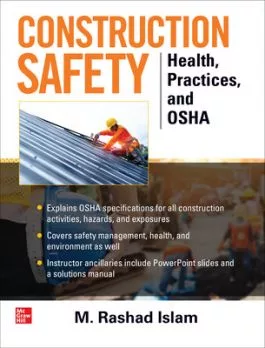
    Construction Safety: Health, Practices and OSHA

  • 9780849365461.jpg

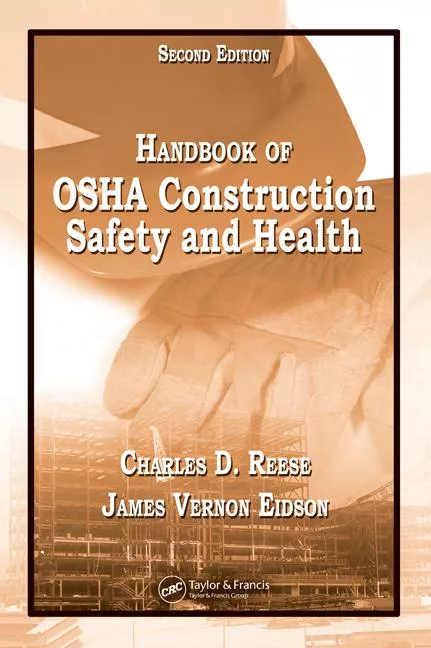
    Handbook of OSHA Construction Safety and Health, Second Edition

  • surviving.webp

    Surviving an OSHA Audit A Management Guide, 2nd Edition

See More Products

Related Directories

  • Scaffold & Access Industry Assn. (SAIA)

    As a global leader in scaffold and access equipment advocacy, we are dedicated to promoting the highest standards of safety, craftsmanship, and ethics. Our mission is to empower everyone involved in the industry to pursue excellence and best practices. Join us in this vital conversation to elevate safety standards and build a stronger, more ethical scaffold community. Together, we can reach new heights!
×

Become a Leader in Safety Culture

Build your knowledge with ISHN, covering key safety, health and industrial hygiene news, products, and trends.

JOIN TODAY
  • RESOURCES
    • Advertise
    • Contact Us
    • Directories
    • Manufacturing Division
    • Store
    • Want More
  • SIGN UP TODAY
    • Create Account
    • eMagazine
    • Newsletters
    • Customer Service
    • Manage Preferences
  • SERVICES
    • Marketing Services
    • Reprints
    • Market Research
    • List Rental
    • Survey/Respondent Access
  • STAY CONNECTED
    • LinkedIn
    • Facebook
    • YouTube
    • X (Twitter)
  • PRIVACY
    • PRIVACY POLICY
    • TERMS & CONDITIONS
    • DO NOT SELL MY PERSONAL INFORMATION
    • PRIVACY REQUEST
    • ACCESSIBILITY

Copyright ©2026. All Rights Reserved BNP Media, Inc. and BNP Media II, LLC.

Design, CMS, Hosting & Web Development :: ePublishing