5 ways to overcome challenges of foot protection programs
Why risk foot injuries?
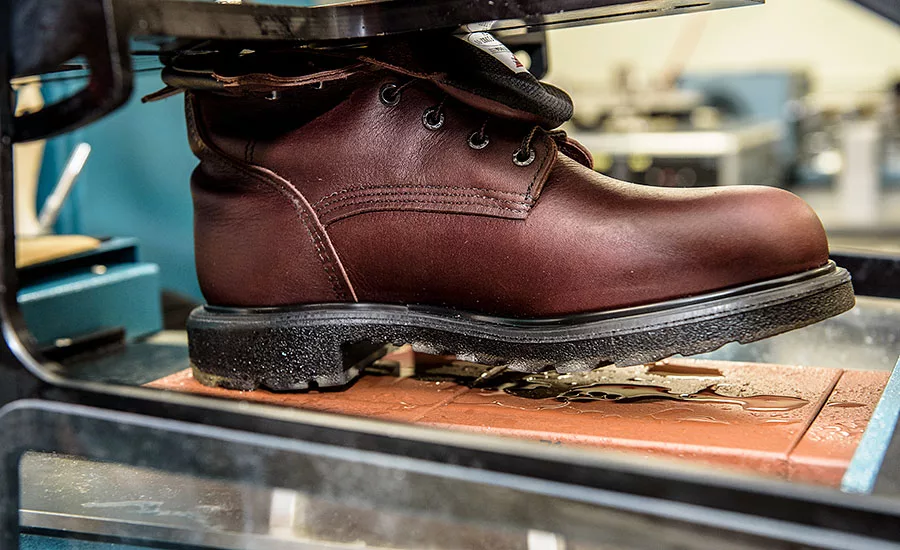
Here’s the good news: outfitting employees with appropriate footwear reduces injuries. In fact, protecting employees’ feet with reliable industrial footwear not only reduces lost work hours — it improves productivity and heightens morale.
Now the bad news: making sure workers have the right footwear for the job is a real, ongoing challenge for safety managers. Here are five ways you can overcome it and take advantage of all the benefits of high-quality safety footwear.
1) Know the regulators
Understanding the code of practice around safety footwear isn’t easy. Of course, workers in industrial settings must have protective footwear according to the OSHA. OSHA has an abundance of rules and regulations regarding workplace safety. Footwear is included in the Personal Protective Equipment (PPE) section of these standards.
Organizations that fail to comply with OSHA regulations run the risk of warnings, sanctions and fines. In 2018, OSHA raised its maximum penalties to $12,934 a day for “failure-to-abate” violations. If you’re tagged with a “willful” and “repeat” violation, the maximum penalty is $129,336.
While OSHA dictates the use of PPE, it’s actually ASTM International—the globally recognized standards organization—that sets the performance requirements for protective footwear. This means safety footwear needs to comply with current ASTM standards, the latest revision being released in 2018.
2) Decode the label
There are two relevant ASTM standards for safety toe footwear. F2413-18 specifies the minimum performance requirements to protect against a variety of workplace hazards. F2412-18a, dictates the test methods used to measure foot protection. Two significant risks to the foot are impact (falling objects) and compression (rolling objects). As a result, safety managers might encounter an ASTM-certified shoe with the following label designation:
- K ASTM F2413-18
- K M/I/C
- K Mt
Let’s unpack what all of this means. The first line communicates that the shoe meets the ASTM F2413-18 standard. In the next line, the M stands for male. If it is a women’s shoe, the letter will be an F (for female). The “I” stands for the impact rating (a 50-pound weight is dropped onto the toe from a height of 18 inches, delivering 75 ft-lbs. of force). The “C” is the compression rating (the shoe can withstand 2,500 pounds of compressive force on the toe). The last line, “Mt,” indicates the shoe offers protection from an impact to the metatarsal area of the foot.
3) Select the right footwear
When toe protection is needed, experts recommend shoes that conform to the ASTM F2413-18 standard which requires a protective toe cap to be an integral and permanent part of the footwear, as opposed to add-on protective devices (such as strap-on toe caps) that can fit poorly, hamper mobility or be forgotten by employees. But reducing the risk to toes is not the complete story.
Every industry needs shoes designed to defend against specific threats. Heat-resistant soles, for example, protect those who work in paving, roofing and hot metal industries. Electric hazard (“EH”) shoes serve as a secondary source of protection against the hazards of stepping on live electrical circuits, electrically energized conductors, parts or apparatus. Puncture-resistant (“PR”) shoes defend against nails, sharp cables and other debris commonly found in construction, tire manufacturing, metal recycling and the glass industry.
As you know, safety is not a one-size-fits-all endeavor. The same is true of footwear. It is important to understand the unique hazards of the job and find footwear to match. In general, the more dangerous the job, the more likely the shoe will be designed for a certain category of risk. Firefighters, for example, require specialized products created just for their exposure to flame and chemicals. Manufacturers and retailers alike can guide employees to the appropriate pair of shoes for their specific needs.
4) Go digital
Even after you know what standards to follow, which products meet them, and which safety footwear is right for your team, you still must manage this program internally. This can involve a great deal of complexity for program administrators who assign specific shoes to specific workers, based on their job, weather conditions or environmental factors (such as wet floors). Then it is necessary to ensure these employees purchase the correct shoes, keep tabs on wear and tear, deal with invoices, and distribute paper vouchers.
Digital programs are now available to simplify these processes, becoming more straightforward to manage. User experiences vary, but the concept is an online “one-stop shop” where program managers can review consolidated invoices (from multiple employee purchases at stores), authorize or revoke electronic vouchers, and run reports regarding important program metrics. Digital programs minimize management time by automating formerly manual steps, efficiently collecting information that was previously difficult to find and providing a better “big picture” view of program details. The programs also enhance worker safety by making it easier to ensure that each worker is equipped with the proper footwear required for their job.
5) Perform scheduled maintenance
To keep your safety footwear program tuned up, it’s important to create a maintenance plan. Work shoes should be checked regularly to determine if they need to be replaced. Remember, any time a heavy object hits a safety toe, it could be compromised. Any material embedded in soles should be removed immediately. Regular cleanings are important for maximum protection and longevity.
Employers must also periodically conduct workplace hazard assessments. Fulfilling this OSHA mandate is not only important for compliance, but it helps protect employees from new threats or dangerous conditions that may have emerged on the job since the last assessment.
If you want to ensure your organization complies with applicable regulations, OSHA offers a number of solutions, including training opportunities and guidance through grants; strategic partnership programs within trade unions and associations; voluntary protection programs; and free consultation assistance for small employers. To get the details, visit www.osha.gov.
A sound investment
According to the U.S. Bureau of Labor Statistics, the workforce suffered approximately 100,000 occupational foot injuries that averaged 10 lost days of work. Now consider all the costs these injuries represent, including fines, lost productivity and worker compensation. It’s easy to see why choosing high-quality safety footwear is the right thing to do for your most valuable asset—your employees—and for your business.
Looking for a reprint of this article?
From high-res PDFs to custom plaques, order your copy today!