ISHN logo
search
cart
facebook twitter linkedin youtube
  • Sign In
  • Create Account
  • Sign Out
  • My Account
ISHN logo
  • NEWS
    • Today's News
    • Global Safety News
    • Government Regulations
  • PRODUCTS
    • Product Innovations
    • Featured Products
  • TOPICS
    • Environmental Health and Safety
    • Facility Safety
    • Workplace Health
    • Occupational Safety
    • PPE
    • More Topics
  • CONSTRUCTION
  • TECHNOLOGY
  • COLUMNS
    • Best Practices
    • Dave Johnson: What’s going on
    • Editorial Comments
    • Leading Safety
  • MULTIMEDIA
    • ISHN Podcast
    • Videos
    • Cold Stress Education Quiz
    • Webinars
    • White Papers
  • MORE
    • Buyer's Guide
    • Newsletters
    • Convention Companion
    • Polls
    • Events
    • ISHN Store
    • Sponsor Insights
  • EMAGAZINE
    • eMagazine
    • Archived Issues
    • Contact
    • Advertise
  • JOIN TODAY!
Government Safety RegulationsOccupational SafetyEnvironmental Health and SafetyPPEWorkplace Safety CultureRisk Management

Heat stress prevention tips

Acclimatization, break schedules, ventilation, clothing & monitoring stress can avoid illnesses and even fatilities.
By Steve Graf
Heat stress prevention tips
May 1, 2019

The topic of worker heat exposure has made headlines across the country in recent years. In January of this year, OSHA leveled a fine of $149,664 for violations of the General Duty Clause in response to the 2018 death of a California Postal Worker. Workers in farming, construction, landscaping, oil fields, utilities, and our military face significant risk to heat related illnesses as temperatures begin to rise.

These are hardly isolated incidents. According to OSHA’s records, there were 30 fatalities related to heat-related illness from 2017-2018. Over the past 25 years, there have been more than 200 recorded deaths.

The culprit: heat stress

Heat stress, the net heat load on the body from the combined contributions of metabolic heat production and external environmental factors, is more than just a nuisance. While there are no OSHA or federal regulations addressing worker exposure limits to heat, the Occupational Safety and Health Act of 1970 dictates that companies must provide a workplace free from recognized hazards.

The hazards have been recognized, and companies are being held accountable. In addition to the potential for fines, workers are uniting to demand companies take heat stress into account during worker shifts.

Prevention, not reaction to heat illness symptoms

Fortunately, with the proper program in place, it is possible to prevent symptoms from even occurring. Acclimatization, work and rest schedules, in conjunction with proper ventilation, clothing and engineering controls, are the key to reducing company risk and promoting worker safety.

Acclimatization to prevent risk

Not all heat stress risks are alike. Acclimatization refers to the incremental adaptions our bodies make (for example circulatory stabilization) in response to gradual increases in heat level exposure. The CDC advises having all new workers and workers returning from an absence of a week or more only work for 20 percent of their normal work period on their first day, with an increase of 20 percent each subsequent day.

Maintaining acclimatization is important as well. It can often be regained within two to three days upon returning to a job site.

Modified work and rest schedules

Not only should frequent rest breaks be encouraged, they should be scheduled, with water available in shaded or air-conditioned recovery areas. Make sure your workers are properly aware of the determined break schedule, and have co-workers check for heat-related symptoms, such as dizziness, prickly skin or nausea.

It is important to note, however, that air conditioning and shade will not impact acclimatization.

Hazard identification

Appropriately categorizing and identifying hazards is crucial to your heat stress prevention program. Environmental measurements evaluate the ambient environment and its effects on your worker. They include the heat index and wet bulb globe temperature (WBGT). Individual measurements evaluate the heat being generated by your worker, and/or other physiological effects. These include core temperature, heart rate, sweat rate and oxygen consumption.   

Monitoring for prevention and safety

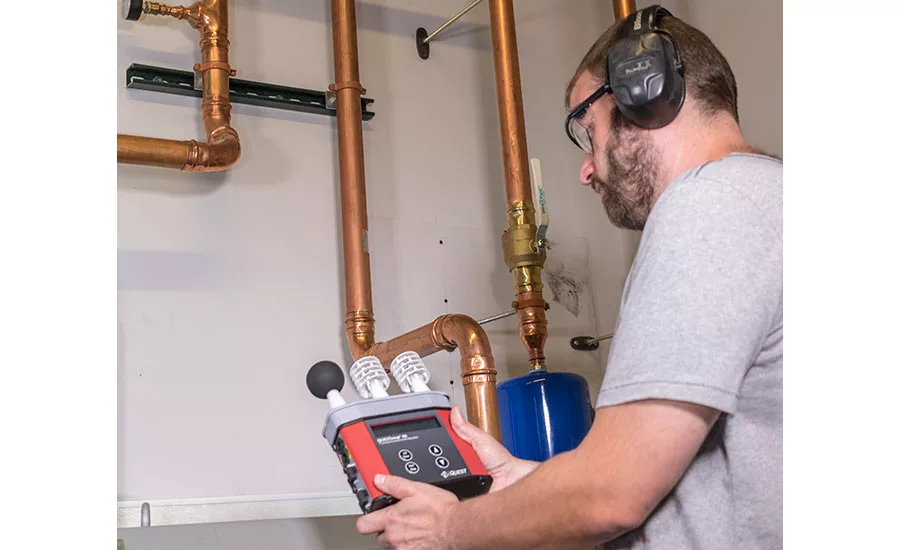
WBGT measures heat stress in direct sunlight, taking into account temperature, humidity, wind speed, sun angle and cloud cover. The WBGT index provides work/rest guidelines intended to keep worker body temperatures below 38° C (100.4° F).

Monitoring through WBGT sensing technology allows you to get information on worker heat stress levels, and act accordingly. Being able to quickly and accurately evaluate potential heat stress environments means knowing your worker exposure before they do, which is often far too late.

Having the right instrumentation at your disposal as part of your heat stress protection program allows you to make adjustments to work schedules, develop a proper acclimatization schedule, and appropriately rest your workers.


KEYWORDS: extreme environments heat protection heat stress illness safety monitoring

Share This Story

Looking for a reprint of this article?
From high-res PDFs to custom plaques, order your copy today!

Steve Graf is Global Product Manager for TSI Quest.

Recommended Content

JOIN TODAY
to unlock your recommendations.

Already have an account? Sign In

  • forklift safety

    Exploring the latest technologies in forklift safety

    With more staff and more stock in warehousing now more...
    Workplace Training Strategies
    By: Josh Cramer
  • welding

    All about welder’s flash or arc eye

    A flash burn is a painful inflammation of the cornea,...
    Environmental Health and Safety
  • dangerous jobs

    The 10 most dangerous jobs in the U.S.

    On-the-job deaths have been rising — hitting the highest...
    Transportation Safety
    By: Benita Mehta
Manage My Account
  • eMagazine Subscriptions
  • ISHN Newsletter & Other Newsletter Alerts
  • Online Registration
  • Manage My Preferences
  • Subscription Customer Service

More Videos

Sponsored Content

Sponsored Content is a special paid section where industry companies provide high quality, objective, non-commercial content around topics of interest to the ISHN audience. All Sponsored Content is supplied by the advertising company and any opinions expressed in this article are those of the author and not necessarily reflect the views of ISHN or its parent company, BNP Media. Interested in participating in our Sponsored Content section? Contact your local rep!

close
  • man wearing the the Sundström SR200 Full Face Mask Respirator
    Sponsored byOHD

    5 Fit Testing Mistakes That Could Cost You

  • This image shows Magid AcuSpex polarized blue mirrored safety glasses.
    Sponsored byMagid Glove and Safety

    Construction PPE Guide: What Crews Need for Each Task

  • lone worker in confined space
    Sponsored byAlphasense Ltd.

    GET THE LEAD OUT of your Safety Oxygen Sensors!

Popular Stories

SpaceX 7 launch

OSHA Investigating Fatal Fall at SpaceX Starbase

Worker Impairment

How to Tell When a Co-Worker is Impaired? A Safety Pro’s Challenge

Automated loading dock equipment

After March 2026 Rivian Death, Safety Managers Reassess Loading Dock Systems Under OSHA's Warehouse Emphasis Program

top 10 most dangerous jobs

Poll

Seasonal Readiness

With the federal heat stress prevention rule on the horizon, which area of your safety program needs the most attention?
View Results Poll Archive

Products

Surviving an OSHA Audit A Management Guide, 2nd Edition

Surviving an OSHA Audit A Management Guide, 2nd Edition

See More Products

ISHN Podcasts

Related Articles

  • Heat Stress prevention

    See More
  • heat stress

    Heat stress prevention recommendations

    See More
  • the Mine Safety and Health Administration

    NIOSH offers free heat-stress prevention resources for employers and mine workers

    See More

Related Products

See More Products
  • 9781482217148.jpg

    Fall Prevention and Protection: Principles, Guidelines, and Practices

  • 9781138072824.jpg

    Accident/Incident Prevention Techniques, Second Edition

  • 1118645685.jpg

    Advanced Safety Management: Focusing on Z10 and Serious Injury Prevention, 2nd Edition

See More Products

Events

View AllSubmit An Event
  • March 4, 2015

    ACGIH® TLV® for Heat Stress and Strain in the Context of Heat Stress Management webinar

    While the Heat Stress and Strain TLV® is designed for exposure assessment, it exists in the context of an integrated heat stress management program. This webinar will outline the components of a heat stress management program to illustrate how the TLV® can be used for exposure assessment and the development of controls.
View AllSubmit An Event

Related Directories

  • Crisis Prevention Institute

    CPI equips organizations with training and resources on preventing and de-escalating difficult behavior.
×

Become a Leader in Safety Culture

Build your knowledge with ISHN, covering key safety, health and industrial hygiene news, products, and trends.

JOIN TODAY
  • RESOURCES
    • Advertise
    • Contact Us
    • Directories
    • Manufacturing Division
    • Store
    • Want More
  • SIGN UP TODAY
    • Create Account
    • eMagazine
    • Newsletters
    • Customer Service
    • Manage Preferences
  • SERVICES
    • Marketing Services
    • Reprints
    • Market Research
    • List Rental
    • Survey/Respondent Access
  • STAY CONNECTED
    • LinkedIn
    • Facebook
    • YouTube
    • X (Twitter)
  • PRIVACY
    • PRIVACY POLICY
    • TERMS & CONDITIONS
    • DO NOT SELL MY PERSONAL INFORMATION
    • PRIVACY REQUEST
    • ACCESSIBILITY

Copyright ©2026. All Rights Reserved BNP Media, Inc. and BNP Media II, LLC.

Design, CMS, Hosting & Web Development :: ePublishing