ISHN logo
search
cart
facebook twitter linkedin youtube
  • Sign In
  • Create Account
  • Sign Out
  • My Account
ISHN logo
  • NEWS
    • Today's News
    • Global Safety News
    • Government Regulations
  • PRODUCTS
    • Product Innovations
    • Featured Products
  • TOPICS
    • Environmental Health and Safety
    • Facility Safety
    • Workplace Health
    • Occupational Safety
    • PPE
    • More Topics
  • CONSTRUCTION
  • TECHNOLOGY
  • COLUMNS
    • Best Practices
    • Dave Johnson: What’s going on
    • Editorial Comments
    • Leading Safety
  • MULTIMEDIA
    • ISHN Podcast
    • Videos
    • Cold Stress Education Quiz
    • Webinars
    • White Papers
  • MORE
    • Buyer's Guide
    • Newsletters
    • Convention Companion
    • Polls
    • Events
    • ISHN Store
    • Sponsor Insights
  • EMAGAZINE
    • eMagazine
    • Archived Issues
    • Contact
    • Advertise
  • JOIN TODAY!
Government Safety RegulationsOccupational SafetyEnvironmental Health and SafetyOSHA Risk Management

Draft a LOTO policy, install equipment, train workers

Controlling hazardous energy
By Tim O’Connor
Controlling hazardous Energy Draft a LOTO policy, install equipment, train workers
November 2, 2019

Each year when OSHA reports its most frequently violated standards, the control of hazardous energy, also known as lockout tagout (1910.147) consistently appears high on the list of greatest offenders. 

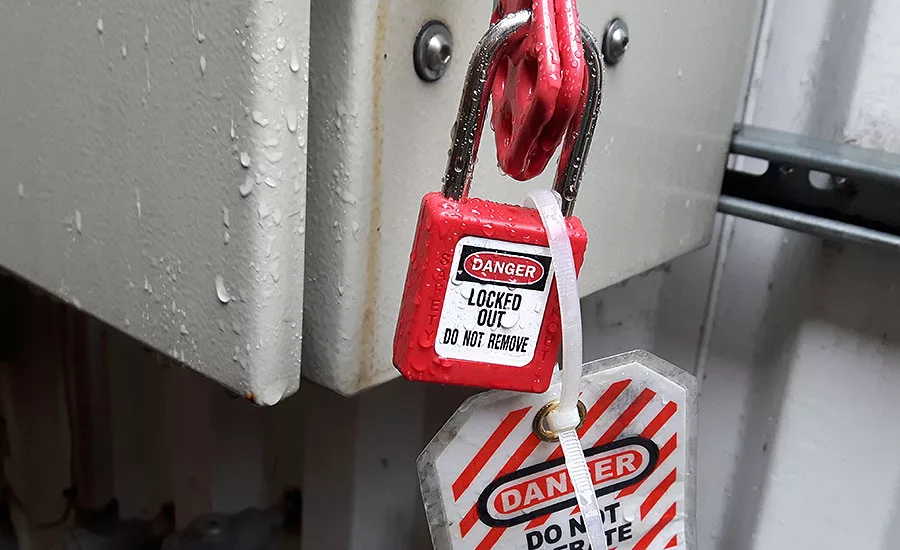
Lockout tagout (LOTO) is a procedure used across industries, including manufacturing, utilities, medical facilities, food service and research settings, to help guarantee machinery is deenergized or shut down while maintenance is being performed. To prioritize the safety of employees, the energy is isolated to prevent accidental startup, as well as possible injuries to anyone working on the machine. 

Most business operators agree that a lockout-tagout program is an ideal way to keep employees safe and is a smart policy to implement, but they often find it is not as easy to put into practice. In reality, business owners and safety managers can execute a successful lockout-tagout program with three simple steps; drafting a formal policy, purchasing quality equipment and training employees on procedure. 

Write it down 

It is important for any company beginning a lockout-tagout program to first create a written document detailing all of the features of the program to employees. The document should include step-by-step procedures for all equipment that needs to be deenergized, including how to shut down each machine, how to control the hazardous energy and how to apply lockout tagout devices. Photos and diagrams can be helpful to confirm all information is easily digestible to a variety of audiences. For companies that do not know where to begin, templates are available1 to help them get started, although it is recommended that written programs be tailored to a company’s own specific needs.

Durable, quality signage

After plans and procedures are drafted, companies should spend time ensuring they are purchasing the best quality and durable tags available. There are many different products available when it comes to lockout tags, including rigid vinyl with brass or plastic grommets. Don’t purchase brass if there is any chance of conductive electricity. 

Consider the tensile strength of the tag to ensure it is strong enough to hold the tag in place so it cannot be easily pulled off. Certain industries, such as utilities, may need to specify certain tensile strength requirements for safety tags to their provider. Find a reputable industrial and safety signage partner to help take the guesswork out of what is needed to meet these requirements. Make sure you work with a company that can adhere to any specific customizations.

A lockout-tagout station can help foster a culture of safety in your organization. This station not only organizes locks and tags, but its presence serves as a visual reminder to employees that they need to lockout a machine prior to servicing for maintenance. Many companies find that having lockout stations helps eliminate employees’ temptation to work without adhering to safety guidelines. 

Another visual reminder for employees is customized and personalized tags for each worker. OSHA’s LOTO regulation mandates all tags must provide identification for the person performing the lockout; some providers offer the capability of personalizing IDs with photos. Looking at the photo of the worker performing maintenance can also give pause for an employee considering energizing the machine before it is safe to do so. 

Make sure as you purchase locks, tags and materials that you consider all types of machines and all types of maintenance. For example, for machines that require a team to perform maintenance, it’s advisable to work with a provider who offers different devices for group lockouts. A good partner will walk clients through all of the necessary items.

The significance of training

Once a written plan is in place and the lockout materials are acquired, it is vital to train employees to participate in the program and use the materials. Training should include reviewing the written program and reviewing the OSHA LOTO requirements. Companies can consult OSHA requirements, the National Safety Council’s training programs, and safety professionals to create equipment-specific training for all authorized and affected employees. It is also advisable to work with a third-party safety professional to assist with auditing lockout tagout programs to identify stop gaps. 

Lockout-tagout programs serve a critical, lifesaving purpose while also ensuring machinery is properly maintained at regular intervals, and that no damage comes to equipment if it is energized too early. Companies with an established program of procedures to control energy will also be in compliance with OSHA requirements, including the standards outlined in 29 CFR 1910.147. 

Of course the most important reason for implementing a lockout-tagout program is to ensure that each and every employee returns home safely at the end of each day. When hazardous energy is not properly contained and controlled, workers can sustain serious or fatal injuries. And according to OSHA, employees exposed to hazardous energy lose an average of 24 workdays.2 Keep your workers safe and eliminate lost work accidents by creating a robust lockout-tagout program today.

References

1. http://www.tdi.texas.gov/pubs/videoresource/oloto.doc

2. https://www.osha.gov/SLTC/controlhazardousenergy/index.html


KEYWORDS: hazardous energy lockout/tagout (LOTO) machine guarding OSHA standards

Share This Story

Looking for a reprint of this article?
From high-res PDFs to custom plaques, order your copy today!

Tim O’Connor is the vice president of sales for LEM Products, Inc., a leading global provider of safety identification labels, tags and signs, including lockout tagout materials. Headquartered in Montgomeryville, Pennsylvania, LEM Products, Inc. is a women-owned enterprise and helps its clients meet supplier diversity requirements and obtain certain tax incentives. All products manufactured by LEM Products, Inc. are proudly made in the USA. For more information, please visit www.lemproductsinc.com.

Recommended Content

JOIN TODAY
to unlock your recommendations.

Already have an account? Sign In

  • forklift safety

    Exploring the latest technologies in forklift safety

    With more staff and more stock in warehousing now more...
    Workplace Training Strategies
    By: Josh Cramer
  • welding

    All about welder’s flash or arc eye

    A flash burn is a painful inflammation of the cornea,...
    Environmental Health and Safety
  • dangerous jobs

    The 10 most dangerous jobs in the U.S.

    On-the-job deaths have been rising — hitting the highest...
    Construction Industry Safety and Health
    By: Benita Mehta
Manage My Account
  • eMagazine Subscriptions
  • ISHN Newsletter & Other Newsletter Alerts
  • Online Registration
  • Manage My Preferences
  • Subscription Customer Service

More Videos

Sponsored Content

Sponsored Content is a special paid section where industry companies provide high quality, objective, non-commercial content around topics of interest to the ISHN audience. All Sponsored Content is supplied by the advertising company and any opinions expressed in this article are those of the author and not necessarily reflect the views of ISHN or its parent company, BNP Media. Interested in participating in our Sponsored Content section? Contact your local rep!

close
  • man wearing the the Sundström SR200 Full Face Mask Respirator
    Sponsored byOHD

    5 Fit Testing Mistakes That Could Cost You

  • This image shows Magid AcuSpex polarized blue mirrored safety glasses.
    Sponsored byMagid Glove and Safety

    Construction PPE Guide: What Crews Need for Each Task

  • lone worker in confined space
    Sponsored byAlphasense Ltd.

    GET THE LEAD OUT of your Safety Oxygen Sensors!

Popular Stories

Automated loading dock equipment

After March 2026 Rivian Death, Safety Managers Reassess Loading Dock Systems Under OSHA's Warehouse Emphasis Program

chemical safety

It Was Just Sugar: Catastrophic Safety Failures in Louisville

psychology in the workplace

Most Workplaces Measure Psychological Safety, Ignoring Psychosocial Risks

top 10 most dangerous jobs

Poll

Seasonal Readiness

With the federal heat stress prevention rule on the horizon, which area of your safety program needs the most attention?
View Results Poll Archive

Products

Surviving an OSHA Audit A Management Guide, 2nd Edition

Surviving an OSHA Audit A Management Guide, 2nd Edition

See More Products

ISHN Podcasts

Related Articles

  • OSHA cites Swain Construction in Omaha, Neb., $118K+ for failing to train workers on heavy equipment, other hazards (10/14)

    See More
  • OSHA fines manufacturer $274,500 for failing to train workers and protect them from safety hazards

    See More
  • Company fails to train workers on propane HazCom

    See More

Related Products

See More Products
  • 9780367861148.jpg

    LEAD Safety A Practical Handbook for Frontline Supervisors and Safety Practitioners

  • 0470387408.jpg

    Preparing for OSHA s Voluntary Protection Programs: A Guide to Success

See More Products

Related Directories

  • SafetyLine Lone Worker

    SafetyLine Lone Worker helps companies monitor the status of workers who are remote, alone, or working in hazardous situations. We are an automated check-in monitoring and emergency notification service. SafetyLine uses its communications infrastructure to ensure that workers have comprehensive monitoring, 24/7, without the need for costly monitoring centers.
×

Become a Leader in Safety Culture

Build your knowledge with ISHN, covering key safety, health and industrial hygiene news, products, and trends.

JOIN TODAY
  • RESOURCES
    • Advertise
    • Contact Us
    • Directories
    • Manufacturing Division
    • Store
    • Want More
  • SIGN UP TODAY
    • Create Account
    • eMagazine
    • Newsletters
    • Customer Service
    • Manage Preferences
  • SERVICES
    • Marketing Services
    • Reprints
    • Market Research
    • List Rental
    • Survey/Respondent Access
  • STAY CONNECTED
    • LinkedIn
    • Facebook
    • YouTube
    • X (Twitter)
  • PRIVACY
    • PRIVACY POLICY
    • TERMS & CONDITIONS
    • DO NOT SELL MY PERSONAL INFORMATION
    • PRIVACY REQUEST
    • ACCESSIBILITY

Copyright ©2026. All Rights Reserved BNP Media, Inc. and BNP Media II, LLC.

Design, CMS, Hosting & Web Development :: ePublishing