A FairWarning Story
Growing calls for FDA to speed approval of at-home coronavirus tests
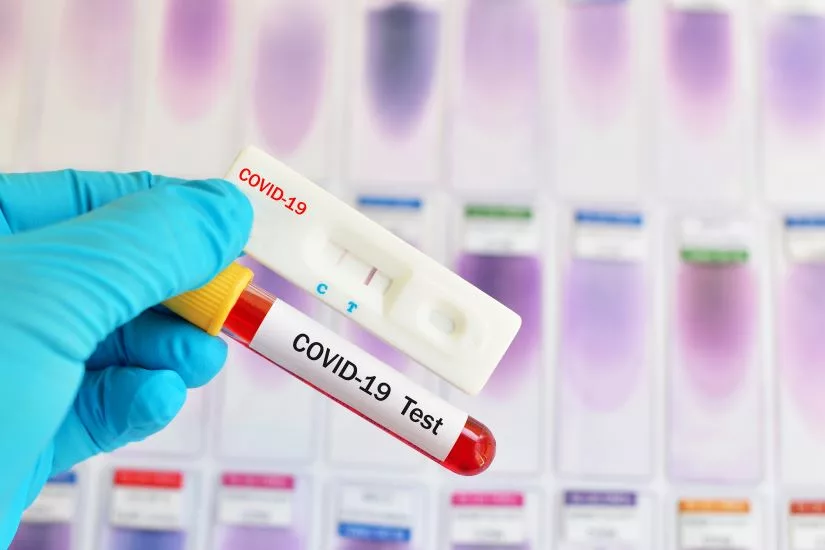
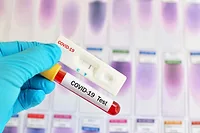
The U.S. Food and Drug Administration is under fire for setting what critics say are near-impossible standards for quick, at-home Covid-19 tests that could provide a breakthrough in stemming the spread of the virus.
The rapid home tests are not as accurate as the common lab tests done now, but can usually detect when an individual has enough of the virus to be contagious. Perhaps most importantly, experts say, the rapid tests could be mass-produced cheaply, allowing many people to test themselves frequently and get results in minutes, before venturing out to schools and workplaces.
Officials and public health experts, including White House advisors Dr. Anthony Fauci and Dr. Deborah Birx, have supported the development of rapid tests that can be conducted either at home or in places like schools, offices, pharmacies and nursing homes. Last week, a bipartisan group of governors from Maryland, Louisiana, Virginia, Massachusetts, Michigan, and Ohio announced they were teaming up with the Rockefeller Foundation to scale up to 30 million tests per week with the rapid tests.
Most of the rapid home tests look for a virus protein called an antigen, instead of replicating virus DNA like the standard lab test that can take several days to report results. These lab tests are highly sensitive, and can detect even a small amount of the virus—but are expensive and time-consuming, requiring labs and technicians. Rapid at-home antigen tests would allow individuals to spit in a tube and wait just 15 or 20 minutes for a result.
Two companies have so far received FDA approval for faster tests, though these still require machine readers to be interpreted. So far, however, no tests have been approved for at-home use, and a growing number of critics say the FDA has put up hurdles to approval that have delayed their wide availability.
After months of vocal, high-level support for cheap, accessible tests, the FDA announced on July 29 that it would consider authorizing rapid home tests, acknowledging that they could be “a game changer.” But it required these tests to be at least 90% as accurate as the standard lab tests, and also include a means to report results to public health agencies.
“Pretty much what they have done is taken five steps backwards towards the use of these as a public health tool,” Michael Mina, a Harvard University epidemiologist and immunologist, said in a conference call with reporters.
“The FDA has put two daggers in the heart of this test, unless they change their diagnostic guidelines for home testing,” said Laurence Kotlikoff, an Boston University economist who has written extensively on the issue, including a New York Times op-ed co-authored with Mina.
An FDA official, who would not speak if identified, said the agency based its requirements on various factors, including lessons learned from testing during the swine flu pandemic in 2009. But the official acknowledged expert opinion is evolving, and said the agency is open to alternative proposals, including people taking and repeating less-sensitive tests over a period of days.
The problem, critics argue, comes with viewing rapid tests as primarily diagnostic tools for individuals, instead of as public health tools that can help on a larger scale. Because public health officials lack the means to know in real time who has the virus and can give it to others, they say, even a lower-sensitivity test could provide a significant benefit.
Antigen tests in particular are considered highly effective at detecting virus positives, but less accurate when they show negative results. Rapid test advocates say that a 50 to 60 percent accuracy rate would still be useful.
“If it means we could even just catch 50% of people that are transmissible we would immediately drop incidents across the whole population and that makes everyone safer,” Mina said.
According to Kotlikoff, “For the purpose of finding if you yourself have just become infected and need to be on top of this, that’s fine, PCR’s [the lab test is] better than anything. If we’re trying to protect the whole country, this is not what we need.”
Creating an at-home rapid test that is 90% as accurate as a standard lab test, “is like comparing apples to oranges,” said Bobby Brooke Herrera, co-founder and CEO of biotech company E25Bio, which has developed two rapid antigen tests. He said the FDA accuracy requirement has added months to development.
“We’ve had a test on our laboratory benches that should have been distributed with FDA approval back in April,” he said. “It’s the frequency and coverage that matters more so than sensitivity.”
And for biotech firms to ensure results are reported to health agencies, Kotlikoff said, “requires basically setting up a software company”—which could make the test much more expensive and hard to make widely available.
“Imagine how much a pregnancy test would cost if it had to be connected to the Department of Health,” said Mina. “It has to come with a WiFi signal.”
The requirements have created a dampening effect on biotech companies and the development of the tests in general, Kotlikoff says.
“They’re all scared to death of the FDA,” he said. “They don’t want to have a black stain from the FDA because it says their tests are insensitive.”
While Herrera said his team at E25Bio is still attempting to meet requirements and polish its application for approval while “also trying to educate many people in the FDA,” other biotech companies developing rapid home tests were more cautious in their remarks.
“We’re all trying to get to a point of confidence to say that less sensitivity is OK,” Rahul Dhanda, co-founder and CEO of Sherlock Biosciences, especially given that at-home testing is even more effective at detecting a contagious case of coronavirus when done daily.
Dhanda’s company is developing quick tests for homes and other non-lab settings that don’t look for antigens, but use gene editing and synthetic biology technology to detect the virus at the molecular level.
Another company, Quidel, which has developed a rapid antigen test for use in hospitals and doctors’ offices that was approved by the FDA—and is in talks with the group of six governors—said through a spokesperson that it has “no information on future self-testing product development at this time.”
About FairWarning
This story was reported by FairWarning (www.fairwarning.org), a nonprofit news organization based in Pasadena, Calif., that focuses on public health, safety and environmental issues.
Did you like this story? Your support means a lot! Your tax-deductible donation in any amount will advance our mission of delivering strong watchdog reporting.
Looking for a reprint of this article?
From high-res PDFs to custom plaques, order your copy today!