In the cannabis patch, a patchwork of safety standards – and in some cases none at all
Although 35 states, three U.S. territories, and the District of Columbia have legalized cannabis for recreational or medical use, there still are no uniform standards for regulating potentially harmful contaminants in cannabis products. And with five more states voting this November on whether to allow cannabis for the first time, the problem will only grow.
That’s largely because the drug remains illegal at the federal level. In the absence of oversight by the U.S. Food and Drug Administration (FDA) or any other arm of the federal government, regulators in each state have had to decide on their own how to manage common contaminants including pesticides, molds, metals and solvents. This has resulted in a patchwork of policies affording widely varying levels of consumer protection — and in some cases, none at all.
“Each state successively has put together their own regulations,” said Josh Wurzer, president of California-based cannabis testing company SC Labs. “No two states are alike in their quality requirements.” A report published in April by the United States Pharmacopoeia (USP), a widely respected non-governmental organization whose safety standards for medicines, food ingredients and dietary supplements are often adopted by the FDA, was supposed to help.
But six months later, its proposed guidelines for monitoring pesticides, metals and biological contaminants specifically on cannabis flower — the cured “buds” sold in dispensaries for smoking, vaporizing or processing into other products — seem to have gained little traction in the industry or among state regulators.
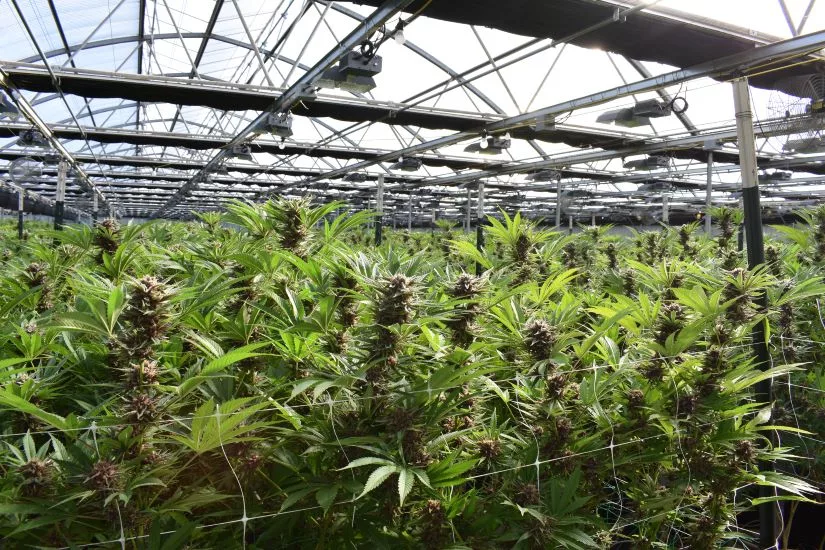
Contaminants can find their way onto cannabis at many stages, from cultivation to packaging. Unlike with fruits and vegetables, any pesticides applied directly or blown from neighboring farms can’t be washed off. Cannabis plants are also known to accumulate trace metals like lead and arsenic from soil, water and fertilizers. In damp environments they can also harbor toxic mold and bacteria.
Smoking or vaporizing contaminated flower can ferry these unwelcome passengers straight to the bloodstream via the lungs, which health scientists consider a far more sensitive route of exposure than ingestion. In individuals with compromised immune systems, some microbes that grow on cannabis can cause acute distress or even death, such as in the case of a California cancer patient whose death of a rare fungal infection in 2017 — before the state began requiring testing — was traced back to tainted medical marijuana.
Perhaps more likely is the possibility that long-term exposure to pesticides, metals and other contaminants, especially through inhalation, could contribute to chronic disease or other health effects that may take decades to appear.
Metals and pesticides on flower can also become concentrated in extracts used for vaporization or in cannabis edibles, drinks and tinctures. These types of products can additionally contain residues of solvents used in some extraction processes.
USP spokesperson Anne Bell said that regulators from only two states — Colorado and Maryland — have been in touch with USP regarding the new report since its publication in the Journal of Natural Products.
A representative of the Colorado Department of Public Health and Environment confirmed that experts with a state marijuana policy working group had sought clarification from USP on its recommendations around mold and other microbiological contaminants, but had not proposed any changes to state policy.
An official with the Maryland Medical Cannabis Commission, meanwhile, said that state regulators did not use the document during a recent revision of testing methods and limits for cannabis contaminants.
“This didn’t get a lot of play, as much as I would have hoped,” said Ethan Russo, one of 16 co-authors of the report and former president of the International Cannabinoid Research Society. “I did hope that people would be pointing to this saying, ‘Look, now there are some standards on how you do things.’ It should be possible for the industry to have some targets and take them to heart. My feeling is unless the industry does it, it’s going to be done very poorly by politicians.”
Russo noted that his home state of Washington, which along with Colorado kicked off the current wave of adult-use legalization in 2012, still doesn’t require pesticide testing for recreational cannabis.
Wurzer, who also contributed to the report, said he believes its release during the coronavirus pandemic may be a factor in its quiet reception so far — but that regulators in states revising or writing new testing guidelines in the future will turn to it as needed.
“I think this is the first step toward a unified quality-control document that we can look at nationally, and I think it did slip under the nose of the industry,” Wurzer said. “I think regulators will find their way to this document, and certainly I believe that this will be the basis for regulations going forward.”
Other efforts are underway to assist state regulators in developing consistent, science-based rules for contaminant testing in cannabis products including foods, drinks and concentrates, said Holly Johnson, chief science officer of the trade group American Herbal Products Association and another of the report’s co-authors.
Organizations including the Association of Analytical Chemists , the ASTM International and the American Chemical Society have all established committees in recent years tasked with developing methods and standards for cannabis testing.
The goal of this work, said Johnson, is to lay a foundation for eventual federal regulation. “We hope to have these limits and validated methods in place so that when the FDA incorporates cannabis into the federal system, these quality monographs are there,” she said.
Industry insiders don’t expect that to happen until cannabis is reclassified under the federal Controlled Substances Act. While they wait, the existing system is likely to continue to be marred by inconsistencies that afford consumers in different states drastically different levels of protection.
“I’m just amazed that the industry can have so much dysfunction and so many variables in how they’re being regulated,” said Robert Thomas, an analytical chemist based in Maryland and author of a book on measuring heavy metals in cannabis. “There’s no consensus whatsoever.”
Among metals, for example, New York’s medical-only program requires testing for arsenic, cadmium, lead, mercury, chromium, antimony, nickel and zinc. Colorado tests for just the first four on New York’s list, and generally allows higher levels. Oregon, meanwhile, whose recreational cannabis program has some of the nation’s strictest pesticide limits, doesn’t test for metals at all.
In its new report, the USP codifies previous recommendations to test for and limit arsenic, cadmium, lead and mercury in cannabis flower. Its guidelines are currently followed by California and Massachusetts for recreational products, and by Rhode Island and Arkansas for medical uses, from among nearly three dozen states with some level of cannabis legalization.
Next month, Arizona, Mississippi, Montana, New Jersey and South Dakota will have a chance to join the fray. In states where ballot measures pass, regulators will have to piece together their own policies for testing and product safety.
If history is any guide, no two sets of rules will be the same. And for consumers and patients who assume their legal weed is safe, where they live will continue to determine what that means.
“It’s really crying out for federal oversight here,” Thomas said. “It’s a mess. Clearly there has to be some oversight at some point.”
About FairWarning
This story was reported by FairWarning (www.fairwarning.org), a nonprofit news organization based in Pasadena, Calif., that focuses on public health, safety and environmental issues.
Did you like this story? Your support means a lot! Your tax-deductible donation in any amount will advance our mission of delivering strong watchdog reporting.
Looking for a reprint of this article?
From high-res PDFs to custom plaques, order your copy today!