New access doors improve safety for workers at Connecticut Water Treatment Plant
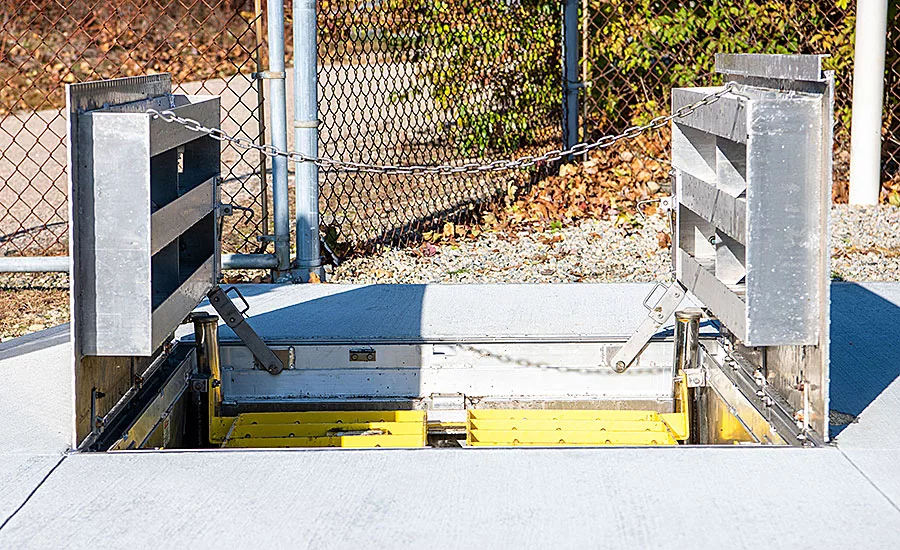
Nine floor doors manufactured by BILCO were installed at water treatment stations in a project in Waterford, Connecticut.
Photos by Bliss Photography & Studios
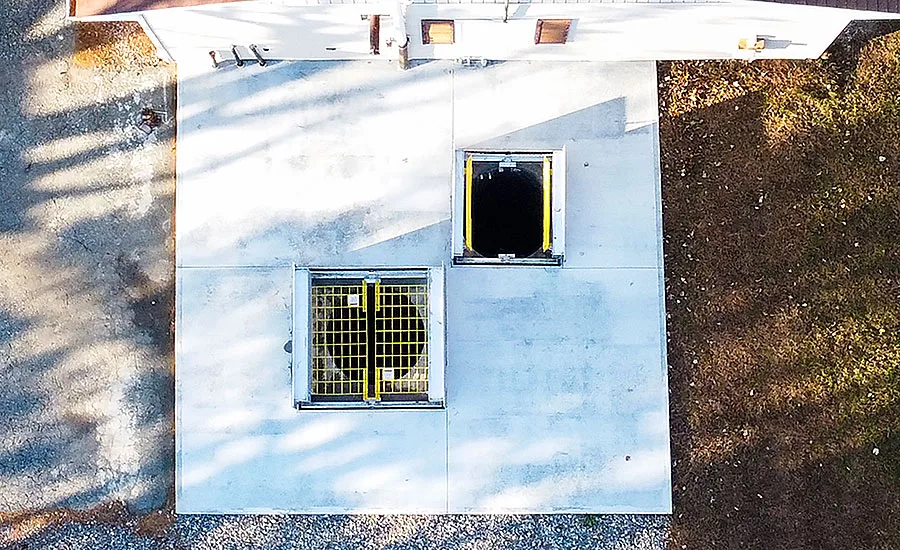
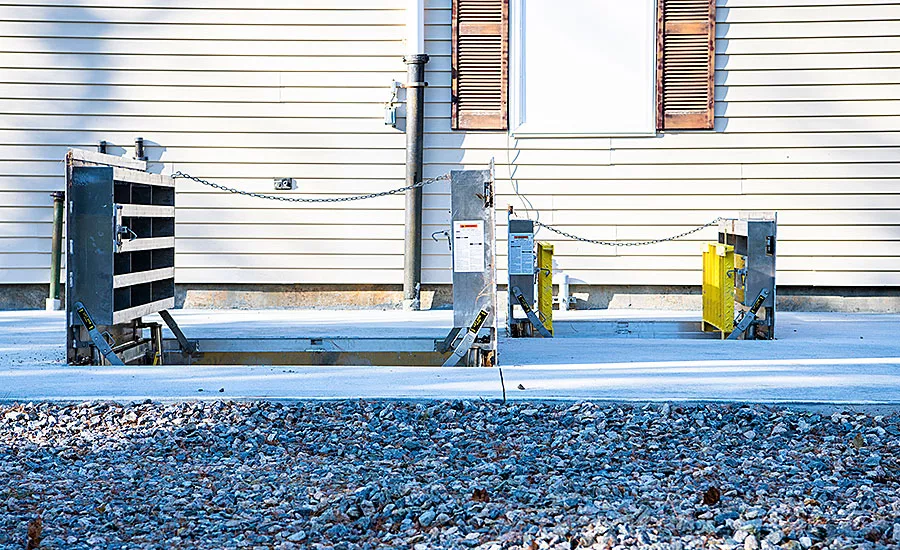
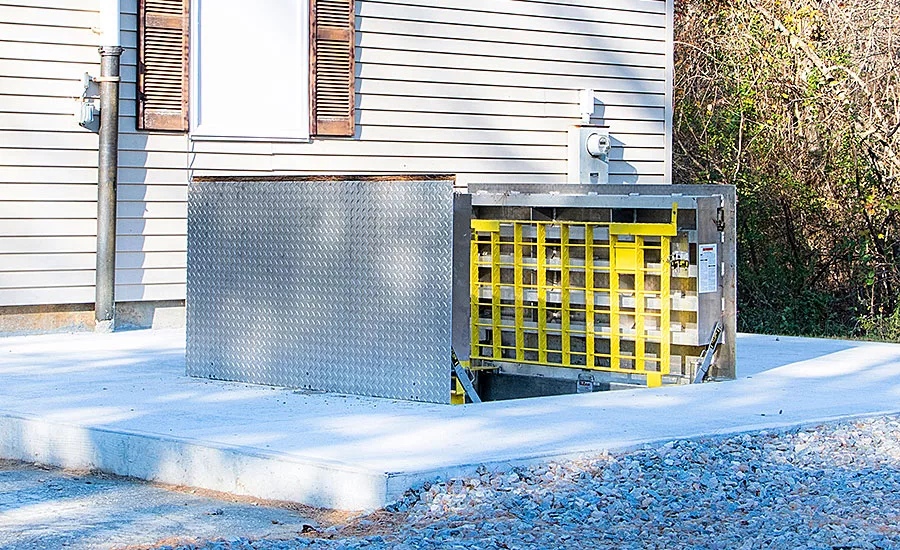
Employees working at water treatment plants face danger every day. The work is inherently treacherous, as water makes every step potentially hazardous, and sometimes even life-threatening.
Statistics from the National Institute for Occupational Safety and Health reflect the perils. In 2018, 27 percent of more than 900,000 nonfatal work injuries resulting in days away from work were related to slips, trips, and falls. Falls are the leading cause of death in the construction industry. The hazards of working at water treatment plants are well documented, with one of the most recent deaths occurring in October 2020. A private contractor for the Buffalo Sewer Authority in New York died when he slipped and fell into a deep well, which eventually leads to the Niagara River.
With those catastrophes in mind, the town of Waterford, Connecticut set about replacing nine doors at its water treatment facilities. The existing doors corroded over time, and town officials replaced the doors with worker safety as one of its top priorities.
The project, which was completed last year, included the installation of doors manufactured by The BILCO Company, which include factory-installed fall protection grating. The doors that were replaced were decades-old and lacked fall protection.
“The old hatches were not required to have fall protection,” said Jim Bartelli, Assistant Director of the Waterford Utility Commission. “When the hatches are open, workers could possibly trip and fall into the opening. The new hatches have fall protection provisions that meet OSHA standards.”
Hazardous Conditions
The U.S. Department of Labor reports work at wastewater treatment plants is among the top 10 most unhealthy jobs in America.
Besides the risk of falls, employees are also exposed to the possibility of trench collapses, working in confined spaces, and exposure to chlorine and hydrogen sulfide gas. Sewage and wastewater contain bacteria, funguses, parasites and viruses that can cause lung, intestinal and other infections. Workers can also be exposed to eye injuries from flying particles, burns from hot vapors, electric shock and hearing damage from excessive noise.
Workers at wastewater treatment plants are frequently required to access wet wells. The wells contain chambers to receive and hold sewage until it is pumped out. The wells also hold submersible pumps that workers need to access.
Valves to stop incoming sewer lines for inspection, repair and cleaning are also included in wet wells. There are also switches for motors, cables, sewage level indicators and guide pipes.
Many water treatment agencies are also now wrestling with disposable wipes that are flushed down toilets, requiring even more time for well access. Wipes snag on sewer pipe imperfections, and catch passing debris and grease that will enlarge and eventually clog pipes. They also get drawn into pumps at the water treatment plants. The only way to remove them is through manual labor.
With the requirement for frequent access to wells, the danger escalates. One slip or moment of inattention can be life-changing, resulting in an injurious fall that could lead to impactful physical consequences.
Fall protection
The doors used in the Waterford project should help workers feel safer while they perform their duties. The doors include factory-installed fall protection grating. The grating, which can also be installed on existing doors, meets OSHA fall protection requirements and allows workers to safely inspect underground areas.
“This was a pretty simple project,” Bartelli said. “But it was something that we prioritized. We want to stay ahead of the curve. The biggest issue is not necessarily the wet well hatches, but in trying to manage these flushables. It is the number one issue in our industry. This will make it a little bit easier and safer.”
The BILCO doors used in the replacement averaged 4-feet by 5-feet, and were installed at-grade to allow access to the wet wells. “The BILCO doors have a much wider opening, which will allow better access to the wet well for removing debris from the wet well baskets,” Bartelli said.
Bartelli said the doors also seal better, which is especially critical in that one of the town’s stations sits in a flood plain area. Waterford, nestled adjacent to Long Island Sound, sits just 46 feet above sea level.
Work on the project included the removal of existing doors, excavating around the perimeter, re-pouring concrete and some asphalt repair. Work needed to be done in stages because the pump stations are active work sites.
BILCO’s doors include a channel frame finish and are used in situations where there is a concern of water or other liquids entering the access opening. The doors come in single- and double-leaf sizes, and feature aluminum construction and stainless steel hardware. The Bill Fisher Enterprise of Burlington, Conn. secured the doors for the project.
“This was a project that was part of our capital plan,” Bartelli said. “A study was recently conducted and over a period of time, many of our wastewater pumping stations could be impacted by tidal water levels. We needed to expand our water-tight manhole covers and install these hatches. In the event we do have a problem with tidal flooding, we will not be bringing seawater into the wastewater system.”
Corrosive environment
Besides the nature of the environment, doors at water treatment plants can also be dangerous due to deterioration caused by corrosion. Contaminants and moisture create a highly toxic environment, and expedites corrosion. A plant in Florida replaced doors on its facility in 2020 after the doors had become a fall hazard due to corrosion and decay caused by the harsh environment.
Besides accessing wells, water treatment plant workers also frequently work on elevated surfaces, ladders, roofs and skylights. Workers also step on to storage tanks, vehicles and roofs at wastewater facilities. There is a lot of potential for missteps, and they happen often.
In 2020, at least five people working at water treatment facilities died in accidents. In one incident, two workers in McCook, Nebraska died in September at the wastewater treatment facility. Larry Dicke, 65, served as McCook’s superintendent for 29 years. He died in the accident along with Kenneth Keslin, 43. Workers also died in accidents in Texas, Tennessee, and California.
Hazards loom at every turn at water treatment plants, and it was important for Waterford officials to do their part to make certain they provided workers with the safest equipment for them to perform their responsibilities. While not all injuries can be prevented by the doors, having the proper equipment in place can go a long way to ensuring the work environment at water treatment facilities is as safe as it possibly can be.
|
Project Profile Where: Waterford, Connecticut What: The town replaced nine doors with new models from BILCO at its water treatment facilities. Why: The new doors have a wider opening, which allows workers more room to access equipment such as valves and pumps in wet wells. The doors also provide a better water seal. Fall protection: The new doors also include factory-installed fall protection. The fall protection grate is especially critical in water treatment stations, where workers can slip and fall into deep wells of water and sewage. Did you know? Falls are the leading cause of death in the construction industry, accounting for more than 33 percent of total deaths in 2018. |
Looking for a reprint of this article?
From high-res PDFs to custom plaques, order your copy today!


