ISHN logo
search
cart
facebook twitter linkedin youtube
  • Sign In
  • Create Account
  • Sign Out
  • My Account
ISHN logo
  • NEWS
    • Today's News
    • Global Safety News
    • Government Regulations
  • PRODUCTS
    • Product Innovations
    • Featured Products
  • TOPICS
    • Environmental Health and Safety
    • Facility Safety
    • Workplace Health
    • Occupational Safety
    • PPE
    • More Topics
  • CONSTRUCTION
  • TECHNOLOGY
  • COLUMNS
    • Best Practices
    • Dave Johnson: What’s going on
    • Editorial Comments
    • Leading Safety
  • MULTIMEDIA
    • ISHN Podcast
    • Videos
    • Cold Stress Education Quiz
    • Webinars
    • White Papers
  • MORE
    • Buyer's Guide
    • Newsletters
    • Convention Companion
    • Polls
    • Events
    • ISHN Store
    • Sponsor Insights
  • EMAGAZINE
    • eMagazine
    • Archived Issues
    • Contact
    • Advertise
  • JOIN TODAY!
Occupational SafetyEnvironmental Health and SafetyFacility SafetyIndustrial Hygiene

How to understand MERV ratings and industrial dust collector filtration
By Randi Huckaby
Camfil-DustCollector-feature-forWeb.jpg
July 15, 2021

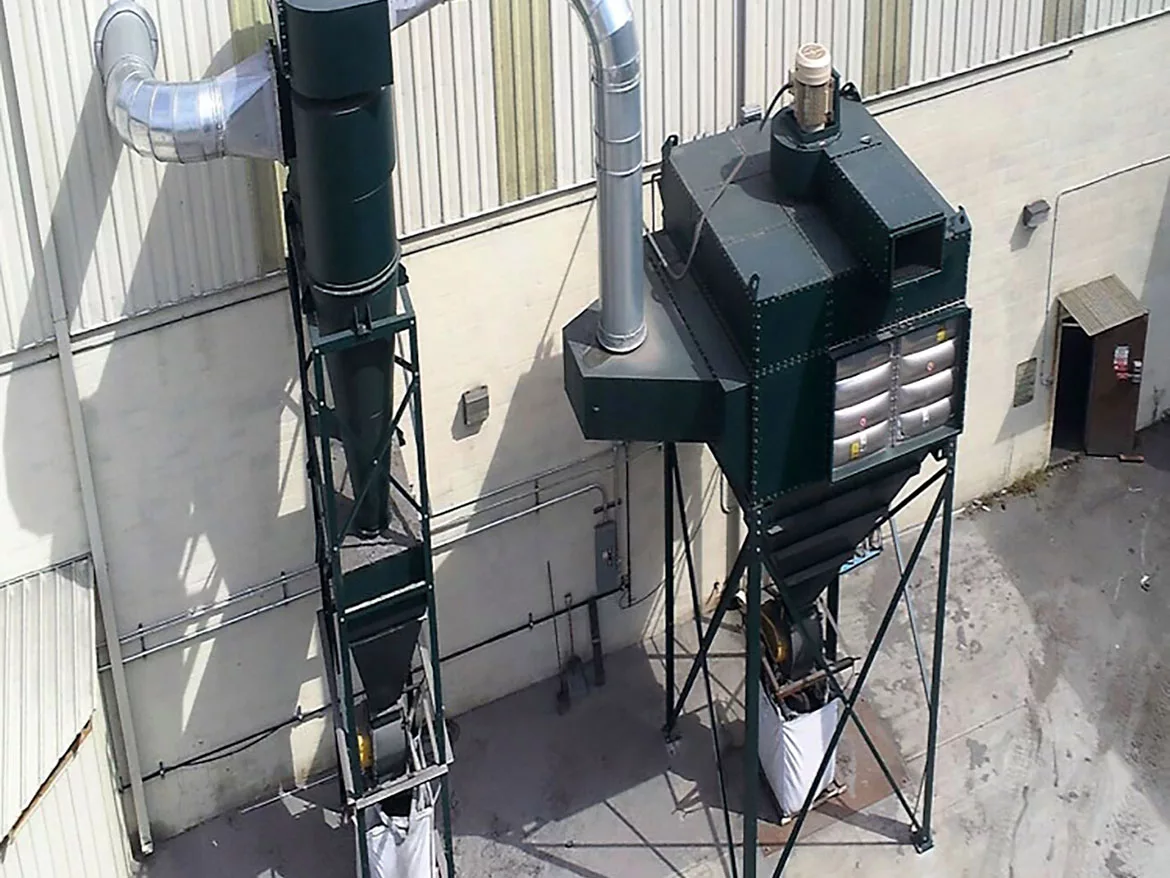
Industrial dust collectors are proven engineering control systems to maintain indoor air quality and protect the health and safety of your workers. One of the key factors to keeping your dust collector operating efficiently over its lifetime is selecting the right dust collector filters. Many replacement dust collector filters offer MERV (Minimum Efficiency Reporting Value) ratings to quantify filter efficiency. MERV ratings are very useful in the HVAC industry, with higher ratings generally indicating superior filtration. However, MERV ratings don’t reflect how well a filter will perform in the active environment of an industrial dust collection system.


More about MERV

MERV is a measurement scale designed in the late 1980s by the American Society of Heating, Refrigerating and Air-Conditioning Engineers (ASHRAE) to compare the effectiveness of air filters. ASHRAE 52.2 defines a test method and rating system in which a filter’s initial efficiency is assigned a number. This number identifies the filter’s minimum performance in removing particulates from an airstream.

The MERV scale goes from 1 to 16 and corresponds to a filter’s ability to capture particles in different size ranges from 0.3 to 10 microns. Higher MERV ratings correspond to a greater percentage of particles captured on each run. MERV ratings are limited with regard to industrial dust collectors because they apply only to new filters and their initial efficiency in a static environment with light dust loading. However, dust collectors and their filter cartridges manage airborne particle emissions over time in a dynamic system.

Industrial dust collection systems face high dust loading, so they are equipped with a pulse cleaning system. The filters are constantly being loaded and unloaded, leading to fluctuations in efficiency and pressure drop. The MERV testing procedure measures initial pressure drop, but not how pressure drop will change over time or how it will affect overall energy usage. These factors have a dramatic effect on the performance of the filter over time, and the MERV rating does not take this into account.


Factors affecting dust collector filter efficiency

As a dust collector runs, dust loads onto the filters and forms a dust cake. This dust cake resists airflow across the filter media. The resistance is measured in water gauge or pascals and is referred to as pressure drop. It is usually between 1 and 5 inches of water. As dust loads and pressure increases, the filter efficiency increases, but the dust collector must work harder. This triggers the pulse cleaning system, which knocks off the dust cake and starts the process over. As a result, the dust cake is constantly changing and so are the pressure drop and filter efficiency. Eventually, the dust load will increase to a level where pulse cleaning is no longer helpful, and the only option is to change out the filter for a new one.

Both higher efficiency filters and dust buildup restrict airflow. With this higher restriction, more energy and compressed air are required to maintain the proper airflow and pressure drop, and this can be costly. MERV ratings don’t take this into consideration.


ASHRAE Standard 199 testing

The best filter for a dust collector is one that offers the best efficiency and cleaning performance. Dust collector performance is based more on its airflow management, its cleaning system and the media’s ability to load and release dust particles. This can only be evaluated by testing how the filter and the dust collector work together as a system.

In order to determine the efficiency of the dust collection system, ASHRAE created Standard 199, “Method of Testing the Performance of Industrial Pulse Cleaned Dust Collectors,” which is designed to account for the fluctuating dust collector environment in a way that MERV does not. The Standard 199 test method calculates the performance of all industrial pulse-cleaned dust collectors including filtration performance and energy consumption. The resulting summary offers an indication of filter life.

Testing under Standard 199 is conducted in six stages that replicate a real-life dust collector application. The test measures performance parameters including emissions, pressure drop and compressed air usage.

The 199 test is a better method for determining both system and filter performance because it provides an accurate portrayal of the dynamics of the industrial dust collection system as a whole, versus the single filter initial efficiency methodology used in MERV.


Summing it up

Although the MERV scale is a useful tool, don’t rely on it alone to select dust collector filters. MERV ratings apply only to new filters, and the efficiency of dust collector filters changes significantly during actual use. Using ASHRAE Standard 199 gives a more accurate reflection of a dust collection system’s lifetime performance, including filtration.

KEYWORDS: Combustible dust dust collection manufacturing

Share This Story

Looking for a reprint of this article?
From high-res PDFs to custom plaques, order your copy today!

Randi Huckaby is Product Manager — Dry Filtration APC Global at Camfil Air Pollution Control (APC). Camfil APC, a unit of the Sweden-based air filtration company Camfil, is an industry-leading global manufacturer of dust, fume and mist collection equipment for challenging industrial applications, with production facilities around the world including the Americas, Europe and Southeast Asia. For information, contact 800-479-6801 or 870-933-8048; email filterman@camfil.com; or visit www.camfilapc.com.

Recommended Content

JOIN TODAY
to unlock your recommendations.

Already have an account? Sign In

  • forklift safety

    Exploring the latest technologies in forklift safety

    With more staff and more stock in warehousing now more...
    Workplace Training Strategies
    By: Josh Cramer
  • welding

    All about welder’s flash or arc eye

    A flash burn is a painful inflammation of the cornea,...
    Environmental Health and Safety
  • dangerous jobs

    The 10 most dangerous jobs in the U.S.

    On-the-job deaths have been rising — hitting the highest...
    Government Safety Regulations
    By: Benita Mehta
Manage My Account
  • eMagazine Subscriptions
  • ISHN Newsletter & Other Newsletter Alerts
  • Online Registration
  • Manage My Preferences
  • Subscription Customer Service

More Videos

Sponsored Content

Sponsored Content is a special paid section where industry companies provide high quality, objective, non-commercial content around topics of interest to the ISHN audience. All Sponsored Content is supplied by the advertising company and any opinions expressed in this article are those of the author and not necessarily reflect the views of ISHN or its parent company, BNP Media. Interested in participating in our Sponsored Content section? Contact your local rep!

close
  • man wearing the the Sundström SR200 Full Face Mask Respirator
    Sponsored byOHD

    5 Fit Testing Mistakes That Could Cost You

  • This image shows Magid AcuSpex polarized blue mirrored safety glasses.
    Sponsored byMagid Glove and Safety

    Construction PPE Guide: What Crews Need for Each Task

  • lone worker in confined space
    Sponsored byAlphasense Ltd.

    GET THE LEAD OUT of your Safety Oxygen Sensors!

Popular Stories

SpaceX 7 launch

OSHA Investigating Fatal Fall at SpaceX Starbase

dust explosion

Tennessee OSHA Issues Record $3.1M Fine After Deadly Explosion at Munitions Plant

Worker Impairment

How to Tell When a Co-Worker is Impaired? A Safety Pro’s Challenge

top 10 most dangerous jobs

Poll

Seasonal Readiness

With the federal heat stress prevention rule on the horizon, which area of your safety program needs the most attention?
View Results Poll Archive

Products

Surviving an OSHA Audit A Management Guide, 2nd Edition

Surviving an OSHA Audit A Management Guide, 2nd Edition

See More Products

ISHN Podcasts

Related Articles

  • Camfil APC

    Camfil APC’s new Quad Pulse Package 2 dust collector increases filtration capacity with two main cartridges

    See More
  • Camfil-feature-mainPicforWebsite.jpg

    4 ways to protect your industrial dust collector from explosions

    See More
  • ISHN0821-VelocityEHS-mainPic.jpg

    How to understand the complex intricacies of HazCom training

    See More

Related Products

See More Products
  • Top Ten Pitfalls in OSHA Recordkeeping and How to Avoid Them

See More Products

Events

View AllSubmit An Event
  • June 26, 2025

    NFPA 660: How to Use the New Consolidated Combustible Dust Standard

    ON DEMAND: Combustible dust and particulate solids can pose a serious hazard in many industries. Over the last 100 years, the National Fire Protection Association (NFPA) committees created many industry- and commodity-specific standards to mitigate those hazards.
View AllSubmit An Event

Related Directories

  • Scientific Dust Collectors

    Scientific Dust Collectors (SDC) began in 1981 when our first patent for improving filter cleaning was issued. Our patented UniFlow Supersonic Nozzle -based cleaning system is where it all starts. Combined with our High Side Inlets, Wide Filter Spacing, and Inlet Baffling, we are able to guarantee performance, efficiency, and filter life. ASHRAE 199 Test Lab on site.
×

Become a Leader in Safety Culture

Build your knowledge with ISHN, covering key safety, health and industrial hygiene news, products, and trends.

JOIN TODAY
  • RESOURCES
    • Advertise
    • Contact Us
    • Directories
    • Manufacturing Division
    • Store
    • Want More
  • SIGN UP TODAY
    • Create Account
    • eMagazine
    • Newsletters
    • Customer Service
    • Manage Preferences
  • SERVICES
    • Marketing Services
    • Reprints
    • Market Research
    • List Rental
    • Survey/Respondent Access
  • STAY CONNECTED
    • LinkedIn
    • Facebook
    • YouTube
    • X (Twitter)
  • PRIVACY
    • PRIVACY POLICY
    • TERMS & CONDITIONS
    • DO NOT SELL MY PERSONAL INFORMATION
    • PRIVACY REQUEST
    • ACCESSIBILITY

Copyright ©2026. All Rights Reserved BNP Media, Inc. and BNP Media II, LLC.

Design, CMS, Hosting & Web Development :: ePublishing