ISHN logo
search
cart
facebook twitter linkedin youtube
  • Sign In
  • Create Account
  • Sign Out
  • My Account
ISHN logo
  • NEWS
    • Today's News
    • Global Safety News
    • Government Regulations
  • PRODUCTS
    • Product Innovations
    • Featured Products
  • TOPICS
    • Environmental Health and Safety
    • Facility Safety
    • Workplace Health
    • Occupational Safety
    • PPE
    • More Topics
  • CONSTRUCTION
  • TECHNOLOGY
  • COLUMNS
    • Best Practices
    • Dave Johnson: What’s going on
    • Editorial Comments
    • Leading Safety
  • MULTIMEDIA
    • ISHN Podcast
    • Videos
    • Cold Stress Education Quiz
    • Webinars
    • White Papers
  • MORE
    • Buyer's Guide
    • Newsletters
    • Convention Companion
    • Polls
    • Events
    • ISHN Store
    • Sponsor Insights
  • EMAGAZINE
    • eMagazine
    • Archived Issues
    • Contact
    • Advertise
  • JOIN TODAY!

The serious business of storing hazmats

September 1, 2004
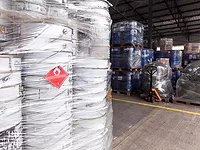
Last month, a fire in a storage trailer containing hazardous chemicals shut down a three-mile stretch of highway in Athens, Maine, as fire crews from four towns put out the blaze. The box trailer housed solvents, propane and other hazardous material. Luckily, firefighters extinguished the flames before they reached most of the combustible materials. The cause? Possibly a discarded cigarette, a combination of chemicals, or the heat generated within the trailer on a warm, sunny day, according to fire officials.

Yes, storing hazardous materials is serious business — with dangerous, potentially catastrophic consequences.

That’s why many facilities draw up detailed hazmat storage policies and procedures that, among other things, ban smoking; specify chemicals to be stored separately; and require labels, warnings, audits, use of approved containers and sufficient ventilation when necessary.

But in too many workplaces, hazmat storage — like housekeeping in general — doesn’t get the attention its risks require. It’s easy to fall into an “out of sight, out of mind” trap when looking to store solvents, gas and oxygen cylinders and any number of chemicals. Complacency creeps in. Employees accustomed to seeing thinners, cleaners, gas cans or pesticides around the shop forget the potentially deadly consequences of poor storage decisions.

Initial assessment

A serious approach to safely storing hazardous materials starts with checking into all applicable local, state, and federal fire codes and safety regs. Make sure you’re in compliance.

Check your material safety data sheets for storage instructions. MSDSs will list safe storage conditions as well as conditions that should be avoided.

If you still have questions, bring in a local fire department or hazmat emergency response squad officials to help with your assessment. Fire and emergency services should be updated regularly on what potentially dangerous materials you have on site, where they are kept, and in what quantities.

Then draft a plan and enforceable policy for storing hazmats. At Clemson University, the EHS department looks to store hazmats in low-traffic, but accessible, areas. The number of storage locations and amounts on hand should be kept to a minimum, according to Clemson’s EHS policy.

Other issues to consider when mapping out storage locations:

  • Ensure that water flowing from sprinkler heads is not obstructed by storage. Generally, storage of materials must be located 18 inches below sprinkler heads, according to the San Diego Fire-Rescue Department. When there is storage against walls, the storage should not be any closer horizontally to the sprinkler head than four inches.

  • Never store hazardous materials near open flame or in direct sunlight, according to the Web site EHow.com.

  • NASA’s hazardous chemicals storage guidelines state that rooms where flammable and combustible toxic materials are stored must have adequate ventilation to prevent chemical vapors from accumulating to flammable levels. The storage area should be free from heat and moisture sources.
  • NASA also states: “No paper products, office equipment, food, or any other non-hazardous material should be stored in any hazardous material storage cabinet.”

    Know your inventory

    Inventory control of hazmats is critical. Refer to MSDSs for information about chemical properties. NASA’s policy states that toxic materials must be physically separated from materials not classified as toxic. Plus, toxic materials should be segregated according to the type of material to be stored, according to NASA.

    The San Diego Fire-Rescue Department advises that incompatible acids should be stored separately from each other (such as nitric acid, perchloric acid, acetic acid).

    Selection of storage cabinets and containers is critical, too. Here’s how specific NASA gets about cabinet requirements for storing acids and bases:

  • Each cabinet must be rated for use with the hazard class of the most hazardous content stored.

  • The cabinet must be listed with an approved testing laboratory (UL, FM, etc.) for the intended use.

  • Cabinets or other storage containers must be designed and rated for use with corrosives by the manufacturer.

  • Flammable corrosives must be stored in a cabinet rated for both corrosives storage and flammable storage.

  • Cabinets should have a spill control tray large enough to contain a complete spill from any two containers.

  • Perforated shelves are not recommended for corrosives storage. Polyethylene shelf trays should be used to protect the shelves from spill damage.

  • Glass containers of one-gallon capacity or higher should be stored on the lowest shelf. Secondary containment is recommended for glass containers (external bottle shrouds, plastic or stainless steel bottle containers).

  • Flammable acids and flammable bases must be completely enclosed in unbreakable containers for storage in the same corrosives cabinet or in the same corrosives cabinet as non-flammable corrosives.

    Activate awareness

    Signs and labels also deserve serious attention. Check for specific regulatory requirements, such as hazard communication labeling. NASA’s policy states: “A room where toxic materials are stored must be clearly identified with highly visible TOXIC MATERIALS signs at all entrances, and doors shall have a National Fire Protection Association Chemical Hazard Rating System sign with hazard explanations.”

    States the San Diego Fire-Rescue Department: “All cabinets that contain hazardous materials, whether approved or not, must be labeled on the outside as to its contents. Letters must be at least one inch high.”

    NASA also takes these steps regarding labels and markings:

  • Each cabinet should be numbered and labeled with the contents of the cabinet.

  • Each cabinet should be clearly labeled as to the hazard class of the materials stored within the cabinet (Acids, Flammables, etc.).

  • Each cabinet should be labeled with the name, phone number, and organizational code of the responsible person(s).

    The human factor

    Many of the keys to safe hazmat storage depend on knowing your toxic materials, regulatory requirements, environmental conditions and matching cabinets and containers to your materials. But obviously, you can’t neglect human factors.

    Your employees need to be trained and made fully aware of the seriousness of your hazmat storage policies and procedures. Receiving crews should know to segregate hazardous and incompatible materials and use designated storage locations in the facility. No smoking zones must be enforced. Complete and accurate inventories of chemicals and hazardous materials should be maintained. Conduct periodic and annual inspections of storage areas and procedures.

    SIDEBAR: OSHA’s checklist — storing flammable & combustible materials

  • Are combustible scrap, debris, and waste materials (oily rags, etc.) stored in covered metal receptacles and removed from the work site promptly?

  • Is proper storage practiced to minimize the risk of fire, including spontaneous combustion?

  • Are approved containers and tanks used for the storage and handling of flammable and combustible liquids?

  • Are all connections on drums and combustible liquid piping, vapor and liquid tight?

  • Are all flammable liquids kept in closed containers when not in use (for example, parts cleaning tanks, pans, etc.)?

  • Are bulk drums of flammable liquids grounded and bonded to containers during dispensing?

  • Do storage rooms for flammable and combustible liquids have explosion-proof lights?

  • Do storage rooms for flammable and combustible liquids have mechanical or gravity ventilation?

  • Is liquefied petroleum gas stored, handled, and used in accordance with safe practices and standards?

  • Are “NO SMOKING” signs posted on liquefied petroleum gas tanks?

  • Are liquefied petroleum storage tanks guarded to prevent damage from vehicles?

  • Are all solvent wastes and flammable liquids kept in fire-resistant, covered containers until they are removed from the work site?

  • Is vacuuming used whenever possible rather than blowing or sweeping combustible dust?

  • Are firm separators placed between containers of combustibles or flammables, when stacked one upon another, to assure their support and stability?

  • Are fuel gas cylinders and oxygen cylinders separated by distance and fire-resistant barriers while in storage?

  • Are fire extinguishers selected and provided for the types of materials in areas where they are to be used?
  • Share This Story

    Looking for a reprint of this article?
    From high-res PDFs to custom plaques, order your copy today!

    Recommended Content

    JOIN TODAY
    to unlock your recommendations.

    Already have an account? Sign In

    • forklift safety

      Exploring the latest technologies in forklift safety

      With more staff and more stock in warehousing now more...
      Facility Safety
      By: Josh Cramer
    • welding

      All about welder’s flash or arc eye

      A flash burn is a painful inflammation of the cornea,...
      Environmental Health and Safety
    • dangerous jobs

      The 10 most dangerous jobs in the U.S.

      On-the-job deaths have been rising — hitting the highest...
      Government Safety Regulations
      By: Benita Mehta
    Manage My Account
    • eMagazine Subscriptions
    • ISHN Newsletter & Other Newsletter Alerts
    • Online Registration
    • Manage My Preferences
    • Subscription Customer Service

    More Videos

    Sponsored Content

    Sponsored Content is a special paid section where industry companies provide high quality, objective, non-commercial content around topics of interest to the ISHN audience. All Sponsored Content is supplied by the advertising company and any opinions expressed in this article are those of the author and not necessarily reflect the views of ISHN or its parent company, BNP Media. Interested in participating in our Sponsored Content section? Contact your local rep!

    close
    • man wearing the the Sundström SR200 Full Face Mask Respirator
      Sponsored byOHD

      5 Fit Testing Mistakes That Could Cost You

    • This image shows Magid AcuSpex polarized blue mirrored safety glasses.
      Sponsored byMagid Glove and Safety

      Construction PPE Guide: What Crews Need for Each Task

    • lone worker in confined space
      Sponsored byAlphasense Ltd.

      GET THE LEAD OUT of your Safety Oxygen Sensors!

    Popular Stories

    SpaceX 7 launch

    OSHA Investigating Fatal Fall at SpaceX Starbase

    Worker Impairment

    How to Tell When a Co-Worker is Impaired? A Safety Pro’s Challenge

    Automated loading dock equipment

    After March 2026 Rivian Death, Safety Managers Reassess Loading Dock Systems Under OSHA's Warehouse Emphasis Program

    top 10 most dangerous jobs

    Poll

    Seasonal Readiness

    With the federal heat stress prevention rule on the horizon, which area of your safety program needs the most attention?
    View Results Poll Archive

    Products

    Surviving an OSHA Audit A Management Guide, 2nd Edition

    Surviving an OSHA Audit A Management Guide, 2nd Edition

    See More Products

    ISHN Podcasts

    Related Articles

    • April2021-JJKellerFeature-1170x878.jpg

      The nuts and bolts of storing materials properly

      See More
    • Co-op consumers vote Mountain Rose Herb green business of the year (11/14)

      See More
    • The business of safety

      See More

    Related Products

    See More Products
    • 1118645685.jpg

      Advanced Safety Management: Focusing on Z10 and Serious Injury Prevention, 2nd Edition

    • 1119906652.webp

      Alive and Well at the End of the Day: The Supervisor's Guide to Managing Safety in Operations, 2E

    See More Products
    ×

    Become a Leader in Safety Culture

    Build your knowledge with ISHN, covering key safety, health and industrial hygiene news, products, and trends.

    JOIN TODAY
    • RESOURCES
      • Advertise
      • Contact Us
      • Directories
      • Manufacturing Division
      • Store
      • Want More
    • SIGN UP TODAY
      • Create Account
      • eMagazine
      • Newsletters
      • Customer Service
      • Manage Preferences
    • SERVICES
      • Marketing Services
      • Reprints
      • Market Research
      • List Rental
      • Survey/Respondent Access
    • STAY CONNECTED
      • LinkedIn
      • Facebook
      • YouTube
      • X (Twitter)
    • PRIVACY
      • PRIVACY POLICY
      • TERMS & CONDITIONS
      • DO NOT SELL MY PERSONAL INFORMATION
      • PRIVACY REQUEST
      • ACCESSIBILITY

    Copyright ©2026. All Rights Reserved BNP Media, Inc. and BNP Media II, LLC.

    Design, CMS, Hosting & Web Development :: ePublishing