ISHN logo
search
cart
facebook twitter linkedin youtube
  • Sign In
  • Create Account
  • Sign Out
  • My Account
ISHN logo
  • NEWS
    • Today's News
    • Global Safety News
    • Government Regulations
  • PRODUCTS
    • Product Innovations
    • Featured Products
  • TOPICS
    • Environmental Health and Safety
    • Facility Safety
    • Workplace Health
    • Occupational Safety
    • PPE
    • More Topics
  • CONSTRUCTION
  • TECHNOLOGY
  • COLUMNS
    • Best Practices
    • Dave Johnson: What’s going on
    • Editorial Comments
    • Leading Safety
  • MULTIMEDIA
    • ISHN Podcast
    • Videos
    • Cold Stress Education Quiz
    • Webinars
    • White Papers
  • MORE
    • Buyer's Guide
    • Newsletters
    • Convention Companion
    • Polls
    • Events
    • ISHN Store
    • Sponsor Insights
  • EMAGAZINE
    • eMagazine
    • Archived Issues
    • Contact
    • Advertise
  • JOIN TODAY!
Columns

MANAGING BEST PRACTICES: Crack down on bogus credentials

November 1, 2003
Many of the nearly 300 certifications available to environmental health and safety personnel can be purchased without clearly demonstrating proficiency in the subject area. The system of credentialing in the EHS field is so confusing few people can tell what is real anymore.

It’s not enough to be just certified, either. "Certified/accredited" is the new mantra. But accredited by whom adds to the confusion. Accrediting agencies for EHS certifications include the Council of Engineering Specialty Boards, the National Skill Standards Board, and the National Commission for Certifying Agencies.

Washington is in a tizzy over bogus credentials. In January 2003, the U.S. General Accounting Office (GAO) released the report GAO-03-269R "Purchases of Degrees from Diploma Mills." The GAO’s investigative report described its "sting" of a diploma mill that allowed the GAO to obtain a BS degree in biology and an MS in medical technology, with honors distinctions, for Senator Susan M. Collins (R-Me.). Senator Collins admits she knows very little about biology or medical technology, but nevertheless was able to obtain the degrees in short order for just $1,515.

To further demonstrate use of bogus degrees among federal employees, the GAO compared the academic credentials of individuals in a government-sponsored resume database with the list of diploma mills at the Oregon State Office of Degree Authorization (ODA) (http://www.osac.state.or.us/oda/unaccredited. html). More than 1,200 resumés listed degrees from the ODA site.

It’s always darkest before the dawn. And for EHS credentials, clarity over academic and certifying credentials is coming. National security and world trade are the driving forces.

Assessing security gaps

Diploma mills are now seen as a national security threat. Several of the 9/11 terrorists gained entry into the U.S. on student visas originated from diploma mills. New laws that address terrorist threats, such as the Patriot Act, require employers to develop vulnerability assessments (described in last month’s column). Background checks on employees, such as gaps in employment or suspicious documents — degrees from a diploma mill — are an essential component of a vulnerability assessment.

The U.S. Office of Personnel Management (OPM) held a seminar this past August for nearly 500 human resource managers and security personnel from government agencies to train them on how to spot bogus academic credentials. John Bear, an authority on diploma mills, illustrated how Internet databases (resumé/job posting sites) can be searched to find people with bogus degrees. At one site, Bear found 5,000 resumés that listed bogus academic credentials.

Identifying true professionals

Cross-border trade in services now accounts for nearly 25 percent of overall world trade. Employers and other organizations need to identify qualified individuals who can deliver professional services across country borders.

To clear up confusion among the many certification programs worldwide (there are more than 1,700 such programs in the U.S. alone), the International Organization of Standardization (ISO) and the International Electrotechnical Commission (IEC) have launched a new standard, ISO/IEC 17024-2003, "General requirements for bodies operating certification systems of persons." The American National Standards Institute (ANSI) will administer ISO/IEC 17024 in the U.S.

In August 2003, the Board of Certified Safety Professionals (BCSP) announced that the Certified Safety Professional® (CSP®) designation was "among the first five certification bodies in any field to have met the standard within the U.S."

A new benchmark

Employers and organizations worldwide will likely view certifications meeting ISO/IEC 17024 accreditation as the hallmark for professional competency and demand their use where professional certifications are required.

For example, Walkerton, Ontario’s municipal water system became contaminated last year and as a result seven people died and more than 2,300 became ill. The provincial government inquiry report included this recommendation: "The Ministry of the Environment should continue to require mandatory certification of persons who perform operational work in water treatment and distribution facilities." The recommendations did not specify what certifications are required, only that the certifications are "based on ISO/IEC 17024."

Organizations that represent the nearly 300 EHS certifications must now step up to the plate and have their certifications accredited by ISO/IEC/ANSI. Only a few will be able to meet the challenge. Those that cannot may still exist, but their value and marketability will be significantly reduced.

Share This Story

Looking for a reprint of this article?
From high-res PDFs to custom plaques, order your copy today!

Recommended Content

JOIN TODAY
to unlock your recommendations.

Already have an account? Sign In

  • forklift safety

    Exploring the latest technologies in forklift safety

    With more staff and more stock in warehousing now more...
    Workplace Training Strategies
    By: Josh Cramer
  • welding

    All about welder’s flash or arc eye

    A flash burn is a painful inflammation of the cornea,...
    Environmental Health and Safety
  • dangerous jobs

    The 10 most dangerous jobs in the U.S.

    On-the-job deaths have been rising — hitting the highest...
    Transportation Safety
    By: Benita Mehta
Manage My Account
  • eMagazine Subscriptions
  • ISHN Newsletter & Other Newsletter Alerts
  • Online Registration
  • Manage My Preferences
  • Subscription Customer Service

More Videos

Sponsored Content

Sponsored Content is a special paid section where industry companies provide high quality, objective, non-commercial content around topics of interest to the ISHN audience. All Sponsored Content is supplied by the advertising company and any opinions expressed in this article are those of the author and not necessarily reflect the views of ISHN or its parent company, BNP Media. Interested in participating in our Sponsored Content section? Contact your local rep!

close
  • man wearing the the Sundström SR200 Full Face Mask Respirator
    Sponsored byOHD

    5 Fit Testing Mistakes That Could Cost You

  • This image shows Magid AcuSpex polarized blue mirrored safety glasses.
    Sponsored byMagid Glove and Safety

    Construction PPE Guide: What Crews Need for Each Task

  • lone worker in confined space
    Sponsored byAlphasense Ltd.

    GET THE LEAD OUT of your Safety Oxygen Sensors!

Popular Stories

SpaceX 7 launch

OSHA Investigating Fatal Fall at SpaceX Starbase

Worker Impairment

How to Tell When a Co-Worker is Impaired? A Safety Pro’s Challenge

Automated loading dock equipment

After March 2026 Rivian Death, Safety Managers Reassess Loading Dock Systems Under OSHA's Warehouse Emphasis Program

top 10 most dangerous jobs

Poll

Seasonal Readiness

With the federal heat stress prevention rule on the horizon, which area of your safety program needs the most attention?
View Results Poll Archive

Products

Surviving an OSHA Audit A Management Guide, 2nd Edition

Surviving an OSHA Audit A Management Guide, 2nd Edition

See More Products

ISHN Podcasts

Related Articles

  • OSHA to crack down on bogus agency-authorized trainers (5/21)

    See More
  • MANAGING BEST PRACTICES: Diploma mill denial?

    See More
  • MANAGING BEST PRACTICES: How to implement best practices

    See More

Related Products

See More Products
  • 1119906652.webp

    Alive and Well at the End of the Day: The Supervisor's Guide to Managing Safety in Operations, 2E

  • 9781482217148.jpg

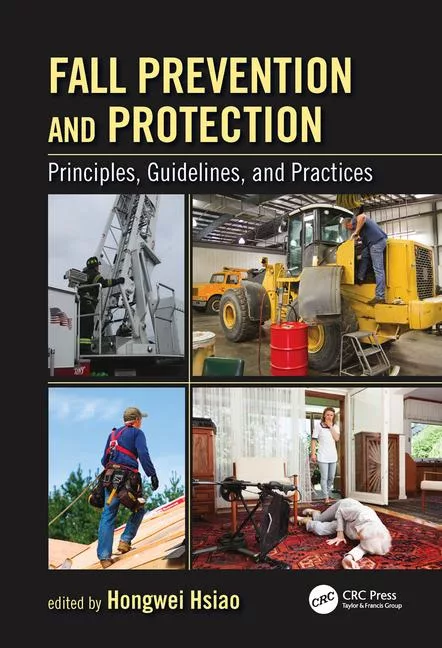
    Fall Prevention and Protection: Principles, Guidelines, and Practices

See More Products
×

Become a Leader in Safety Culture

Build your knowledge with ISHN, covering key safety, health and industrial hygiene news, products, and trends.

JOIN TODAY
  • RESOURCES
    • Advertise
    • Contact Us
    • Directories
    • Manufacturing Division
    • Store
    • Want More
  • SIGN UP TODAY
    • Create Account
    • eMagazine
    • Newsletters
    • Customer Service
    • Manage Preferences
  • SERVICES
    • Marketing Services
    • Reprints
    • Market Research
    • List Rental
    • Survey/Respondent Access
  • STAY CONNECTED
    • LinkedIn
    • Facebook
    • YouTube
    • X (Twitter)
  • PRIVACY
    • PRIVACY POLICY
    • TERMS & CONDITIONS
    • DO NOT SELL MY PERSONAL INFORMATION
    • PRIVACY REQUEST
    • ACCESSIBILITY

Copyright ©2026. All Rights Reserved BNP Media, Inc. and BNP Media II, LLC.

Design, CMS, Hosting & Web Development :: ePublishing