ISHN logo
search
cart
facebook twitter linkedin youtube
  • Sign In
  • Create Account
  • Sign Out
  • My Account
ISHN logo
  • NEWS
    • Today's News
    • Global Safety News
    • Government Regulations
  • PRODUCTS
    • Product Innovations
    • Featured Products
  • TOPICS
    • Environmental Health and Safety
    • Facility Safety
    • Workplace Health
    • Occupational Safety
    • PPE
    • More Topics
  • CONSTRUCTION
  • TECHNOLOGY
  • COLUMNS
    • Best Practices
    • Dave Johnson: What’s going on
    • Editorial Comments
    • Leading Safety
  • MULTIMEDIA
    • ISHN Podcast
    • Videos
    • Cold Stress Education Quiz
    • Webinars
    • White Papers
  • MORE
    • Buyer's Guide
    • Newsletters
    • Convention Companion
    • Polls
    • Events
    • ISHN Store
    • Sponsor Insights
  • EMAGAZINE
    • eMagazine
    • Archived Issues
    • Contact
    • Advertise
  • JOIN TODAY!
Columns

PSYCHOLOGY OF SAFETY: Forget gimmicks & gut feelings

By E. Scott Geller
August 30, 2002
Safety management clearly suffers from a "flavor-of-the-month" syndrome. It seems safety pros are continually looking for a new idea or "fad" on which to hang their management hat:

  • In the '70s, DuPont's STOP was a popular approach to managing the human aspects of safety.

  • In the '80s, safety pros became enamored with the notion of "total quality management," which encompassed the profound teachings of Deming, Crosby, Juran and Covey.

  • "Behavior-based safety" attracted peak interest in the '90s, quickly challenged by consultants promoting "holistic and humanistic approaches" and "culture change."

  • Now the new kid on the block is "six sigma." Trainers, managers and consultants are scrambling to figure out the profound knowledge behind this concept so they can develop relevant training and management programs.

    Were any of these paradigm shifts influenced by scientific research? Did any change in perspective adopt and adapt the best in the prior approaches as the result of objective and empirical research evidence? Were any components of a proposed "new" approach to safety management dropped because of a lack of research support?

    I think the answer to each of these questions is "no." Am I right?

    Be honest. Change in safety management is rarely driven by empirical and objective research data. Instead, we convince ourselves to try a new safety management technique after reading a slick promotional brochure, hearing a sales pitch at a safety conference, or skimming a "pop psychology" book.

    In this article, the third of a three-part series on critical research principles for safety, I offer suggestions for how to apply research to your safety management needs.

    Solicit assistance

    After reading last month's column, you're convinced (I hope) that specific changes in methods of managing the human dynamics of safety should be based on empirical evidence rather than common-sense opinion. But you're probably also convinced you don't have the time for research.

    You barely have time to skim the variety of management approaches available and select the one that sounds the best.

    Why not tell social or behavioral scientists of your evaluation needs? As a researcher in a university psychology department for almost 40 years, I assure you behavioral and social scientists are constantly looking for useful empirical questions they can address with their students. Of course, it's advantageous if you live close to a college or university so you can make a personal request and visit the research group periodically for an update. This is not necessary, however, given communication channels such as email. But you must be able to formulate your research question(s) appropriately.

    How to attract interest

    You need to "sell" your idea or need to a researcher by using language that shows respect for the scientific method, while also sparking the interest of the scientist. This three-part series aims to do just that.

    This series has revealed how researchers talk. Last month, I defined the scientific method as empirical, objective, self-correcting and progressive. In July (part one), I defined three basic criteria required for a cause-and-effect relationship, and explained why these criteria cannot be reached with the standard "accident investigation" (which should be called an "incident analysis"). Researchers are skeptical about assertions of "cause-and-effect" relationships, and they insist on defining concepts and ideas in operational terms. "Operational" means the factor or program component is explained with objective language that can be similarly understood by everyone who receives the explanation. It's essential to state your research question(s) in operational terms.

    And remember, researchers love theory. They like to test a theory, particularly when their data could show support of one theoretical concept over another. Plus, researchers like to organize and interpret their data within a theory or principle. So attempt to relate your research question(s) to a theoretical concept or principle.

    It's best to find one or more relevant theories from the literature, but feel free to apply your own theoretical notions to your research question(s). It's likely the researcher will be able to link your conceptual analysis to one or more other theories previously proposed and tested in the research literature.

    Do it yourself

    Before wrapping up this treatise on the value of research for safety pros, I must make one more plea for conducting your own management-related research. My ISHN article last month reviewed a straightforward DO IT research process. An intervention target is operationally defined, and then objective measures of this target are taken systematically before, during and after a particular management intervention is put into effect.

    Intervention evaluation can be as simple as counting the occurrences of a certain behavior or event throughout an intervention process. For example, every time I board an airplane I give the flight attendant an "Airline Lifesaver" card that contains a safety-belt reminder message I want read at the end of the flight. Half the cards promise a prize for reading the safety-belt message. At the end of the flight, I complete a data log to track the intervention condition (prize vs. no prize), airline, length of flight, gender and age of flight attendant, and if the announcement is read.

    I bet you could count reactions or results from something you do on a regular basis for safety, and track the ongoing impact or change influenced by your intervention. You could, for example, count every safety conversation you have with another person and note whether the result of each interaction is positive, negative or neutral. Such data could be helpful in learning what kinds of interpersonal communication lead to the most constructive results.

    One thing is certain, tracking your safety conversations will influence more safety conversations. Research is motivating. Tracking interventions for safety will increase the occurrence of safety-management interventions. For more than 15 years I have given the Airline Lifesaver card on more than 1,000 flights. I would not have kept implementing this simple intervention if I were not tracking its impact.

    Bottom line: Without more safety management research, intervention programs to prevent workplace injuries will come and go according to the latest "pop psychology" fad. Research makes possible the continuous improvement of safety management programs, enabling successively better safety performance.

    Links

    • Safety Performance Solutions
  • Share This Story

    Looking for a reprint of this article?
    From high-res PDFs to custom plaques, order your copy today!

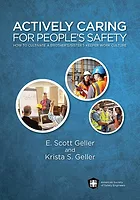
    E. Scott Geller, Ph.D., is Alumni Distinguished Professor, Center for Applied Behavior Systems, Virginia Tech, and senior partner with Safety Performance Solutions, Blacksburg, VA. For more information visit www.safetyperformance.com. "Actively Caring for People's Safety: How to cultivate a brother’s/sister’s keeper work culture," co-authored by Scott’s daughter Krista, was recently published by ASSE. Scott’s 15-minute TEDX talk on You Tube can be accessed at: https://www.youtube.com/watch?v=7sxpKhIbr0E


    Recommended Content

    JOIN TODAY
    to unlock your recommendations.

    Already have an account? Sign In

    • forklift safety

      Exploring the latest technologies in forklift safety

      With more staff and more stock in warehousing now more...
      Facility Safety
      By: Josh Cramer
    • welding

      All about welder’s flash or arc eye

      A flash burn is a painful inflammation of the cornea,...
      Environmental Health and Safety
    • dangerous jobs

      The 10 most dangerous jobs in the U.S.

      On-the-job deaths have been rising — hitting the highest...
      Transportation Safety
      By: Benita Mehta
    Manage My Account
    • eMagazine Subscriptions
    • ISHN Newsletter & Other Newsletter Alerts
    • Online Registration
    • Manage My Preferences
    • Subscription Customer Service

    More Videos

    Sponsored Content

    Sponsored Content is a special paid section where industry companies provide high quality, objective, non-commercial content around topics of interest to the ISHN audience. All Sponsored Content is supplied by the advertising company and any opinions expressed in this article are those of the author and not necessarily reflect the views of ISHN or its parent company, BNP Media. Interested in participating in our Sponsored Content section? Contact your local rep!

    close
    • man wearing the the Sundström SR200 Full Face Mask Respirator
      Sponsored byOHD

      5 Fit Testing Mistakes That Could Cost You

    • This image shows Magid AcuSpex polarized blue mirrored safety glasses.
      Sponsored byMagid Glove and Safety

      Construction PPE Guide: What Crews Need for Each Task

    • lone worker in confined space
      Sponsored byAlphasense Ltd.

      GET THE LEAD OUT of your Safety Oxygen Sensors!

    Popular Stories

    SpaceX 7 launch

    OSHA Investigating Fatal Fall at SpaceX Starbase

    Worker Impairment

    How to Tell When a Co-Worker is Impaired? A Safety Pro’s Challenge

    Automated loading dock equipment

    After March 2026 Rivian Death, Safety Managers Reassess Loading Dock Systems Under OSHA's Warehouse Emphasis Program

    top 10 most dangerous jobs

    Poll

    Seasonal Readiness

    With the federal heat stress prevention rule on the horizon, which area of your safety program needs the most attention?
    View Results Poll Archive

    Products

    Surviving an OSHA Audit A Management Guide, 2nd Edition

    Surviving an OSHA Audit A Management Guide, 2nd Edition

    See More Products

    ISHN Podcasts

    Related Articles

    • ASSE

      Hot off the ASSE press: Actively Caring for People’s Safety

      See More
    • Actively Caring for People’s Safety

      4 STEPS to cultivating a brother’s/sister’s keeper culture

      See More
    • actively caring for people, behavior-based safety

      Actively caring for people’s safety

      See More

    Related Products

    See More Products
    • Top Ten Pitfalls in OSHA Recordkeeping and How to Avoid Them

    See More Products

    Related Directories

    • American Society of Safety Professionals (ASSP)

      The American Society of Safety Professionals (ASSP) is a global association of occupational safety and health professionals who are dedicated to workplace safety. We provide education, safety standards, advocacy and a professional community that supports our diverse members and the profession.
    • Alliance of Women’s Safety Apparel Manufacturers (AWSAM)

      The Alliance of Women's Safety Apparel Manufacturers is a collection of specialty manufacturers and distributors committed to providing properly designed and fitted PPE for women. Our foundational pillars are Awareness, Access and Advocacy. Our non-profit organization has 12 Founding Members and aligns the needs of women in the workforce and the companies they work for with specialty manufacturers dedicated to providing appropriate PPE for women. The Founding Members of the organization have made great strides in removing barriers to access that have existed for many years and kept women from being equally protected. Together, we create a platform that increases awareness of products made for women, encourages equal access to appropriately fitting PPE, and advocates for the safety of women in the workforce. In the spirit of co-opetition, we collaborate to envision what is next for women in industry as we work side by side to accomplish our mission, increase our impact, and share the journey with everyone seeking to elevate diversity and equality in their workplace.
    ×

    Become a Leader in Safety Culture

    Build your knowledge with ISHN, covering key safety, health and industrial hygiene news, products, and trends.

    JOIN TODAY
    • RESOURCES
      • Advertise
      • Contact Us
      • Directories
      • Manufacturing Division
      • Store
      • Want More
    • SIGN UP TODAY
      • Create Account
      • eMagazine
      • Newsletters
      • Customer Service
      • Manage Preferences
    • SERVICES
      • Marketing Services
      • Reprints
      • Market Research
      • List Rental
      • Survey/Respondent Access
    • STAY CONNECTED
      • LinkedIn
      • Facebook
      • YouTube
      • X (Twitter)
    • PRIVACY
      • PRIVACY POLICY
      • TERMS & CONDITIONS
      • DO NOT SELL MY PERSONAL INFORMATION
      • PRIVACY REQUEST
      • ACCESSIBILITY

    Copyright ©2026. All Rights Reserved BNP Media, Inc. and BNP Media II, LLC.

    Design, CMS, Hosting & Web Development :: ePublishing