ISHN logo
search
cart
facebook twitter linkedin youtube
  • Sign In
  • Create Account
  • Sign Out
  • My Account
ISHN logo
  • NEWS
    • Today's News
    • Global Safety News
    • Government Regulations
  • PRODUCTS
    • Product Innovations
    • Featured Products
  • TOPICS
    • Environmental Health and Safety
    • Facility Safety
    • Workplace Health
    • Occupational Safety
    • PPE
    • More Topics
  • CONSTRUCTION
  • TECHNOLOGY
  • COLUMNS
    • Best Practices
    • Dave Johnson: What’s going on
    • Editorial Comments
    • Leading Safety
  • MULTIMEDIA
    • ISHN Podcast
    • Videos
    • Cold Stress Education Quiz
    • Webinars
    • White Papers
  • MORE
    • Buyer's Guide
    • Newsletters
    • Convention Companion
    • Polls
    • Events
    • ISHN Store
    • Sponsor Insights
  • EMAGAZINE
    • eMagazine
    • Archived Issues
    • Contact
    • Advertise
  • JOIN TODAY!
Columns

PSYCHOLOGY OF SAFETY: Engaging employees in '05

January 1, 2005
Happy New Year! To celebrate the beginning of my 15th year contributing articles for ISHN, I’d like to offer ten prime ways to get people involved in injury-prevention efforts. Over the years, I have discussed each of these in prior ISHN contributions, but it might be useful to have this Top Ten List in one place. They could, in fact, serve as New Year’s Resolutions for the safety pros who want to achieve more employee participation in their injury-prevention campaigns.

10) Make safety personal — How do successful advertisers sell their products? They display individuals similar to their potential customers enjoying the benefits of their products. In contrast, many organizations try to motivate safety involvement with group statistics like total recordable injury rate (TRIR) or workers’ compensation costs. This takes the focus away from what people relate to — other people.

9) Teach & motivate with personal stories — A well-told, personal story activates vivid imagery. Listeners can put themselves in the position of the story-teller and feel relevant emotions. When the story is linked to a related lesson, learning is facilitated and remembered.

8) Accompany scare tactics with action plans — A personal story about an injury, pain and suffering is emotional and motivational. Listeners visualize themselves in the same predicament, and experience fear and anxiety. They are ready to take action to prevent such a tragedy in their own lives. This is the prime time to teach an injury-prevention technique.

7) Activate & support success seeking — Scare tactics and prevention strategies activate desirable behavior, but can also lead to an undesirable attitude or mindset. When the focus is on avoiding failure, one’s sense of personal control and freedom is stifled. And if the prevention efforts do not work, you can get failure acceptance, apathy, and feelings of helplessness.

The antidote: Substitute success seeking for failure avoiding. We should define our injury-prevention efforts and results in achievement terms. Get people talking about what they do for safety, and discuss outcomes in terms of milestones accomplished instead of losses avoided.

6) Motivate with positive consequences — In so many situations, attention to failure rather than success is more prevalent, and penalties are used more than rewards to manage the behaviors of children and adults. Why? Because mistakes are noticeable, and punishment seems to work.

But recognition for desirable performance is key to a success-seeking attitude. So, as trite as it sounds, become a “good finder.” Look for the good things people do and support that behavior with positive consequences. But, remember, the power is in the delivery. Sincere one-to-one words of genuine appreciation are usually more influential than financial rewards.

5) Focus on the process — In safety, the focus is typically on negative outcomes, from OSHA recordables to compensation costs. With our attention on the negative and reactive scoreboard of total recordables, it’s easy to take our eyes off the “ball” — the proactive process things we need to do daily in order to prevent workplace injuries.

For over a decade, my Safety Performance Solutions partners and I have been teaching corporate cultures a DO IT process, with “D” for define desirable or undesirable behavior to target; “O” for observe the target behavior; “I” for intervene to improve the behavior; and “T” for test the impact of your intervention. This process defines the journey needed to come closer to the ultimate destination of an injury-free workplace.

4) Use behavior-based feedback — Behavior-based feedback provides direction or motivation, or both of these, depending on its delivery. I only want to make the point that behavior-based feedback is necessary for performance improvement and competence building. Since people want to be more competent at what they believe is important, opportunities to receive feedback invite participation.

3) Set SMART goals — “Zero injuries” reflects the vision of dedicated safety pros. It is a destination, not a goal. Goals are journey tools.

SMART goals are empowering because they facilitate a process that people believe is achievable, effective, and worth the effort. This is reflected in the words represented by the letters of SMART: Specific, Motivational, Achievable, Relevant, and Trackable.

2) Use empowering language — For more than three decades I have been complaining about unfortunate language used by safety pros. Words like “behavior modification,” “accident investigation,” “loss control,” “compliance training,” “root cause,” and “occupant restraint” come across as failure-oriented and freedom-limiting. They set the stage for fault-finding over fact-finding.

Our language both influences and reflects our culture. Take a careful look at our safety language and make necessary adjustments. For example, substitute “incident analysis” for “accident investigation,” “contributing factors” for “root causes,” and “safety belt” for “occupant restraint.”

1) Ask the right question — Consider the effects of questions like “Who did that?” “Why was that hazard not removed earlier?” “What is the root cause of this injury?” and “Why didn’t you follow the OSHA guidelines?”

These questions project the problem beyond the person asking the question. They deflect a solution to someone else.

The perspective changes with this question, “How can I help?” It’s not “Why did that have to happen?” but rather “What can I do to help correct the mishap?” I recommend you start with the question, “What can I do?” and proceed to do whatever is within your domain of influence to focus on the positive and make your injury-prevention process more achievement-focused.

Share This Story

Looking for a reprint of this article?
From high-res PDFs to custom plaques, order your copy today!

Recommended Content

JOIN TODAY
to unlock your recommendations.

Already have an account? Sign In

  • forklift safety

    Exploring the latest technologies in forklift safety

    With more staff and more stock in warehousing now more...
    Workplace Training Strategies
    By: Josh Cramer
  • welding

    All about welder’s flash or arc eye

    A flash burn is a painful inflammation of the cornea,...
    Environmental Health and Safety
  • dangerous jobs

    The 10 most dangerous jobs in the U.S.

    On-the-job deaths have been rising — hitting the highest...
    Transportation Safety
    By: Benita Mehta
Manage My Account
  • eMagazine Subscriptions
  • ISHN Newsletter & Other Newsletter Alerts
  • Online Registration
  • Manage My Preferences
  • Subscription Customer Service

More Videos

Sponsored Content

Sponsored Content is a special paid section where industry companies provide high quality, objective, non-commercial content around topics of interest to the ISHN audience. All Sponsored Content is supplied by the advertising company and any opinions expressed in this article are those of the author and not necessarily reflect the views of ISHN or its parent company, BNP Media. Interested in participating in our Sponsored Content section? Contact your local rep!

close
  • man wearing the the Sundström SR200 Full Face Mask Respirator
    Sponsored byOHD

    5 Fit Testing Mistakes That Could Cost You

  • This image shows Magid AcuSpex polarized blue mirrored safety glasses.
    Sponsored byMagid Glove and Safety

    Construction PPE Guide: What Crews Need for Each Task

  • lone worker in confined space
    Sponsored byAlphasense Ltd.

    GET THE LEAD OUT of your Safety Oxygen Sensors!

Popular Stories

SpaceX 7 launch

OSHA Investigating Fatal Fall at SpaceX Starbase

Automated loading dock equipment

After March 2026 Rivian Death, Safety Managers Reassess Loading Dock Systems Under OSHA's Warehouse Emphasis Program

psychology in the workplace

Most Workplaces Measure Psychological Safety, Ignoring Psychosocial Risks

top 10 most dangerous jobs

Poll

Seasonal Readiness

With the federal heat stress prevention rule on the horizon, which area of your safety program needs the most attention?
View Results Poll Archive

Products

Surviving an OSHA Audit A Management Guide, 2nd Edition

Surviving an OSHA Audit A Management Guide, 2nd Edition

See More Products

ISHN Podcasts

Related Articles

  • 10 leadership tips for engaging employees in the safety process

    See More
  • PSYCHOLOGY OF SAFETY: Want to engage employees?

    See More
  • PSYCHOLOGY OF SAFETY: The psychology of recovery

    See More

Related Products

See More Products
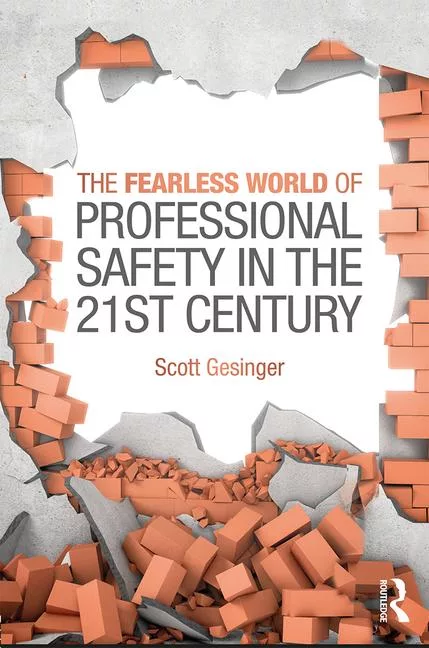
  • fearless world.jpg

    The Fearless World of Professional Safety in the 21st Century

See More Products

Related Directories

  • American Society of Safety Professionals (ASSP)

    The American Society of Safety Professionals (ASSP) is a global association of occupational safety and health professionals who are dedicated to workplace safety. We provide education, safety standards, advocacy and a professional community that supports our diverse members and the profession.
  • Board of Certified Safety Professionals (BCSP)

    Since 1969, BCSP has been setting and certifying the technical competency criteria for safety, health, and environmental practitioners; ensuring safety through certification. In 2019, BCSP developed examCORE a comprehensive educational program for safety certification.
  • Alliance of Women’s Safety Apparel Manufacturers (AWSAM)

    The Alliance of Women's Safety Apparel Manufacturers is a collection of specialty manufacturers and distributors committed to providing properly designed and fitted PPE for women. Our foundational pillars are Awareness, Access and Advocacy. Our non-profit organization has 12 Founding Members and aligns the needs of women in the workforce and the companies they work for with specialty manufacturers dedicated to providing appropriate PPE for women. The Founding Members of the organization have made great strides in removing barriers to access that have existed for many years and kept women from being equally protected. Together, we create a platform that increases awareness of products made for women, encourages equal access to appropriately fitting PPE, and advocates for the safety of women in the workforce. In the spirit of co-opetition, we collaborate to envision what is next for women in industry as we work side by side to accomplish our mission, increase our impact, and share the journey with everyone seeking to elevate diversity and equality in their workplace.
×

Become a Leader in Safety Culture

Build your knowledge with ISHN, covering key safety, health and industrial hygiene news, products, and trends.

JOIN TODAY
  • RESOURCES
    • Advertise
    • Contact Us
    • Directories
    • Manufacturing Division
    • Store
    • Want More
  • SIGN UP TODAY
    • Create Account
    • eMagazine
    • Newsletters
    • Customer Service
    • Manage Preferences
  • SERVICES
    • Marketing Services
    • Reprints
    • Market Research
    • List Rental
    • Survey/Respondent Access
  • STAY CONNECTED
    • LinkedIn
    • Facebook
    • YouTube
    • X (Twitter)
  • PRIVACY
    • PRIVACY POLICY
    • TERMS & CONDITIONS
    • DO NOT SELL MY PERSONAL INFORMATION
    • PRIVACY REQUEST
    • ACCESSIBILITY

Copyright ©2026. All Rights Reserved BNP Media, Inc. and BNP Media II, LLC.

Design, CMS, Hosting & Web Development :: ePublishing